Currimao Watchtower: A Timeless Sentinel of Ilocos Norte
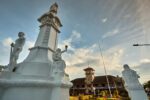
The Currimao Watchtower in Ilocos Norte is a historic Spanish-era structure built to guard against pirate invasions. Situated along the scenic coastline, this coral-stone watchtower

There’s a striking sense of space in Ilocos Norte Province — where wide skies meet rolling landscapes, and the coastline seems to stretch toward tomorrow. From the moment the road bends toward the northwest tip of Luzon, you feel a shift: the wind carries stories of sea and sand, and the light feels cleaner, sharper, more insistent. In Laoag City, the provincial capital, old and new stand side by side. Spanish‑era churches and ancestral houses sit near modern café corners, all framed by bougainvillea and gentle golden light that photographers seem to chase by instinct.
One of the first iconic stops is the Sinking Bell Tower beside the Laoag Cathedral, where the stone bell tower seems to lean into its own weight, a silent reminder of centuries past. Walking the streets at sunrise or dusk, you notice how the shadows fall across old walls and wooden doors, how the patina of age becomes a conversation between light and texture. In markets near the city’s edge, the aromas of local snacks and fresh produce mingle with laughter and slow conversations — the kind that shape every place’s unique heartbeat.
Just a short distance northeast lies the dramatic Paoay Church, a UNESCO World Heritage treasure known for its massive buttresses and thick walls that seem to anchor history itself against wind and time. Its façade, weathered yet majestic, rises like a fortress of faith beside open plains, and early morning shadows make its lines and angles feel ready for any wide‑angle frame. Across the road, old houses and quiet plazas add a lived‑in grace to the setting, where locals pause to pray or exchange warm smiles with visitors.
A few kilometres down the road, the art‑filled hallways of the Sinking Bell Tower Museum and the lantern shops near the church lanes offer closer encounters with craft and tradition. These places feel like doors you open slowly, waiting for stories tucked inside frames, wood blocks, paper lanterns, and old photographs — all pieces of lives that have stayed long and seen much.
Nature here has its own voice too. In the coastal reaches near Pagudpud, the restless waves of the West Philippine Sea crash against broad shores and rocky points with a confidence that seems older than time. Blue Lagoon stretches with sand and clear water that seems to change its hue with every passing moment, and the nearby Kapurpurawan Rock Formations rise like sculpted art carved by wind and tide, their pale limestone faces turning soft gold in late afternoon light — scenes that feel cinematic without needing any filter at all.

The Currimao Watchtower in Ilocos Norte is a historic Spanish-era structure built to guard against pirate invasions. Situated along the scenic coastline, this coral-stone watchtower

Northward, Bangui speaks quietly through line after line of graceful white blades — the iconic Bangui Windmills standing tall along the shore, their slow rotations turning wind into motion and perfect silhouettes against sunrise and sunset. Walking that stretch at dawn, you feel how the rhythm of blades and tide seems to breathe with you; every photo feels like a study in motion and stillness intertwined.

Further along the coast, Burgos offers stillness and space at spots like Caparispisan Beach, where sands are wide, umbrellas rare, and the horizon seems to complete itself only at the farthest point your eyes can reach. Small fishing villages nearby lean into the sea breeze, nets drying on low fences, bicycles parked by the shade trees, and elders watching the tide — scenes that feel unhurried and true to place.
In the interior, the gentle slopes of Marcos and the fertile fields of Solsona echo with slow daily rhythms. Here, rice harvests and grazing carabaos seem to move at a tempo that aligns with sunrise and sunset, not clocks. Stop at roadside stands for fresh fruit or “sarangani” — local sweets and treats that taste sweeter when the wind is at your back and the horizon is wide before you.
Food in Ilocos Norte is as bold as its landscapes. Crisp bagnet reflects local skill at making pork crackle and sing with texture, while the savoury tang of dinakdakan and the slow‑cooked goodness of pinapaitan carry tastes shaped by land and livestock. In busy town markets and roadside eateries alike, these dishes are stories served on plates, each bite a note in the province’s wider composition of taste and place.
Late afternoons here belong to light that seems to stretch a little longer before dusk. Whether you’re on the sandy stretch of Paraiso ni Anton near Pagudpud, beside the windmills at Bangui, or on a quiet road outside Laoag where farmers head home after a long day, Ilocos Norte Province rewards laid‑back observation and slow steps. Every bend in a corner road, every gleam on limestone, every distant horizon has its own quiet story — and a chance to be framed just right.
EXPLORE MORE ABOUT THE
Philippines
BROWSE BY CATEGORIES
BROWSE BY PROVINCE