
Moriones Festival: A Living Tradition in the Heart of the Bondoc Peninsula
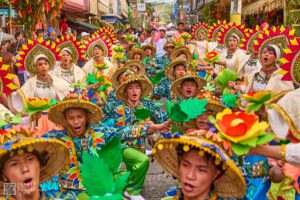
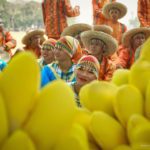
If you think the Moriones Festival is something you can only witness in Marinduque, think again. Over the years, this dramatic, mask-filled tradition has quietly
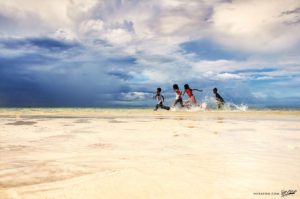
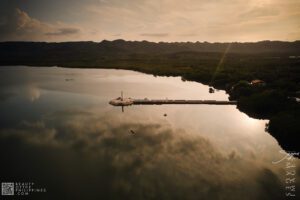
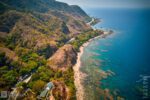
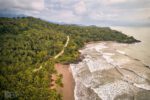
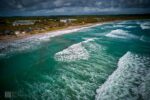
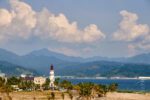
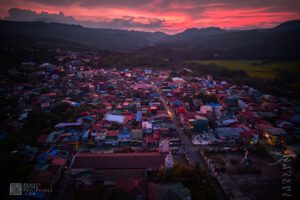
Hondagua is a barangay in the Municipality of Lopez, within Quezon Province, part of Region IV-A (CALABARZON) on Luzon island, Philippines. It lies directly along the shores of Lamon Bay and sits only about 12 meters above sea level. Being here, the relationship between land and sea is immediate. Coconut trees stretch toward the coast, roads subtly slope toward the water, and the horizon always seems present, even from inland paths.
Based on the 2020 census, Hondagua has a population of 3,008 people, placing it among the mid-sized barangays of Lopez. Population records show a gradual decline over the years, reflecting rural-to-urban migration that many Philippine communities experience. Even so, everyday life feels intact—neighbors recognize each other, routines repeat, and the pace remains steady rather than hurried.
The name Hondagua is believed to come from the Spanish words honda meaning deep and agua meaning water, referencing the deep coastal waters near its shoreline. Before this, the area was known as Bagacay, later referred to as Barangay Ilayang Bagacay. During earlier periods, the land was heavily forested, and livelihoods centered on fishing and hunting wild animals, with nature providing what the community needed.
During the American colonial period, formal local governance took shape. In 1927, construction began on a railway intended to connect the Bicol region to Manila, with a planned station in Barangay Ilayang Bagacay. An American engineer overseeing the project chose to rename the area Hondagua, a name that has remained ever since and continues to reflect the barangay’s close ties to the sea.
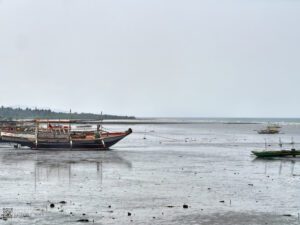
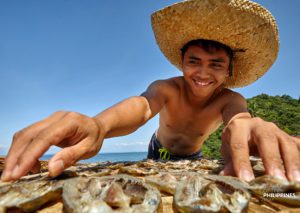
Hondagua’s economy rests firmly on agriculture and fishing. Coconut farming, including copra production, remains central, alongside rice and other local crops. Fishing thrives due to direct access to Lamon Bay, where boats, nets, and shoreline activity are part of the daily scene.
One of the most defining landmarks here is Philippine Flour Mills, established in 1962. Located near the port area, the blue-painted facility stands out against the coastal backdrop. It produces both hard and soft flour under world-class standards and plays a crucial role in the country’s food supply chain. The port of Hondagua can accommodate ocean-going vessels, receiving wheat imports from the United States and Canada, which are then distributed by land to Region V, Region IV, and Metro Manila. For a barangay, this level of national economic connection is significant.
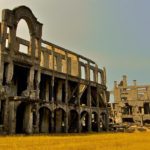
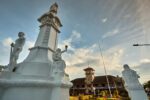
Not far from daily activity sits the abandoned Philippine National Railways (PNR) station, along with its decaying coach cars. Once part of an ambitious railway network, the station now stands still, weathered by time. The site has quietly become a favorite stop for visitors, offering a glimpse into a past era when trains passed through what is now a calm coastal community. The contrast between movement then and stillness now adds a strong sense of nostalgia.
Along parts of the coastline, mangrove areas continue to thrive. These mangroves serve as natural barriers against coastal erosion, provide habitats for marine species, and contribute to the area’s biodiversity. Beyond their ecological role, they shape the everyday landscape—green, dense, and calm against the open water of Lamon Bay.
The seawall of Hondagua is one of the most familiar gathering places in the barangay. As late afternoon turns to evening, people naturally drift here. Sitting along the concrete edge, watching the sun sink into Lamon Bay, the sky often shifts into layers of orange, pink, and purple. The scene is simple, repeated daily, and deeply woven into local life.
RELATED STORIES

If you think the Moriones Festival is something you can only witness in Marinduque, think again. Over the years, this dramatic, mask-filled tradition has quietly



Every time I walk toward Siain Port, the first thing that hits me is the line of the pier itself—long, straight, and stretching into Lamon


Every May 15, the charming town of Lucban, Quezon, bursts into a kaleidoscope of colors, music, and movement for the Pahiyas Festival, a grand celebration


When people talk about ports in Quezon Province, the bigger and busier ones usually come to mind first. But further south, along the Bondoc Peninsula,


Hondagua National High School, established by law, serves students from the barangay and nearby areas. It allows access to secondary education without the need to travel far into the town center of Lopez, keeping learning within reach of home and community.
Faith-based groups and civic organizations remain active as well. Religious congregations, including a Church of Christ community that recently marked its 85th anniversary, continue to organize activities that bring residents together, reinforcing shared identity and connection.
Matinik Beach is a familiar destination, especially during the summer. The shoreline features simple cottages for rent and floating cottages that sit directly on the water. Reaching the beach often involves riding the improvised trolley known locally as “skits” from Lopez town. The route passes through Binutas Cave, a man-made tunnel created to allow access to the shore.
Local stories add another layer to Binutas Cave. According to long-held myths, the tunnel is linked to World War II treasure legends, believed to be connected to valuables left behind during the Japanese occupation. Whether taken as history or folklore, the stories add intrigue to what is otherwise a practical passage.
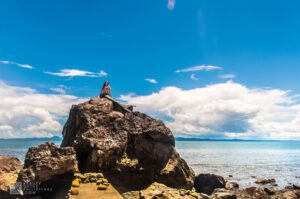
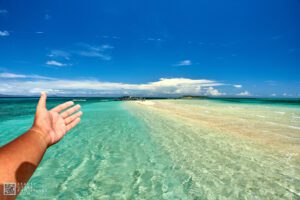
Close to Hondagua lies Pulong Niugan, a small island known among locals for its gently sloping beach and calm waters. About 50 meters from shore, coral colonies support marine life and offer good snorkeling conditions. A modest sandbar adds to its appeal. The sand may not be white, but the quiet setting and natural features continue to draw both residents and visitors.
Hondagua may appear understated, but its layers reveal themselves over time. It functions as a coastal economic hub, a place of working ports and quiet rituals, and a community shaped by both movement and stillness. From abandoned railways to active mills, from mangroves to seawalls, Hondagua tells its story not through spectacle, but through continuity—and that’s what makes it worth paying attention to.
I’m looking forward to the stories and images leaving a lasting positive impression on you, just as they have on me. Stay connected with us on social media for a weekly exploration of travel assignments and breathtaking visuals. Our focus is on championing local tourism, showcasing small businesses, and honoring the magnificence of the Philippines through the content we curate. Join us in spreading the word by clicking the ‘share’ buttons below. Your support means the world to us.
EXPLORE MORE about


When people talk about ports in Quezon Province, the bigger and busier ones usually come to mind first. But further south, along the Bondoc Peninsula,


Right in the heart of Lucban, Quezon, you’ll find the San Luis Obispo de Tolosa Parish Church, more commonly known as Lucban Church. This centuries-old


If you’re planning a trip to Quezon province, you absolutely can’t miss the stunning Sariaya Church, officially known as the Saint Francis of Assisi Parish


This celebration of the “Candle Festival” takes place from the 31st of January to the 2nd of February each year and is held in order


Gunao Lake, located in the charming town of Dolores in Quezon Province, remains a hidden treasure waiting to be discovered by adventurers seeking natural wonders.


Situated along the pristine shores of Quezon Province, Atimonan Port is more than just a transportation hub—it is a doorway to stunning islands and a


Located along the northeastern coast of Luzon, Philippines, Lamon Bay is a stunning destination that boasts pristine waters, rich marine life, and a vibrant local


If you think the Moriones Festival is something you can only witness in Marinduque, think again. Over the years, this dramatic, mask-filled tradition has quietly


Among the many festivals that take place in Quezon, one of the most popular is the Boling-Boling Festival, particularly in the town of Catanauan. The


Located in the heart of Dolores, Quezon, the Hambujan Festival is a vibrant celebration that embodies the town’s rich heritage and deep connection with nature.


This Christmas, Dolores shone as the creative heart of Quezon province. Paskotitap 2025 transformed the town into a radiant celebration of lights, movement, and storytelling—where


General Luna, Quezon might not be the first place that pops into your head when planning Holy Week travel—but maybe it should be. Every Lenten


Finding A&J Cafe at J.P. Rizal Street corner E. Caparros Street in Barangay Pipisik, the space immediately communicates calm. Minimalist design, warm lighting, and an


Pulong Pasig Sandbar, situated in the pristine coastal waters of Calauag, Quezon, is a breathtaking sandbar that emerges and disappears with the tides, offering an


If there’s one local delicacy that defines the town of Lucban, Quezon, it’s the unmistakably bold and garlicky Lucban Longganisa. This native sausage isn’t just


The Malagonlong Bridge is among the 11 historical bridges of the city of Tayabas located in Quezon Province. This bridge is one of the oldest


If you’ve ever wondered what faith looks like when it’s woven into the daily life of a town, you might want to head to General


You and your family and friends can experience the beauty of San Narciso Beach in Quezon Province. This stunning beach offers plenty of activities and


Situated along the picturesque coastal highway of Atimonan, Quezon, the Sirena ng Atimonan is more than just a roadside landmark—it is a symbol of the


Every May 15, the charming town of Lucban, Quezon bursts into a dazzling display of colors, artistry, and cultural pride as it celebrates the Pahiyas


Every May 15, the charming town of Lucban, Quezon, bursts into a kaleidoscope of colors, music, and movement for the Pahiyas Festival, a grand celebration


Every time I walk toward Siain Port, the first thing that hits me is the line of the pier itself—long, straight, and stretching into Lamon



The Quezon Zigzag Road was built in 1969 during the Marcos administration, designed to link Quezon Province with the Bicol Region. Faced with the rugged
BROWSE BY CATEGORIES
BROWSE BY PROVINCE