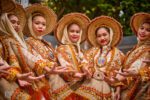
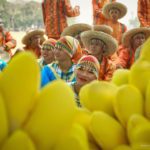
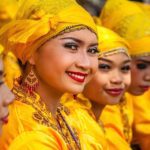
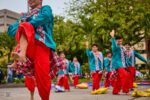
ABOVE: Al Cinco de Noviembre performers deliver a powerful and dramatic street dance during Araw ng Kalayaan 2025 in Manila.
During the Araw ng Kalayaan 2025 celebration held at Luneta on June 12, one performance stood out not just for its vibrant choreography and rich visuals, but for the powerful story it carried. The performers from Negros Occidental brought to life the Al Cinco de Noviembre Festival—an annual celebration rooted in one of the most remarkable moments of Philippine resistance.
Now, you might think: what does a November 5 event have to do with June 12? Here’s the thing—freedom doesn’t come with a single date. It’s a living legacy, echoed in countless acts of courage across the archipelago. And in the case of Negros, that echo came in 1898, when Negrenses staged a bloodless revolt that tricked Spanish forces into surrendering—with nothing but bamboo cannons, wooden rifles, and unwavering resolve. Yes, it really happened.
ABOVE: Al Cinco de Noviembre performers deliver a powerful and dramatic street dance during Araw ng Kalayaan 2025 in Manila.
The performance at Luneta captured the cleverness and unity behind this local revolution. But back home in Negros Occidental, the actual Al Cinco de Noviembre Festival is a week-long celebration that transforms cities like Bago, Silay, Talisay, and Bacolod into living stages.
In Bago City, for instance, they reenact the revolution through Sigabong sang mga Kanyon—a booming spectacle of simulated cannon blasts and period costumes. Over in Silay, things take a more theatrical turn with torchlight parades and dramatic street plays. Students carry flaming torches, actors relive the revolution, and the entire community becomes part of the storytelling. Honestly, it’s goosebumps kind of stuff.
That’s what made the Luneta performance resonate so deeply. It wasn’t just about historical facts—it was about who the Negrenses are. That spirit was reflected not only in the costumes and choreography but also in the stories behind them. Stories that, come November, are also told through food.
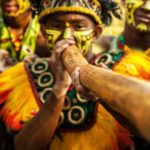
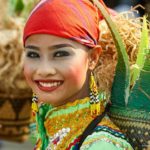
ABOVE: A performer in traditional costume strikes a commanding pose as the Al Cinco de Noviembre group delivers a dramatic street dance during Araw ng Kalayaan 2025 in Manila.
Yes, food. The festival in Negros always features Kaon ta kag iban pa, which roughly means “Let’s eat and more.” It’s a heritage food fair that showcases inasal, lumpia, piaya, native coffee—the kind of dishes that come with stories about sugarcane haciendas and family recipes passed down through generations.
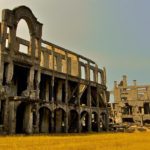
And if you ever make it to Negros during the actual festival, the experience doesn’t stop at performances. Places like Balay Negrense in Silay offer a tangible peek into the early 1900s sugarlandia lifestyle—think antique furniture and creaky wooden floors full of stories. Then there’s The Ruins in Talisay, once a grand mansion, now a skeletal beauty surrounded by gardens and wide skies. These landmarks aren’t just Instagrammable; they’re part of the larger narrative of resilience and change.
RELATED STORIES
ABOVE: A performer proudly holds a scroll while another raises the Philippine flag during Al Cinco de Noviembre’s powerful presentation at Araw ng Kalayaan 2025 in Manila.
Back at Luneta, what truly made the performance memorable was how it represented a community that owns its history—not just on stage, but in daily life. In Negros, even outside of festival season, you’ll find people talking about the revolution in barber shops, karinderias, or tricycle queues. It’s not just an event—it’s part of the everyday rhythm.
Here’s the truth: today’s travelers want more than sightseeing. They want connection. Stories. Meaning. That’s why Al Cinco de Noviembre, and the way it was presented during Araw ng Kalayaan 2025, hits different. It’s a reminder that freedom was won not just by battles—but by courage, wit, and collective heart. It’s a story worth hearing, wherever you are.
If that Luneta showcase left you curious, the best time to visit Negros Occidental is the first week of November. Fly into Bacolod–Silay Airport and you’re a short ride away from Silay, Bago, or Talisay. While you’re at it, check out Balay Negrense, The Ruins, or even just sit by the Capitol Lagoon in Bacolod and soak in the slower pace after the festival rush.
ABOVE: A performance of the Al Cinco de Noviembre Festival during Araw ng Kalayaan 2025, showcasing unity, history, and the enduring spirit of revolution.
What the Araw ng Kalayaan 2025 event reminded us is that Philippine independence wasn’t born in one place—it rose in many. Al Cinco de Noviembre is just one chapter, but it’s a story that sticks. Whether you see it live in Negros or feel its energy in a Luneta performance, it’s history you don’t just watch—you carry it with you.
I’m looking forward to the stories and images leaving a lasting positive impression on you, just as they have on me. Stay connected with us on social media for a weekly exploration of travel assignments and breathtaking visuals. Our focus is on championing local tourism, showcasing small businesses, and honoring the magnificence of the Philippines through the content we curate. Join us in spreading the word by clicking the ‘share’ buttons below. Your support means the world to us.
BROWSE BY CATEGORIES
BROWSE BY PROVINCE