BROWSE BY PROVINCE

Ilocos Sur, Philippines
Old Banaoang Bridge
The Scenic Ruins Along the Vigan Route
Share
Tweet
Email
EXPLORE Old Banaoang Bridge

PUBLISHED March 17, 2024

PHOTOS | WORDS BY MARIANO SAYNO

  • Ilocos Sur, Philippines
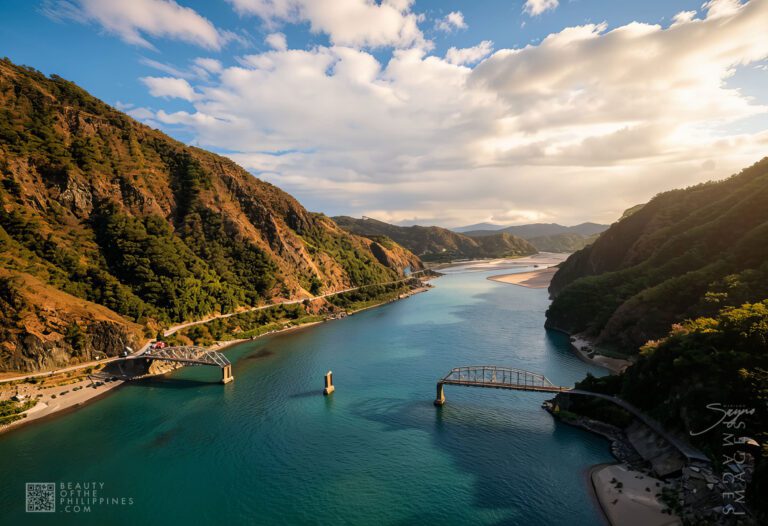
Seen along the highway corridor approaching Vigan City, the remains of Old Banaoang Bridge still dominate the landscape of the Abra River with a presence that feels both familiar and unfinished. Long known to travelers as the Old Quirino Bridge, the steel truss structure once served as one of the most recognizable gateways into Ilocos Sur, framed by rocky mountain slopes and the narrowing terrain of the Vigan Gap. Even after portions of the bridge collapsed during Super Typhoon Egay in 2023, the site continues drawing photographers, motorists, cyclists, and heritage travelers who stop not only to see what survives, but to witness how a landmark tied to generations of northbound journeys has changed over time. The remaining steel framework, broken spans, and wide river basin now give the bridge a different kind of tourism identity — part historical landmark, part scenic ruin, and part cultural memory site. For many visitors traveling through Ilocandia, the bridge remains less about transportation and more about atmosphere, nostalgia, and the enduring visual character of the northern Philippine landscape.
Explore the Philippines through my lens as we venture into Old Banaoang Bridge with Point of View (POV) photography. Using a body cam, I’ll guide you on an interactive tour, revealing the behind-the-scenes of capturing the shots shared here. Let’s dive into this visual journey together and uncover the wonders through my lens!
Let’s explore the PHILIPPINES through my lens as we journey on a photo slideshow to Old Banaoang Bridge. Join me in this visual adventure and discover the wonders captured through my lens! Check out the shared slideshow here.
The Steel Gateway Before Entering Vigan

For decades, travelers heading north toward Vigan City often recognized the approach to Old Banaoang Bridge as one of the defining moments of the journey into Ilocos Sur. The structure appeared dramatically against the wide basin of the Abra River, framed by mountain walls narrowing into what became known as the Vigan Gap. Whether arriving through long provincial bus rides, motorcycle trips, cycling routes, or family road journeys from Manila, many visitors associated the bridge with the feeling of finally entering the landscapes of Ilocandia.


Even in its partially ruined state by 2026, the bridge continues to hold that emotional weight. Travelers approaching the area no longer encounter a complete crossing, yet the remaining steel framework still dominates the scenery with a recognizable silhouette that has remained embedded in northern Philippine travel culture for generations. The site has gradually transformed from an active transport structure into a tourism landmark shaped equally by history, memory, landscape, and loss.


Positioned between the municipalities of Santa and Bantay in Ilocos Sur, the bridge stands near one of the major entry corridors leading toward Vigan City. Its location alone helped establish its iconic reputation over the decades, especially among travelers making long overland journeys through Northern Luzon.

Check out the video for more highlights. See what I’ve captured through my lens with Point of View (POV) photography. Using a body cam, I’ll take you on an interactive tour, showing you behind-the-scenes moments of capturing the shots shared here.
Check out the video below for additional features. Explore what I’ve captured through my lens in this cinematic slideshow.
From Colonial Infrastructure to Regional Lifeline

The origins of Old Banaoang Bridge trace back to the American colonial period, when the steel truss crossing was constructed over the Abra River at the narrow mountain passage of the Vigan Gap. Originally called the Banaoang Bridge, the structure was named after Barangay Banaoang in Santa, Ilocos Sur. Over time, however, it became more widely known as the Quirino Bridge, honoring Elpidio Quirino, the Philippine president who hailed from Ilocos Sur.


At a time when road systems across northern Luzon were still developing, the bridge played a critical role in linking northern and southern trade and travel routes throughout the region. Before newer crossings existed, it served as one of the major access points leading into Vigan and the surrounding Ilocos provinces. For travelers moving through the northwestern coastline of the Philippines, the bridge became both a practical route and a recognizable regional landmark.


Its engineering design contributed heavily to its fame. The structure used a Parker-type or camelback steel truss system known for both durability and visual elegance. Stretching roughly 456 meters across the river system, the bridge developed a reputation not only for functionality but also for its striking appearance against the surrounding geography. The elevated arch-like profile, exposed steel framework, dramatic symmetry, and long linear perspective created one of the most visually distinctive bridge crossings in the country.

Where the Mountains Narrow Toward the River

Part of what made Old Banaoang Bridge iconic was its extraordinary natural setting. The bridge sits within a landscape where steep mountain walls narrow toward the river basin, creating the geographic corridor known as the Vigan Gap. Travelers approaching from the south are greeted by a panoramic composition of steel trusses, rocky slopes, open skies, and the flowing waters of the Abra River below.


Because of this scenery, the location became particularly popular among photographers, landscape videographers, cyclists, motorcycle riders, and road travelers seeking cinematic northern Luzon views. During sunrise and late afternoon, golden light reflecting across the river and steel framework transformed the bridge into one of the most photographed structures in Ilocos Sur.


The narrow roadway and exposed steel construction also created a distinctly vintage driving experience rarely found in newer infrastructure. Many travelers intentionally slowed down while crossing or stopped nearby for photographs because of the panoramic mountain and river scenery surrounding the structure. Even before the rise of social media tourism, the bridge already held a reputation as one of the symbolic visual gateways into Ilocandia.


As digital travel culture expanded during the 2010s, the bridge gained even wider recognition online. Drone photography, cinematic travel reels, motorcycle vlogs, landscape shoots, and prenup sessions frequently featured the structure because of the dramatic contrast between industrial steelwork and the rugged terrain surrounding the Abra River.

A Landmark Remembered Through Cinema and Road Culture

The cultural presence of Old Banaoang Bridge extended beyond tourism photography. The structure became deeply connected to Filipino pop culture after appearing in several local films, particularly productions associated with Fernando Poe Jr. Because of these appearances, generations of Filipinos came to recognize the bridge not only as infrastructure but also as part of the visual language of classic Philippine cinema.


For many travelers from Luzon, the bridge eventually became one of those familiar geographic markers signaling that Vigan and the wider Ilocos Region were already near after hours of highway travel. Within road-trip culture, its silhouette became tied to memories of provincial bus rides, family vacations, long motorcycle journeys, and northbound holiday travel.


The bridge’s image became so recognizable that tourism materials and travel features frequently used it to represent the province itself. Few structures in northern Philippines carried the same combination of engineering identity, cinematic familiarity, and emotional connection to domestic travel culture.

Surviving Wars, Floods, and Structural Decline

Throughout its long history, Old Banaoang Bridge survived multiple destructive events. During World War II, the structure reportedly endured bombings yet remained standing afterward, reinforcing its reputation for engineering endurance.


One of its most serious earlier damages occurred during Super Typhoon Feria in 2001, when powerful flood currents from the Abra River washed away one of the bridge spans. The damaged section was later reconstructed, although the replacement differed from the original truss design.


As years passed, concerns surrounding the bridge’s aging infrastructure and vulnerability to severe flooding continued increasing. Eventually, construction began on a newer replacement bridge nearby in 2007. The modern crossing officially opened in 2009 and became the primary vehicular route connecting Santa and Bantay.


For several years afterward, the coexistence of the old and new bridges created a unique “twin bridge” landscape frequently photographed by visitors. The contrast between the aging steel truss and the modern concrete crossing symbolized the changing relationship between historical and contemporary infrastructure in Ilocos Sur.


With the opening of the replacement bridge, the older structure gradually transitioned into a tourism-oriented destination rather than a major transportation corridor. Visitors increasingly stopped for sightseeing, photography, river viewing, and nearby adventure tourism activities connected to the Abra River environment.

The Collapse That Changed the Bridge’s Identity

The most defining recent chapter in the bridge’s story came during Super Typhoon Egay in July 2023, internationally known as Doksuri. Massive flooding and violent river currents from the swollen Abra River caused catastrophic structural damage to the old bridge. Two spans were reportedly swept away, including sections carrying the decorative “One Ilocos Sur” installations attached to the structure.


Images and drone footage of the collapse circulated widely online and quickly became among the most recognizable visual symbols of the typhoon’s destruction across Northern Luzon. Public reaction extended far beyond concern over damaged infrastructure. Many Filipinos responded emotionally because the bridge represented nostalgia, regional identity, heritage tourism, and decades of collective travel memory.


By 2026, the bridge’s partially collapsed appearance has itself become part of the tourism narrative. Travelers now arrive not only to remember its former grandeur but also to witness a surviving fragment of Ilocos Sur history altered by natural disaster.


The remaining framework standing above the river creates a striking visual contrast between permanence and destruction. Missing spans interrupt the once-continuous steel profile, while exposed sections frame the surrounding mountains and river in ways that feel both cinematic and haunting.

The Rise of Ruin Tourism Along the Abra River

Even in damaged condition, Old Banaoang Bridge remains tourism-relevant because its identity has evolved rather than disappeared. The bridge now occupies a growing place within heritage tourism, ruin photography, and what some travelers informally describe as dark tourism landscapes.


Visitors interested in colonial-era infrastructure, engineering heritage, and regional development continue including the bridge in Ilocos Sur itineraries. At the same time, photographers and videographers increasingly document the structure because of the dramatic imagery created by the broken spans above the Abra River.


The surrounding river environment remains visually powerful even after the collapse. The area continues attracting drone hobbyists, landscape photographers, motorcycle riders, cycling groups, and adventure travelers exploring the scenic highways of northern Luzon. Prior to the collapse, nearby tourism activities included ziplining, boating, and river-based recreation, and parts of the surrounding scenery continue to be promoted within local adventure tourism.


For many visitors, however, the experience is no longer centered on crossing the bridge itself. Instead, the site now functions as a place for witnessing transformation — a historic landmark reshaped by nature while still retaining its identity within the cultural memory of Ilocandia.

Between Preservation, Memory, and the Future of Heritage Infrastructure

By 2026, conversations surrounding preservation, memorialization, and possible restoration continue appearing in tourism discussions and regional online communities. Even after partial destruction, locals and travelers still refer to the structure with familiarity and affection.


The bridge represents far more than transportation infrastructure. Across decades of travel culture in the Philippines, it came to symbolize resilience against disasters, the endurance of northern road routes, engineering heritage, and the relationship between built structures and natural landscapes.


Its continued presence beside the modern replacement bridge reinforces this contrast between past and present. One structure carries active traffic across the river, while the other stands as a reminder of older journeys, older engineering systems, and the vulnerability of heritage infrastructure against increasingly extreme weather events.


For travelers arriving in the area today, the strongest impression often comes from seeing the broken steel trusses standing against the mountains and river currents of the Abra River basin. The bridge no longer functions primarily as a crossing. Instead, it has become one of the most recognizable historical ruins in Northern Luzon, carrying with it generations of memory tied to travel, cinema, engineering, and the changing landscapes of Ilocos Sur.

RELATED STORIES

Gabriela Silang Memorial Shrine: Remembering La Generala

The Gabriela Silang Memorial Shrine sits prominently along the national highway in Santa, Ilocos Sur, making it one of those places you don’t plan to


Read More »

Tobacco Festival: Candon City’s Stirring Tribute at Araw ng Kalayaan 2025

When Candon City brought its “Ikkis ti Candon” float to Luneta for the 2025 Araw ng Kalayaan celebration, it wasn’t just joining a national parade—it was putting

Read More »

I’m looking forward to the stories and images leaving a lasting positive impression on you, just as they have on me. Stay connected with us on social media for a weekly exploration of travel assignments and breathtaking visuals. Our focus is on championing local tourism, showcasing small businesses, and honoring the magnificence of the Philippines through the content we curate. Join us in spreading the word by clicking the ‘share’ buttons below. Your support means the world to us.

BROWSE BY REGION
  • metro MANILA
  • abra
  • albay
  • baguio city
  • BATAAN
  • batangas
  • Benguet
  • bulacan
  • cagayan
  • cavite
  • cebu
  • cotabato
  • davao oriental
  • Guimaras
  • ilocos norte
  • ilocos sur
  • Iloilo
  • Isabela
  • laguna
  • lanao del norte
  • maguindanao
  • negros occidental
  • nueva vizcaya
  • palawan
  • Pampanga
  • pangasinan
  • QUEZON
  • rizal
  • Samar
  • sarangani
  • sorsogon
  • Tarlac
  • zambales
  • zamboanga city

EXPLORE MORE about

  • Ilocos Sur

Gabriela Silang Memorial Shrine: Remembering La Generala

The Gabriela Silang Memorial Shrine sits prominently along the national highway in Santa, Ilocos Sur, making it one of those places you don’t plan to
Read More »

Tobacco Festival: Candon City’s Stirring Tribute at Araw ng Kalayaan 2025

When Candon City brought its “Ikkis ti Candon” float to Luneta for the 2025 Araw ng Kalayaan celebration, it wasn’t just joining a national parade—it was putting


Read More »

BROWSE BY CATEGORIES

LOCATIONS
PROVINCES

Abra

Albay

Baguio City

Bataan

Batangas

Benguet

Bulacan

Cagayan

Cavite

Cebu

Cotabato

Davao Oriental

Guimaras

Ilocos Norte

Ilocos Sur

Iloilo

Isabela

Laguna

Lanao del Norte

Maguindanao

Manila

Negros Occidental

Nueva Vizcaya

Palawan

Pampanga

Pangasinan

Quezon

Rizal

Samar

Sarangani

Sorsogon

Tarlac

Zambales

Zamboanga City

ARCHITECTURE
HERITAGE

Bonifacio Monument Tutuban

Burdang Lumban Festival

Cagsawa Festival

Capones Lighthouse

Casa Manila

Christ the King Seminary

Corregidor Island Dark Tour Experience

Corregidor Island Reopens

Corregidor Island

Cultural Center of the Philippines

Fantasy World

Gabriela Silang Memorial Shrine

Gomburza National Monument

Hondagua

Iloilo Customs House

Intramuros

Jones Bridge

Jones Bridge

Kartilya ng Katipunan

La Loma Cemetery

LOAD MORE

CHURCHES
FAITH

Bacolor Church

Baguio Cathedral

Barasoain Church

Binondo Church

Calaca Church

Calumpit Church

Chong Hock Tong Temple

Feast of Black Nazarene

Greenbelt Chapel

Guadalupe Chapel Intramuros

Guadalupe Ruins Makati

La Naval de Manila

Las Piñas Bamboo Organ

Las Piñas Church

Lingayen Cathedral

Lubenas Festival

Lucban Church

Malate Church

Manila Abbey

Manila Cathedral

LOAD MORE

NATURAL & MAN-MADE
ATTRACTIONS

A&J Cafe

Alligator Lake

Amare La Cucina Baguio

Ambuklao Dam

Angeles City Holy Rosary Parish Church

Antipolo Cathedral

Apurawan Beach

Atimonan Port

Avilon Zoo

Azalea Hotels & Residences Baguio

Bagac Beach

Baguio Media Newseum

Balai Isabel

Balayan Bay

Baluarte de San Diego

Betis Church

Binondo Chinatown

Binuatan Creations

Bustos Dam

Café Khawa

LOAD MORE

FESTIVALS &
EVENTS

Al Cinco de Noviembre Festival

Ana Kalang Festival

Antipolo Maytime Festival

Balacat Festival

Balitok Ti Alicia Festival

Bañamos Festival

Bato Art Festival

Bato Art Festival

Boling-Boling Festival

Buhayani Festival

Burdang Lumban Festival

Candle Festival

Dinagyang Festival

Feast of Santo Niño

Gilingan Festival

Halamanan Festival

Hambujan Festival

Iloilo Dinagyang Festival

Inaul Festival

Itik Festival

LOAD MORE
Facebook Twitter Instagram Envelope

All photographs that appear on the site are copyright of Mariano Sayno ©2022 Beauty of the philippines

All photographs that appear on the site are copyright of Mariano Sayno ©2022 Beauty of the philippines.com

Beauty of the philipipnes LOGO WHITE

BROWSE BY PROVINCE

Abra

Albay

Baguio City

Bataan

Batangas

Benguet

Bulacan

Cagayan

corregidor-island

Cavite

Cebu

Cotabato

Davao Oriental

Manggahan aFestival of Guimaras

Guimaras

Ilocos Norte

Ilocos Sur

dinagyang aliwan friesta husayno mariano sayno

Iloilo

Isabela

Laguna

Lanao del Norte

Maguindanao

Manila Bay by Mariano Sayno

Manila

Negros Occidental

Magat River Dupax Del Norte

Nueva Vizcaya

Palawan

Pampanga

Lingayen Cathedral

Pangasinan

Quezon

Rizal

Samar

Sarangani

Sorsogon

Tarlac

Zambales

Zamboanga City

Old Quirino Bridge, Santa, Ilocos Sur, Philippines