


Sirena ng Atimonan: Where Folklore Meets the Sea
A Familiar Figure Along the Road The Sirena ng Atimonan stands along the Pan-Philippine Highway, right by the shores of Lamon Bay in Barangay Angeles,
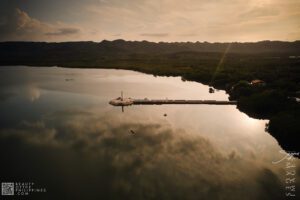
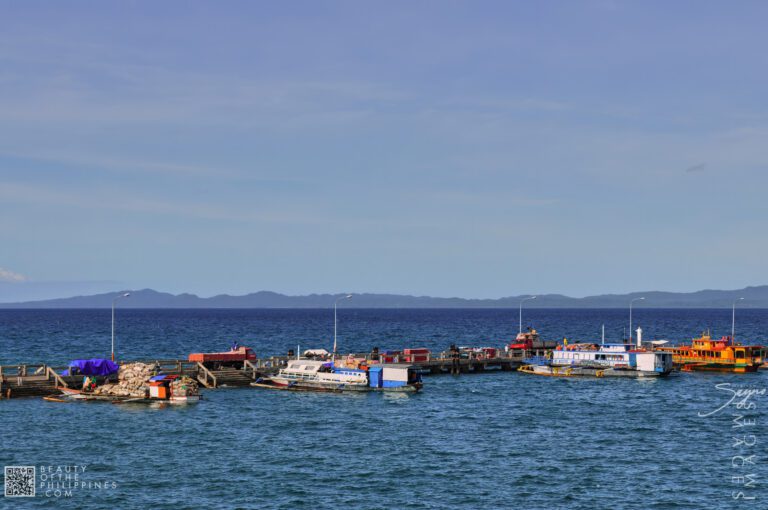
I first approached Atimonan Port with the sea on one side and the steady traffic of the Maharlika Highway (Pan-Philippine Highway/AH26) on the other. Located in the coastal municipality of Atimonan in Quezon Province, the port faces Lamon Bay, that wide stretch of water opening toward the Pacific in southeastern Luzon.
In this part of CALABARZON, the shoreline is not just scenery—it is livelihood, transport corridor, and invitation. Even at a glance, the port reveals its role as one of the region’s working maritime gateways. It may not dominate the skyline with towering cranes, yet it stands firmly as a strategic seaside link connecting mainland communities to offshore islands and coastal settlements.
I first approached Atimonan Port with the sea on one side and the steady traffic of the Maharlika Highway (Pan-Philippine Highway/AH26) on the other. Located in the coastal municipality of Atimonan in Quezon Province, the port faces Lamon Bay, that wide stretch of water opening toward the Pacific in southeastern Luzon.
In this part of CALABARZON, the shoreline is not just scenery—it is livelihood, transport corridor, and invitation. Even at a glance, the port reveals its role as one of the region’s working maritime gateways. It may not dominate the skyline with towering cranes, yet it stands firmly as a strategic seaside link connecting mainland communities to offshore islands and coastal settlements.
What struck me while observing the port operations was the balance between routine and anticipation. Passenger vessels moved in rhythm with the tide, preparing for crossings to Alabat Island, known for its beaches and mangrove forests, and to Perez Island, a quieter destination favored by those looking for intimate shoreline escapes.
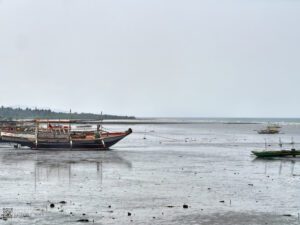
Schedules depended on sea conditions—something every traveler here quickly learns to respect. In that sense, the unpredictability of departures became part of the narrative of rural island travel. The port also handled modest cargo movements and accommodated daily fishing boats that ventured into the rich waters of Lamon Bay.
By mid-morning, fishing vessels would return, unloading tuna, crabs, and local fish varieties that define Atimonan’s coastal cuisine. Watching this exchange of goods and greetings felt like witnessing the backbone of the town’s marine economy. The port was not just infrastructure; it was livelihood in motion.
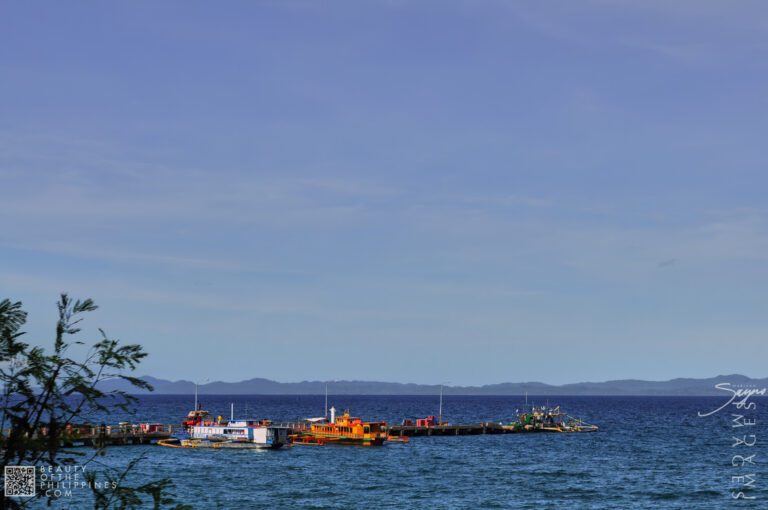
ABOVE: Atimonan Port in Quezon Province mainly serves passenger vessels, boosting tourism by connecting travelers to nearby islands.
The terminal structure itself remained simple and functional. A modest building offered waiting areas, while small stalls sold snacks and drinks to commuters and weekend explorers. Operated by the municipal government, the facilities focused on essentials rather than spectacle.
Standing there with a camera, I noticed how everyday life overlapped seamlessly with travel. Students heading home, vendors arranging goods, boatmen calling out destinations—it was a layered scene. The distant hum of engines mixed with conversations in Quezon dialect, and in that blend, you sensed how deeply tied the town is to both sea and road.
The port’s scale matched the rhythm of Lamon Bay. It did not overwhelm; it served.
From this harbor, small boats could be chartered toward Alabat Island, where mangrove systems, rural barangays, and quiet beaches awaited those willing to slow down. Kayaking and snorkeling opportunities drew eco-minded travelers, while community-based visits offered insight into island living.
Perez Island, less developed, appealed to visitors seeking uncluttered shorelines and a kind of coastal stillness that is increasingly rare. The journeys themselves—crossing open water with wind pressing against your face—were part of the experience.
Beyond island routes, the view across Lamon Bay held its own attraction. Sunrise painted the water gold; sunset turned fishing skiffs into silhouettes. It was the sort of light that makes you pause mid-step, camera raised, aware that ports can be landscapes too.
A short drive inland leads toward the Quezon Protected Landscape, a conservation area known for rainforest terrain, waterfalls, caves, and birdlife. For travelers mapping out an itinerary, this meant combining coastal mornings with upland treks—sea breeze first, forest air later. Scenic hills and rivers nearby offered hiking and picnic options, expanding the port’s relevance beyond maritime transport.
Culturally, Atimonan carries its identity through events like the Tagultol Festival, which celebrates the town’s fishing heritage. Even if festivities unfold on land, the influence of the sea is unmistakable.
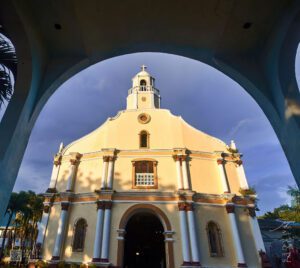
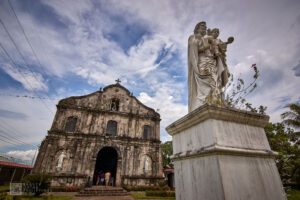
Visitors could also explore the Our Lady of the Angels Parish Church, adding historical depth to a trip that might otherwise revolve solely around beaches and boats. Local restaurants near the port served fresh seafood, regional pancit, and coconut-based specialties—reminders that gastronomy is another gateway into place.
Reaching Atimonan Port from Manila typically required a three- to four-hour journey via the Maharlika Highway. Provincial buses and vans regularly traversed this route, making the port accessible even to independent travelers without private vehicles.
As with any sea crossing along Lamon Bay, checking weather conditions was essential, especially during monsoon months when waters could turn rough. Planning around the elements was part of responsible travel here.
Spending time at Atimonan Port, I began to see it less as a stopover and more as a threshold. It marked the line where highways met tide, where mainland routines shifted into island pace.
For travelers drawn to laid-back beaches, authentic island narratives, and maritime culture, this port quietly offered a starting point. Not through grand design, but through function, community presence, and its steady gaze toward open water.
And as I packed my gear and watched another boat ease into the bay, I realized that sometimes the most compelling destinations are not the islands themselves—but the docks where journeys begin.
RELATED STORIES

A Familiar Figure Along the Road The Sirena ng Atimonan stands along the Pan-Philippine Highway, right by the shores of Lamon Bay in Barangay Angeles,


Right in the heart of Lucban, Quezon, you’ll find the San Luis Obispo de Tolosa Parish Church, more commonly known as Lucban Church. This centuries-old


Every August, Quezon Province bursts with color, rhythm, and tradition as the Niyogyugan Festival takes over Lucena City. More than just a tribute to coconuts,


At the heart of San Narciso town in Quezon, a modest but profoundly significant landmark rises — the San Narciso Church, officially named St. Joseph
I’m looking forward to the stories and images leaving a lasting positive impression on you, just as they have on me. Stay connected with us on social media for a weekly exploration of travel assignments and breathtaking visuals. Our focus is on championing local tourism, showcasing small businesses, and honoring the magnificence of the Philippines through the content we curate. Join us in spreading the word by clicking the ‘share’ buttons below. Your support means the world to us.
EXPLORE MORE about


When people talk about ports in Quezon Province, the bigger and busier ones usually come to mind first. But further south, along the Bondoc Peninsula,


Gunao Lake, located in the charming town of Dolores in Quezon Province, remains a hidden treasure waiting to be discovered by adventurers seeking natural wonders.


Hondagua is a barangay in the Municipality of Lopez, within Quezon Province, part of Region IV-A (CALABARZON) on Luzon island, Philippines. It lies directly along


Every May 15, the charming town of Lucban, Quezon, bursts into a kaleidoscope of colors, music, and movement for the Pahiyas Festival, a grand celebration


Quezon Zigzag Road, or Bitukang Manok, was constructed in 1969 during President Ferdinand Marcos’ administration. Engineers faced the challenge of traversing the rugged slopes of


Tucked along the Dumacaa River in Tayabas City, Malagonlong Bridge — or Puente de Malagonlong — is one of the Philippines’ oldest and longest stone


Located in the town of San Narciso, Quezon Province, San Narciso Beach — or Talisay Beach as locals call it — stretches along the Philippine


This celebration of the “Candle Festival” takes place from the 31st of January to the 2nd of February each year and is held in order


This Christmas, Dolores shone as the creative heart of Quezon province. Paskotitap 2025 transformed the town into a radiant celebration of lights, movement, and storytelling—where


Along Quezon Province’s eastern seaboard, Lamon Bay unfolds as a living tapestry of sea, sand, and human stories. Unlike the more visited Pacific-facing beaches of


When you wander into the vibrant town of Lucban, Quezon, you can’t miss the aroma that defines its identity — the unmistakable, bold scent of



Located in the heart of Dolores, Quezon, the Hambujan Festival is a vibrant celebration that embodies the town’s rich heritage and deep connection with nature.


Pulong Pasig Sandbar, situated in the pristine coastal waters of Calauag, Quezon, is a breathtaking sandbar that emerges and disappears with the tides, offering an


Traveling along the Maharlika Highway in the heart of Sariaya, Quezon Province, you can’t help but notice the quiet elegance of Sariaya Church. Known formally


Every Holy Week, from Palm Sunday to Good Friday, the town of General Luna in Quezon transforms into a living stage of devotion and culture.


Every May 15, the charming town of Lucban, Quezon bursts into a dazzling display of colors, artistry, and cultural pride as it celebrates the Pahiyas


When most travelers picture the Moriones Festival, it’s the streets of Marinduque that come to mind. Yet the Bondoc Peninsula in Quezon Province has its


Every August, Quezon Province bursts with color, rhythm, and tradition as the Niyogyugan Festival takes over Lucena City. More than just a tribute to coconuts,


Finding A&J Cafe at J.P. Rizal Street corner E. Caparros Street in Barangay Pipisik, the space immediately communicates calm. Minimalist design, warm lighting, and an


Right in the heart of Lucban, Quezon, you’ll find the San Luis Obispo de Tolosa Parish Church, more commonly known as Lucban Church. This centuries-old


At the heart of San Narciso town in Quezon, a modest but profoundly significant landmark rises — the San Narciso Church, officially named St. Joseph


A Familiar Figure Along the Road The Sirena ng Atimonan stands along the Pan-Philippine Highway, right by the shores of Lamon Bay in Barangay Angeles,


The Candle Festival in Candelaria, Quezon, held from January 31 to February 5, 2026, celebrates devotion to Nuestra Señora de la Candelaria while highlighting community


For travelers exploring Quezon Province, few festivals rival the energy and creativity of the Boling-Boling Festival in Catanauan. Celebrated in the days leading up to


Every time I walk toward Siain Port, the first thing that hits me is the line of the pier itself—long, straight, and stretching into Lamon


Standing quietly at the center of town, Mulanay Church feels less like a monument and more like a steady presence. I noticed how time moves


In General Luna, Quezon, Holy Week is far from ordinary. The town’s quiet streets transform into a tapestry of devotion and local artistry through the
BROWSE BY CATEGORIES
BROWSE BY PROVINCE