BROWSE BY PROVINCE

Nagcarlan, Laguna
Nagcarlan Underground Cemetery
Exploring Laguna’s Hidden Colonial Heritage
Share
Tweet
Email
EXPLORE Nagcarlan Underground Cemetery

PUBLISHED March 20, 2024

PHOTOS | WORDS BY MARIANO SAYNO

  • Nagcarlan, Laguna
Hidden beneath a quiet chapel in Nagcarlan, Laguna, the Nagcarlan Underground Cemetery offers a window into colonial life, revolutionary strategy, and historical architecture. Visitors descend stone steps to explore a crypt once reserved for elites, while aboveground niches tell stories of the wider community. Beyond its solemn beauty, the site served as a meeting place for revolutionaries, making it both a historical landmark and a space where the past feels vividly alive for heritage travelers.
Explore the Philippines through my lens as we venture into Nagcarlan Underground Cemetery with Point of View (POV) photography. Using a body cam, I’ll guide you on an interactive tour, revealing the behind-the-scenes of capturing the shots shared here. Let’s dive into this visual journey together and uncover the wonders through my lens!
Let’s explore the PHILIPPINES through my lens as we journey on a photo slideshow to Nagcarlan Underground Cemetery. Join me in this visual adventure and discover the wonders captured through my lens! Check out the shared slideshow here.
What the Nagcarlan Underground Cemetery Is

The Nagcarlan Underground Cemetery in Barangay Bambang, Nagcarlan, Laguna stands as one of the most unique historical sites in the Philippines. Unlike typical cemeteries, this site was intentionally designed with both practical and ecclesiastical considerations: a chapel aboveground for funeral rites, and a crypt beneath, providing a burial space that respected both public health concerns and spiritual traditions of the 19th century. Its layered purpose, blending the sacred with the strategic, makes it a compelling destination for heritage travelers seeking a narrative that spans life, death, and history.

Check out the video for more highlights. See what I’ve captured through my lens with Point of View (POV) photography. Using a body cam, I’ll take you on an interactive tour, showing you behind-the-scenes moments of capturing the shots shared here.
Check out the video below for additional features. Explore what I’ve captured through my lens in this cinematic slideshow.
Origins and Construction

Built in 1845 under the guidance of Franciscan friar Father Vicente Velloc, the cemetery was conceived during the Spanish colonial era with health considerations in mind, particularly to prevent the spread of diseases like cholera by situating the burials away from densely populated areas. The chapel and underground crypt were constructed on sloping terrain at the foot of Mt. San Cristobal, creating a distinctive architectural ensemble. Visitors today are greeted by an 18-foot red brick archway flanked by a wrought-iron gate, leading to a broad courtyard and the small chapel that hosted funeral masses.

Architectural Features

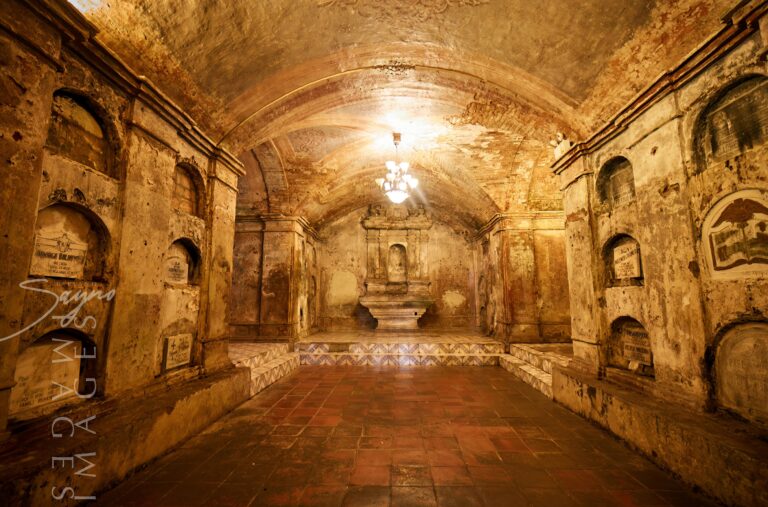
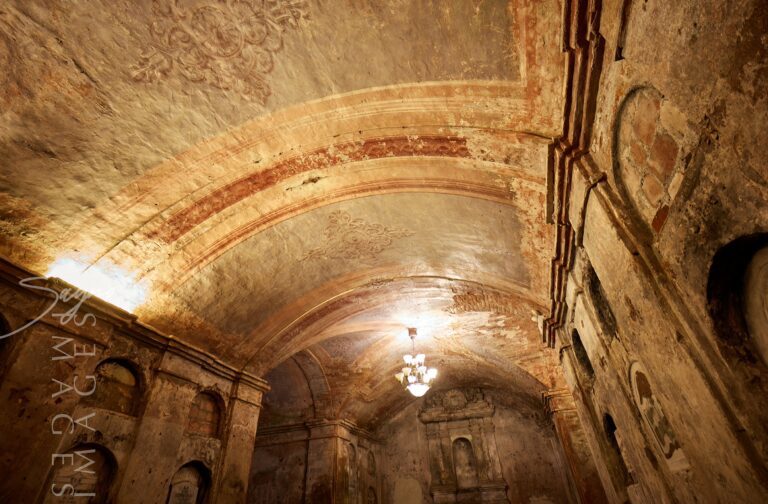
The cemetery occupies roughly one hectare and reflects Spanish Baroque design. Aboveground, octagonal walls made of red tiles contain around 240 apartment-style niches that once served as burial sites for townspeople. Descending a stone stairway into the crypt, visitors encounter 36 wall niches carefully arranged along all sides. An inscription in Spanish carved into the steps reminds visitors of mortality and the resting place that awaits all:
“Go forth, Mortal man, full of life
Today you visit happily this shelter,
But after you have gone out,
Remember, you have a resting place here,
Prepared for you.”

Social Stratification in Burial Practices

The underground cemetery reflects social hierarchies of the Spanish colonial era. Spanish friars, town elites, and affluent families were interred in the underground vault, while the general population was assigned to aboveground niches and perimeter spaces. The site therefore functions not only as a burial ground but also as a tangible record of societal structure in colonial Laguna.

Role in Philippine Revolutionary History

During the Philippine Revolution against Spain, the underground crypt served as a discreet meeting place for revolutionaries, including figures such as Pedro Paterno and General Severino Taiño, contributing to planning that led to the Pact of Biak-na-Bato in 1897. Later, during the Philippine-American War and World War II, Filipino guerrillas also used the crypt as a hideout and strategic shelter. This dual purpose as both a sacred and revolutionary space makes the cemetery exceptional among Philippine heritage sites.

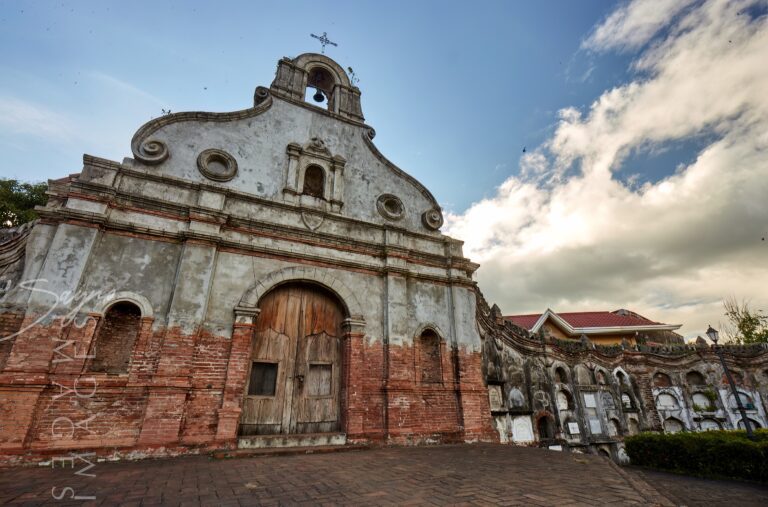
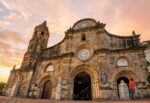
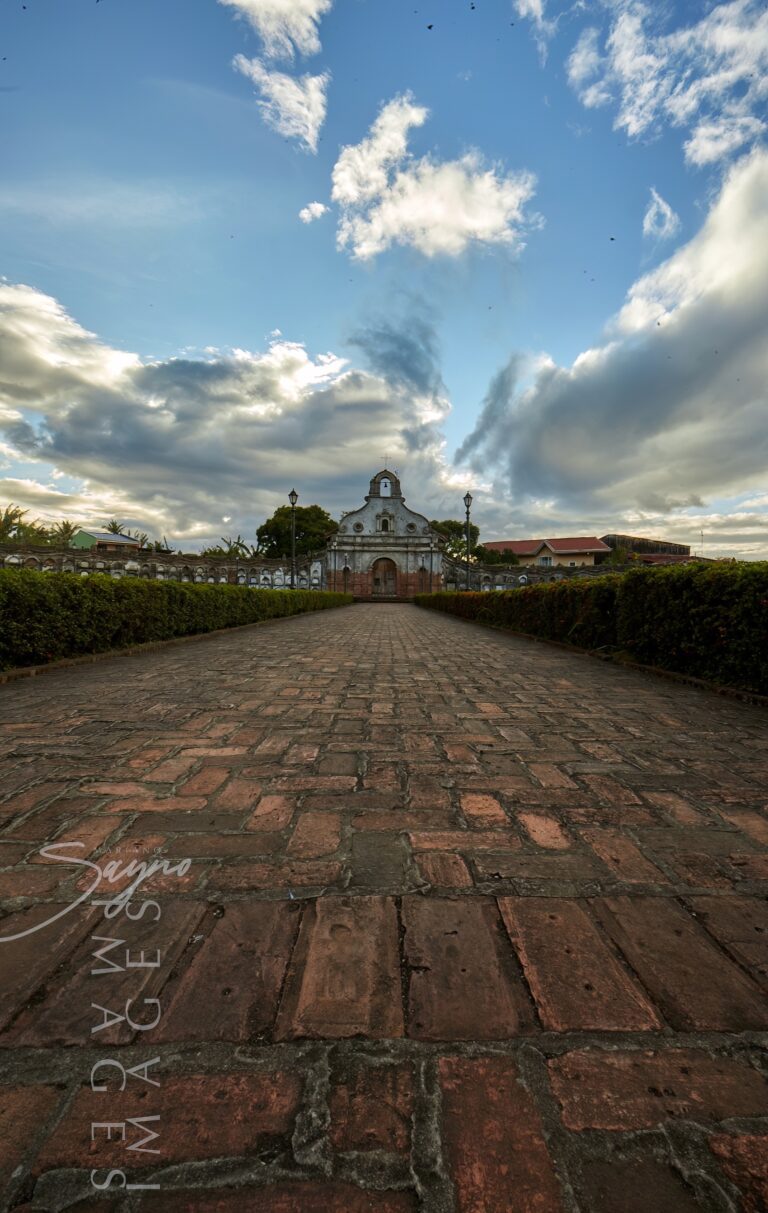
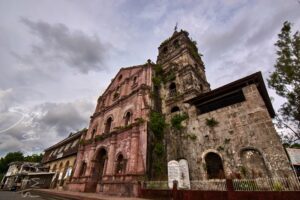
ABOVE: The old church façade marks the entrance to the historic Nagcarlan Underground Cemetery.

ABOVE: The old church façade marks the entrance to the historic Nagcarlan Underground Cemetery.

Designation and Conservation

Recognizing its historical and architectural significance, the government declared the cemetery a National Historical Landmark in 1981 under Presidential Decree No. 260. No new burials were permitted after this declaration, and the site underwent restoration before reopening to the public on October 24, 1981. By 2019, the cemetery had evolved into a heritage museum under the management of the National Historical Commission of the Philippines (NHCP), preserving structural elements such as tile floors, frescoed walls, and iron fixtures while providing interpretive materials to visitors about its layered past.

Cultural and Tourist Significance

Today, the Nagcarlan Underground Cemetery serves multiple roles. It is a rare example of subterranean burial architecture, a historical record of colonial burial customs, and a monument to revolutionary memory. Scholars, heritage travelers, and general visitors can explore the atmospheric corridors, understand colonial social structures, and witness the ingenuity of Spanish-era design. Its presence continues to shape contemporary understanding of Philippine history, connecting tangible spaces with stories of faith, resistance, and community identity.

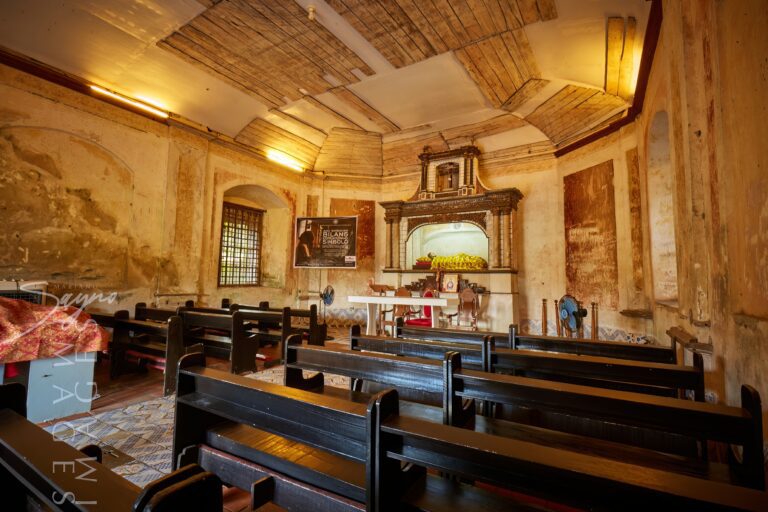
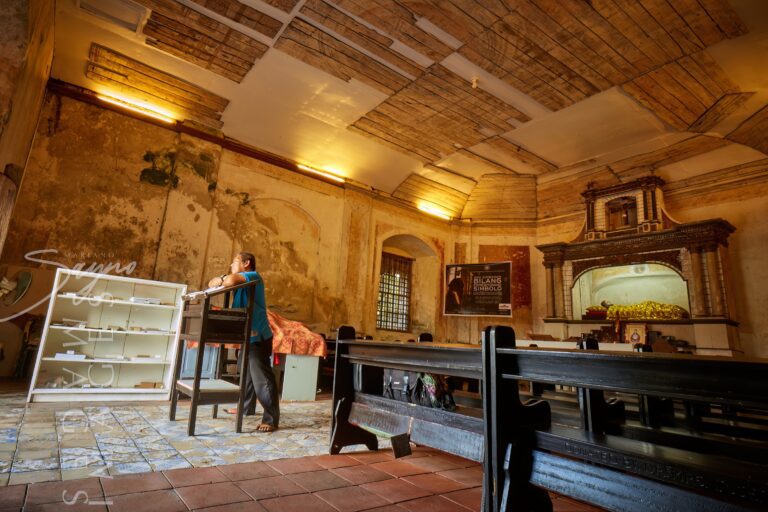
ABOVE: A man prays inside the chapel of the Nagcarlan Underground Cemetery, with its aged walls, wooden ceiling, and an altar featuring a statue of the reclining Christ.

ABOVE: A man prays inside the chapel of the Nagcarlan Underground Cemetery, with its aged walls, wooden ceiling, and an altar featuring a statue of the reclining Christ.

RELATED STORIES

Bañamos Festival: Where Hot Springs Meet Festive Street Parades

What the Bañamos Festival Is About The Bañamos Festival is the signature cultural and tourism celebration of the Municipality of Los Baños, Laguna, commemorating the

Read More »

Ana Kalang Festival: Where Kalang-Kalang and Street Dancing Meet Tradition

Nagcarlan Awakens: The Spirit of Ana Kalang Visiting Nagcarlan, Laguna in the third week of April, you immediately sense the town has transformed. The Ana

Read More »

Alligator Lake: Tadlac’s Quiet Crater of Laguna

Tucked into Barangay Tadlac in Los Baños, Alligator Lake stands apart from Laguna’s more bustling attractions. While many flock to the town’s famed hot springs,

Read More »

Majayjay Church: Exploring Laguna’s Ancient Sanctuary of Faith and History

Tucked high on Mt. Banahaw and overlooking verdant valleys, Majayjay Church, formally known as the Saint Gregory the Great Parish Church, stands as one of

Read More »

I’m looking forward to the stories and images leaving a lasting positive impression on you, just as they have on me. Stay connected with us on social media for a weekly exploration of travel assignments and breathtaking visuals. Our focus is on championing local tourism, showcasing small businesses, and honoring the magnificence of the Philippines through the content we curate. Join us in spreading the word by clicking the ‘share’ buttons below. Your support means the world to us.

BROWSE BY REGION
  • metro MANILA
  • abra
  • albay
  • baguio city
  • BATAAN
  • batangas
  • Benguet
  • bulacan
  • cagayan
  • cavite
  • cebu
  • cotabato
  • davao oriental
  • Guimaras
  • ilocos norte
  • ilocos sur
  • Iloilo
  • Isabela
  • laguna
  • lanao del norte
  • maguindanao
  • negros occidental
  • nueva vizcaya
  • Pampanga
  • pangasinan
  • QUEZON
  • rizal
  • Samar
  • sarangani
  • Tarlac
  • zambales
  • zamboanga city

EXPLORE MORE about

  • laguna

Majayjay Church: Exploring Laguna’s Ancient Sanctuary of Faith and History

Tucked high on Mt. Banahaw and overlooking verdant valleys, Majayjay Church, formally known as the Saint Gregory the Great Parish Church, stands as one of

Read More »

Sambalilo Festival: Celebrating Cavinti’s Iconic Pandan Weaving and Culture

Understanding the Sambalilo Festival The Sambalilo Festival is the signature cultural celebration of Cavinti, a municipality in Laguna. Traditionally held during the first week of

Read More »

Ana Kalang Festival: Where Kalang-Kalang and Street Dancing Meet Tradition

Nagcarlan Awakens: The Spirit of Ana Kalang Visiting Nagcarlan, Laguna in the third week of April, you immediately sense the town has transformed. The Ana

Read More »

Itik Festival: A Colorful Tribute to Victoria’s Duck-Raising Heritage

Origins and Cultural Significance If you wander Victoria during the festival, it’s immediately clear that the Itik Festival is more than a celebration—it’s a living

Read More »

Enchanted Kingdom: Why EK Remains the Top Theme Park Destination in the Philippines

Enchanted Kingdom, often simply called EK, stands as the Philippines’ first and only world-class theme park in 2012. Located in San Lorenzo South, Santa Rosa

Read More »

Laguna de Bay: Exploring the Philippines’ Largest Lake and Cultural Hub

Laguna de Bay, or Laguna Lake, is much more than the Philippines’ largest freshwater lake. Covering approximately 900 km² with a 220 km shoreline, it stretches across

Read More »

Buhayani Festival: Calamba’s Tribute to Rizal Through Parade and Performance

The Buhayani Festival, held every June 19 in Calamba, Laguna, honors the life and heroism of Dr. José Rizal, the city’s most celebrated son. First


Read More »

Three Kings Festival: Mabitac’s Colorful Epiphany Celebration

In Mabitac, Laguna, the celebration has been embraced wholeheartedly, particularly intertwining it with the town’s founding anniversary to create a grand town festival. It has
Read More »

Burdang Lumban Festival: Laguna’s Living Tapestry of Heritage

Lumban, recognized as the “Embroidery Capital of the Philippines,” comes alive every third week of September with its vibrant Burdang Lumban Festival, a celebration of
Read More »

Pinya Festival: Celebrating Pineapple and Culture in Calauan

A Sweet Harvest in Motion: Calauan’s Pinya Festival Walking through Calauan in early May, you immediately feel the energy of a community united in celebration.

Read More »

Kesong Puti Festival: Culinary Heritage Alive in Santa Cruz

Santa Cruz, a first-class urban municipality and the capital of Laguna province in the Philippines, is a place where tradition, culture, and culinary delights converge.

Read More »

Gilingan Festival: The Story That Shaped Siniloan

A Festival Rooted in a Name Standing in Siniloan during festival season, you begin to notice how one object keeps appearing—in costumes, in floats, in
Read More »

Bañamos Festival: Where Hot Springs Meet Festive Street Parades

What the Bañamos Festival Is About The Bañamos Festival is the signature cultural and tourism celebration of the Municipality of Los Baños, Laguna, commemorating the

Read More »

Turumba Festival: Devotion and Dance in Pakil, Laguna

The Turumba Festival in Pakil, Laguna, centered around the veneration of Our Lady of Sorrows of Turumba, continues to unite locals and attract visitors, showcasing
Read More »

Alligator Lake: Tadlac’s Quiet Crater of Laguna

Tucked into Barangay Tadlac in Los Baños, Alligator Lake stands apart from Laguna’s more bustling attractions. While many flock to the town’s famed hot springs,
Read More »

BROWSE BY CATEGORIES

LOCATIONS
PROVINCES

Abra

Albay

Baguio City

Bataan

Batangas

Benguet

Bulacan

Cagayan

Cavite

Cebu

Cotabato

Davao Oriental

Guimaras

Ilocos Norte

Ilocos Sur

Iloilo

Isabela

Laguna

Lanao del Norte

Maguindanao

Manila

Negros Occidental

Nueva Vizcaya

Pampanga

Pangasinan

Quezon

Rizal

Samar

Sarangani

Tarlac

Zambales

Zamboanga City

ARCHITECTURE
HERITAGE

Andres Bonifacio Birthplace Monument

Bonifacio Monumento

Burdang Lumban Festival

Cagsawa Festival

Capones Lighthouse

Casa Manila

Christ the King Seminary

Corregidor Island Dark Tour Experience

Corregidor Island Reopens

Corregidor Island

Cultural Center of the Philippines

Fantasy World

Gabriela Silang Memorial Shrine

Gomburza National Monument

Hondagua

Iloilo Customs House

Intramuros

Jones Bridge

Kartilya ng Katipunan

La Loma Cemetery

LOAD MORE

CHURCHES
FAITH

Bacolor Church

Baguio Cathedral

Barasoain Church

Binondo Church

Calaca Church

Calumpit Church

Chong Hock Tong Temple

Greenbelt Chapel

Guadalupe Church Ruins

La Naval de Manila

Lingayen Cathedral

Lubenas Festival

Lucban Church

Malate Church

Manila Abbey

Manila Cathedral

The Manila Golden Mosque

Meycauayan Church

Morong Church

Mount Carmel Shrine

LOAD MORE

NATURAL & MAN-MADE
ATTRACTIONS

A&J Cafe

Alligator Lake

Amare La Cucina Baguio

Ambuklao Dam

Antipolo Church

Atimonan Port

Avilon Zoo

Azalea Hotels & Residences Baguio

Bagac Beach

Baguio Media Newseum

Balai Isabel

Balayan Bay

Baluarte de San Diego

Betis Church

Binondo Chinatown

Café Khawa

Callao Cave

Camara Island

Candle Festival of Candelaria

Capas Train Station

LOAD MORE

FESTIVALS &
EVENTS

Al Cinco de Noviembre Festival

Ana Kalang Festival

Antipolo Maytime Festival

Balacat Festival

Balitok Ti Alicia Festival

Bañamos Festival

Bato Art Festival

Boling-Boling Festival

Buhayani Festival

Burdang Lumban Festival

Candle Festival

Dinagyang Festival

Feast of Santo Niño de Tondo

Gilingan Festival

Halamanan Festival

Hambujan Festival

Iloilo Dinagyang Festival

Inaul Festival

Itik Festival

Kalivungan Festival

LOAD MORE
Facebook Twitter Instagram Envelope

All photographs that appear on the site are copyright of Mariano Sayno ©2022 Beauty of the philippines

All photographs that appear on the site are copyright of Mariano Sayno ©2022 Beauty of the philippines.com

Beauty of the philipipnes LOGO WHITE

BROWSE BY PROVINCE

Abra

Albay

Baguio City

Bataan

Batangas

Benguet

Bulacan

Cagayan

corregidor-island

Cavite

Cebu

Cotabato

Davao Oriental

Manggahan aFestival of Guimaras

Guimaras

Ilocos Norte

Ilocos Sur

dinagyang aliwan friesta husayno mariano sayno

Iloilo

Isabela

Laguna

Lanao del Norte

Maguindanao

Manila Bay by Mariano Sayno

Manila

Negros Occidental

Magat River Dupax Del Norte

Nueva Vizcaya

Pampanga

Lingayen Cathedral

Pangasinan

Quezon

Rizal

Samar

Sarangani

Tarlac

Zambales

Zamboanga City

Nagcarlan, Laguna, Philippines