


Sine Sampaloc Film Festival: When a Small-Town Parade Becomes Part of the Film Story
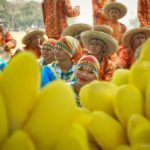
The Sine Sampaloc Film Festival becomes particularly vivid when the program leaves the formal screening space and reaches the roads of Sampaloc, Quezon. Among the

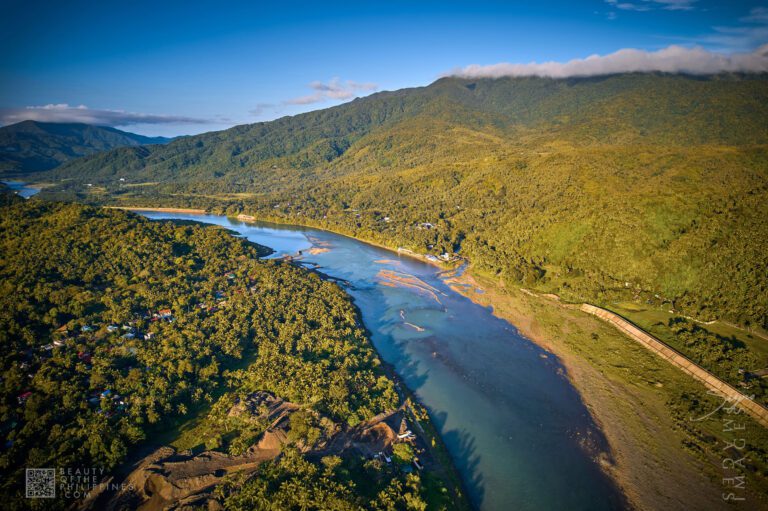
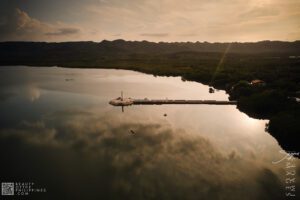
The first impression of Agos River in Barangay Banugao, Infanta, Quezon can be deceptively quiet. Early light settles over the water, the river current keeps moving between stones, and the surroundings can feel far removed from the pace of a conventional tourist attraction. Yet beneath that calm is a working landscape that has long been tied to food, farming, transportation, water management, settlement, and fishing.
The river originates in the Sierra Madre and moves through the lower landscape shared by Infanta and General Nakar before continuing toward the Pacific side of Quezon. Studies of the area describe old settlements along the Agos River, while the lower river basin has historically supported agriculture and other community activities. The provincial government also recognizes the wild Agos River among the natural attractions of Infanta, alongside places such as Pinlac Falls and Mt. Taronton. Regional tourism planning has identified portions of the river in Barangays Ilog and Banugao for activities including swimming, bamboo rafting, picnicking, and picture-taking.
But for a visitor interested in understanding the river rather than simply photographing its scenery, there is another story waiting in the shallows: pagtatain.
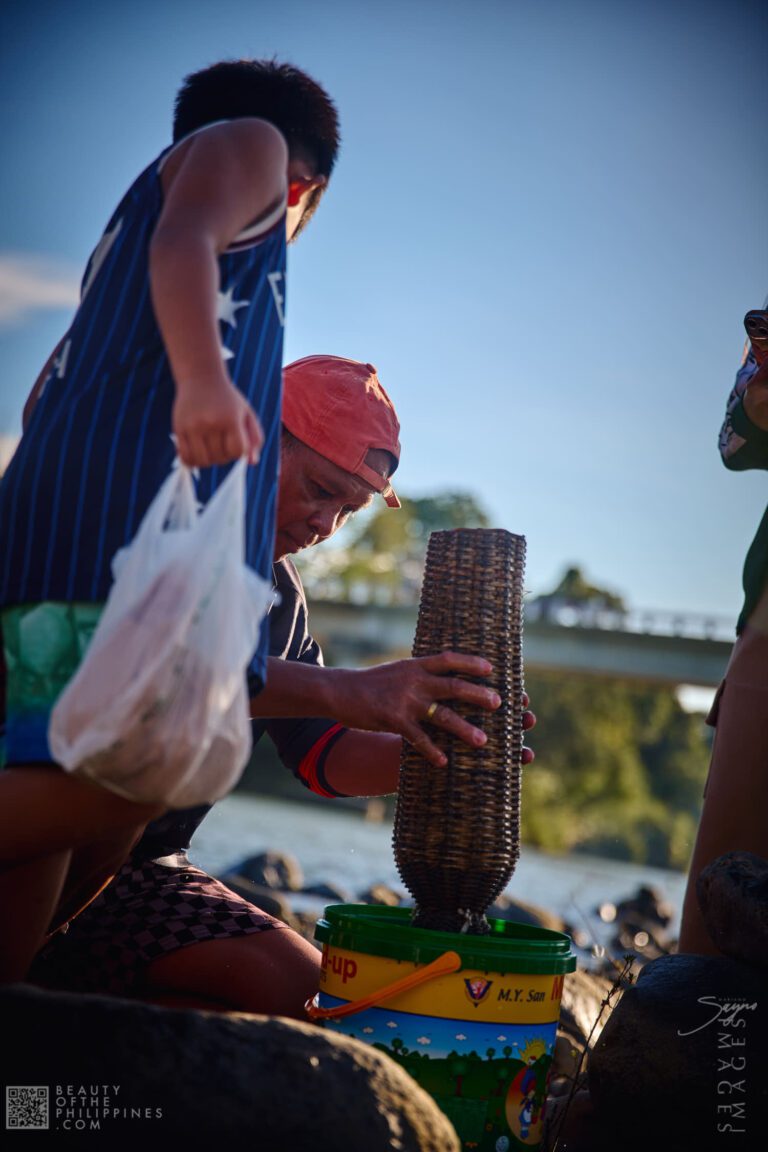
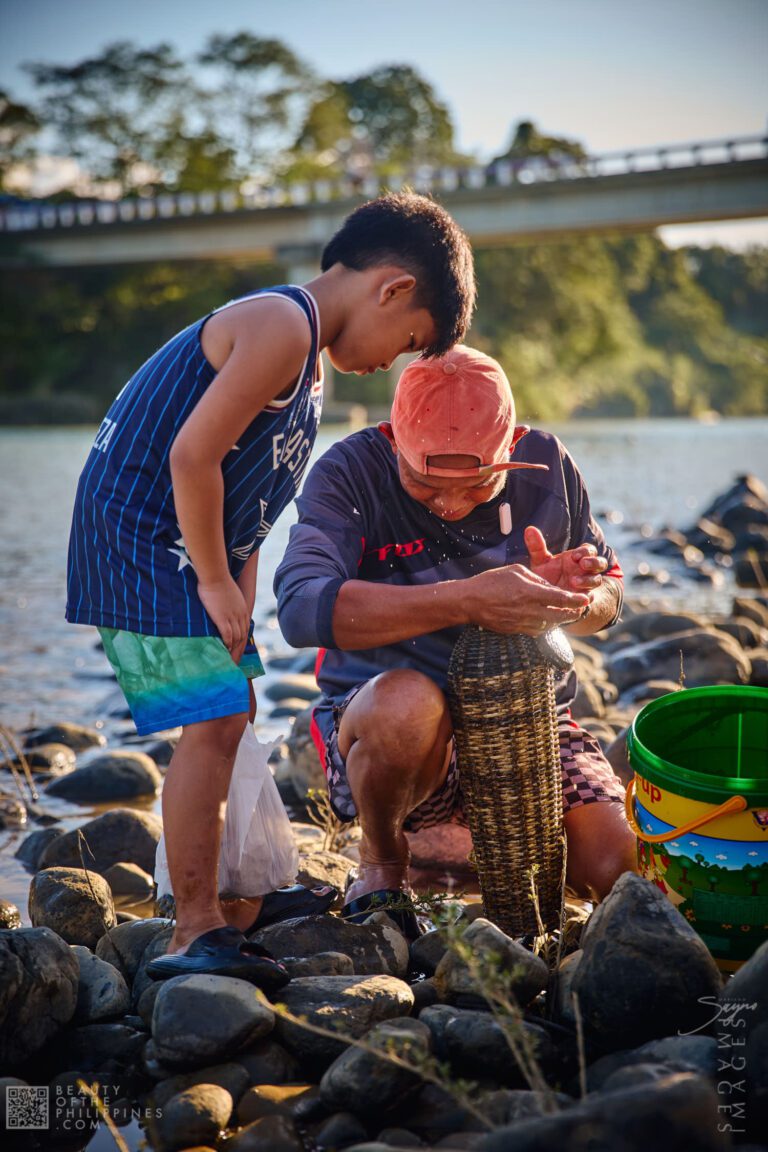
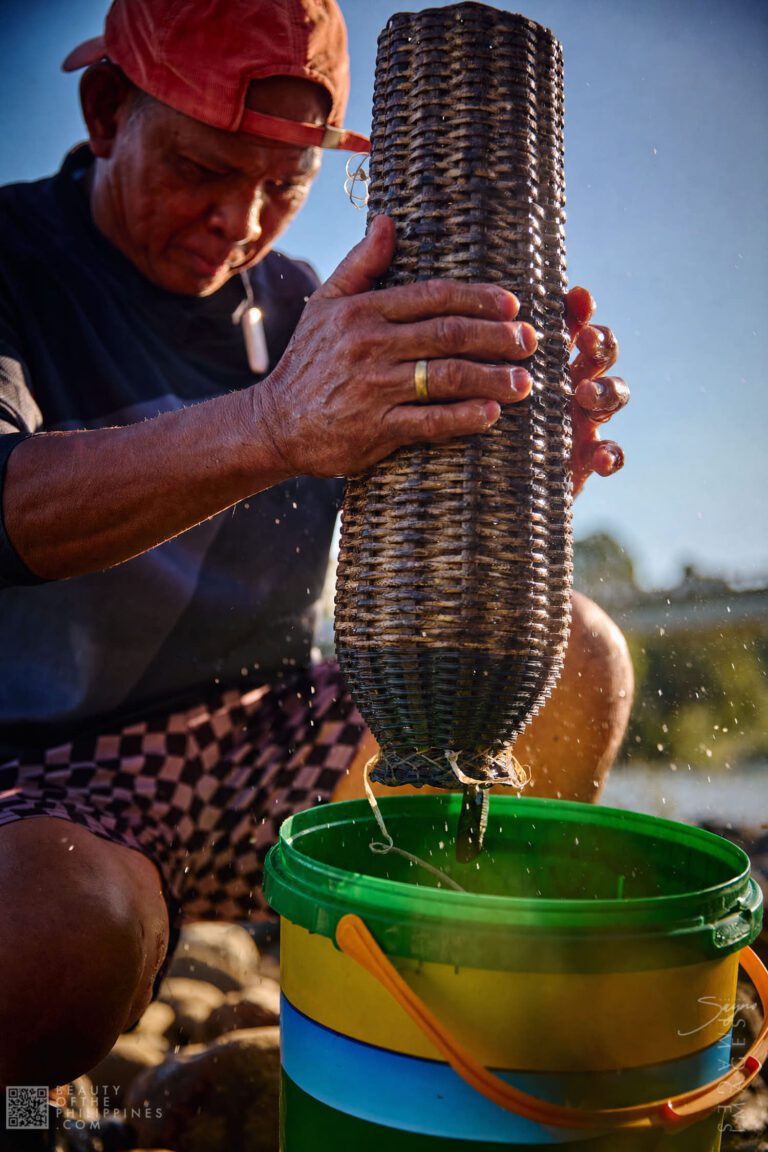
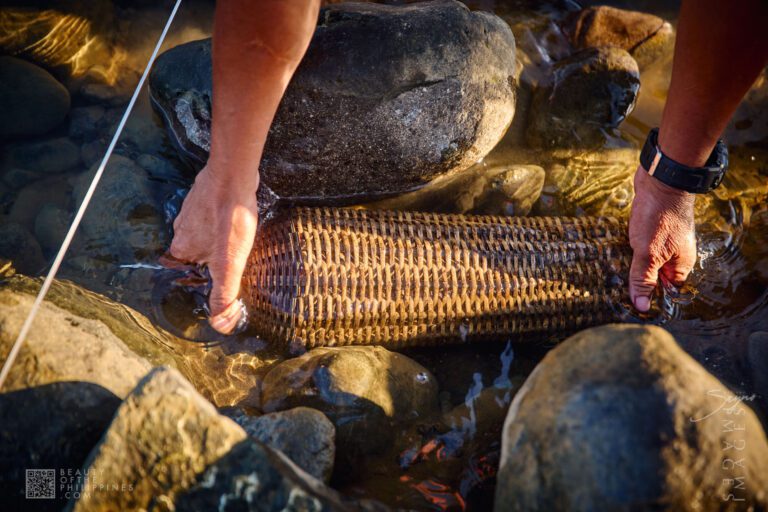
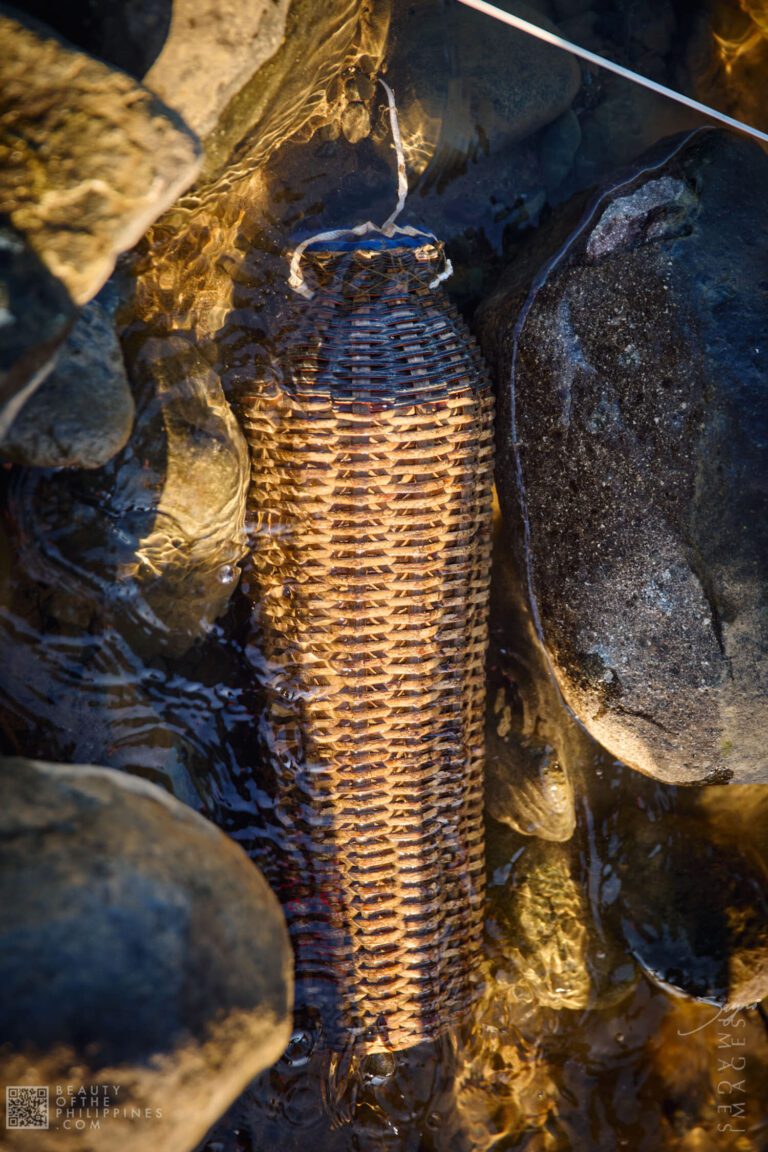
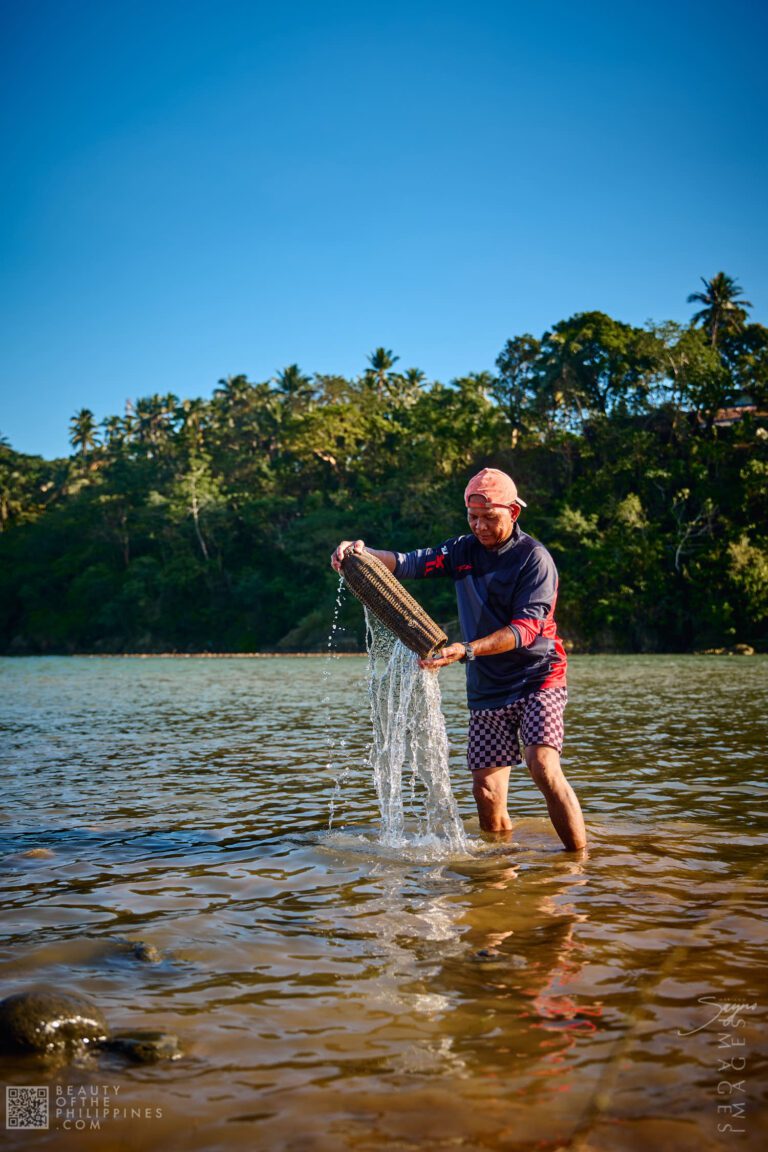
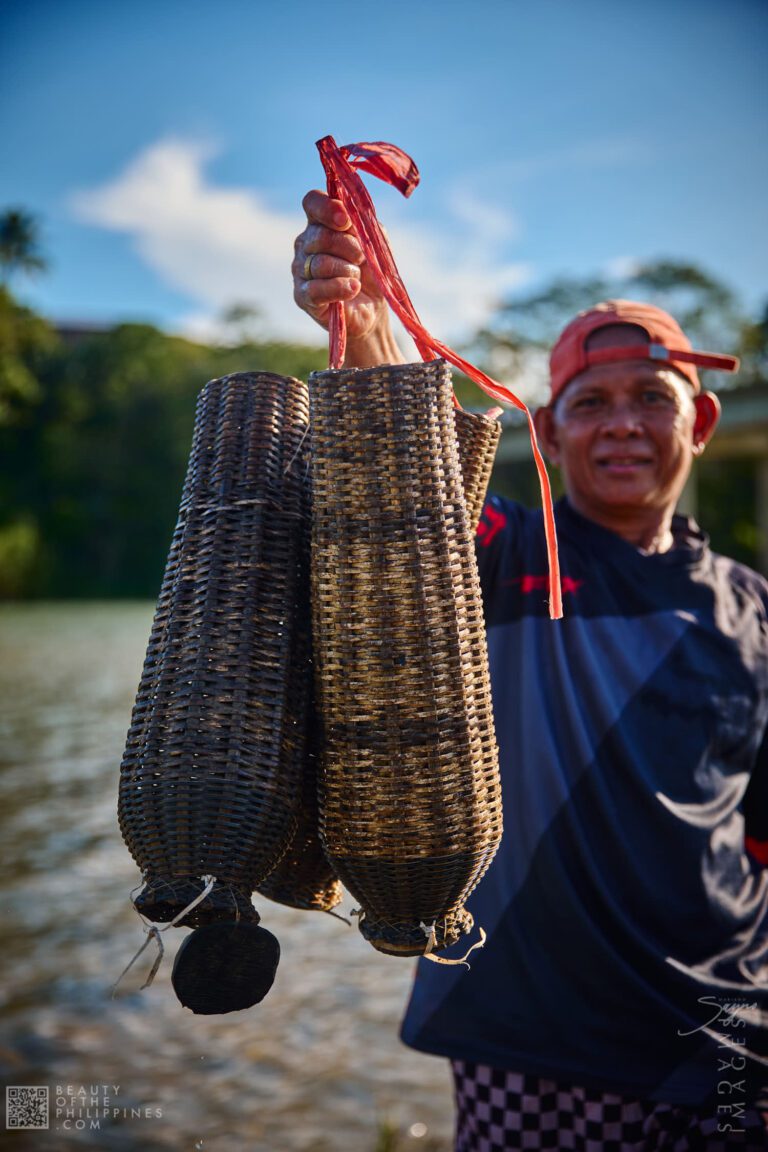
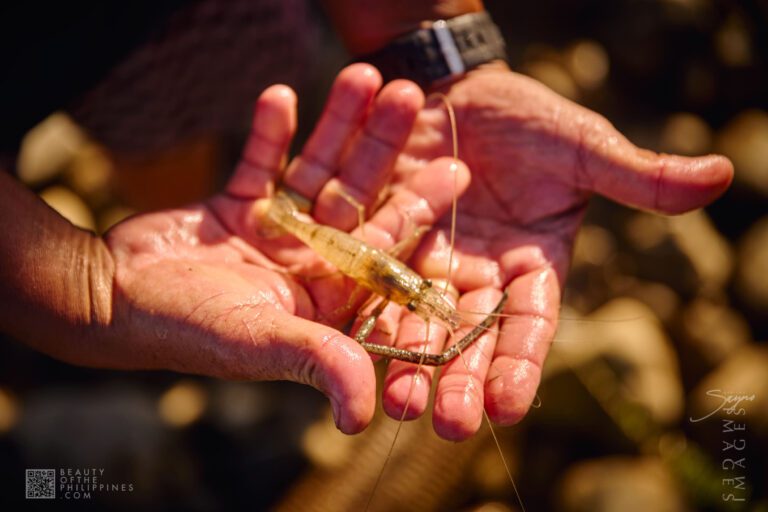
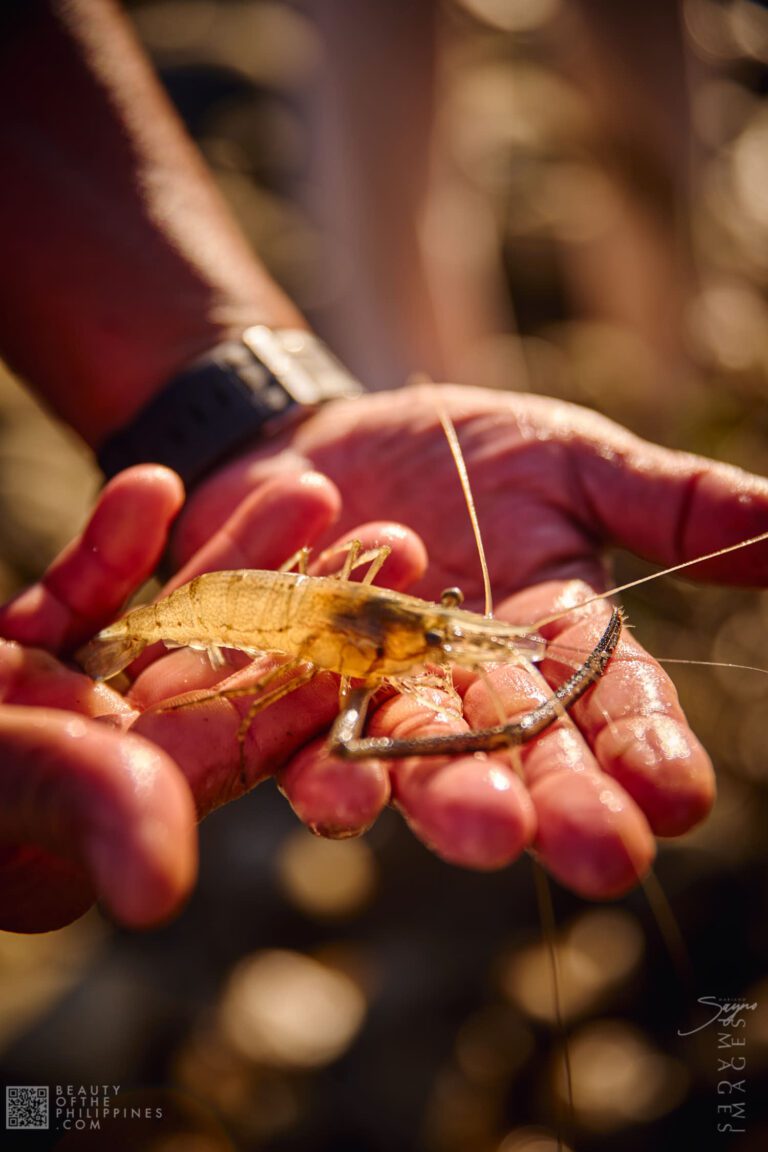
Pagtatain is a traditional fishing practice in which a small bamboo trap called a tain is positioned in the river to catch shrimp and other small aquatic animals. Documentation of the practice along Agos River describes the trap as a narrow, cylindrical structure made from hand-split bamboo strips. Rather than being thrown into the water or dragged behind a fisherman, it is carefully positioned among or beneath river stones, with its opening facing the direction of the current.
The arrangement may look uncomplicated when seen for the first time. A bamboo trap, a few stones, flowing water, and an overnight wait do not resemble the equipment-heavy side of modern fishing. Yet the simplicity of the tain should not be mistaken for simplicity in the knowledge behind it. Its placement depends on understanding the current, the riverbed, the stability of the stones, the movement of aquatic animals, and the right place to leave the trap.
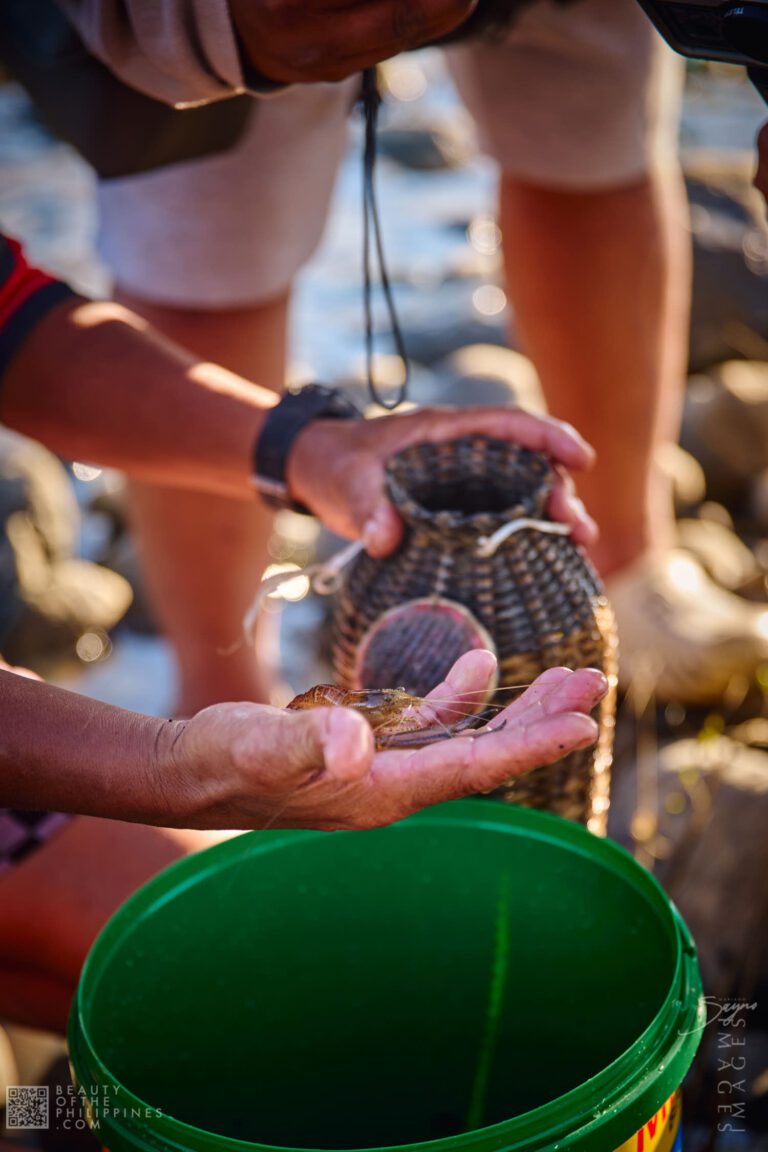
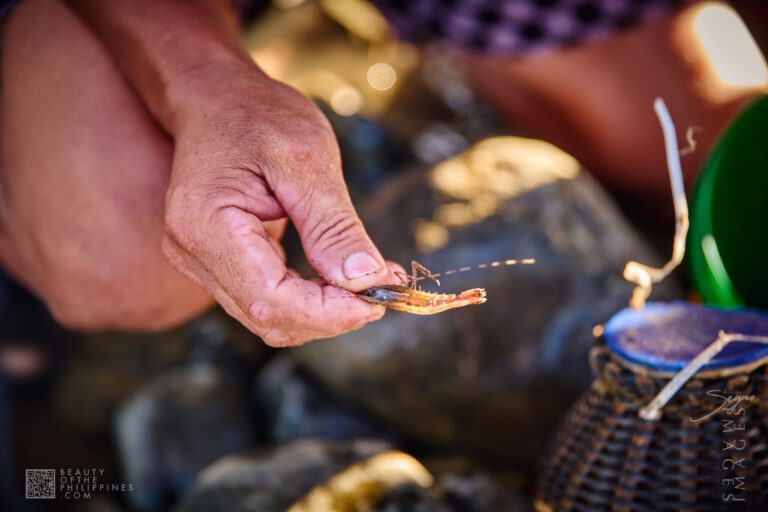
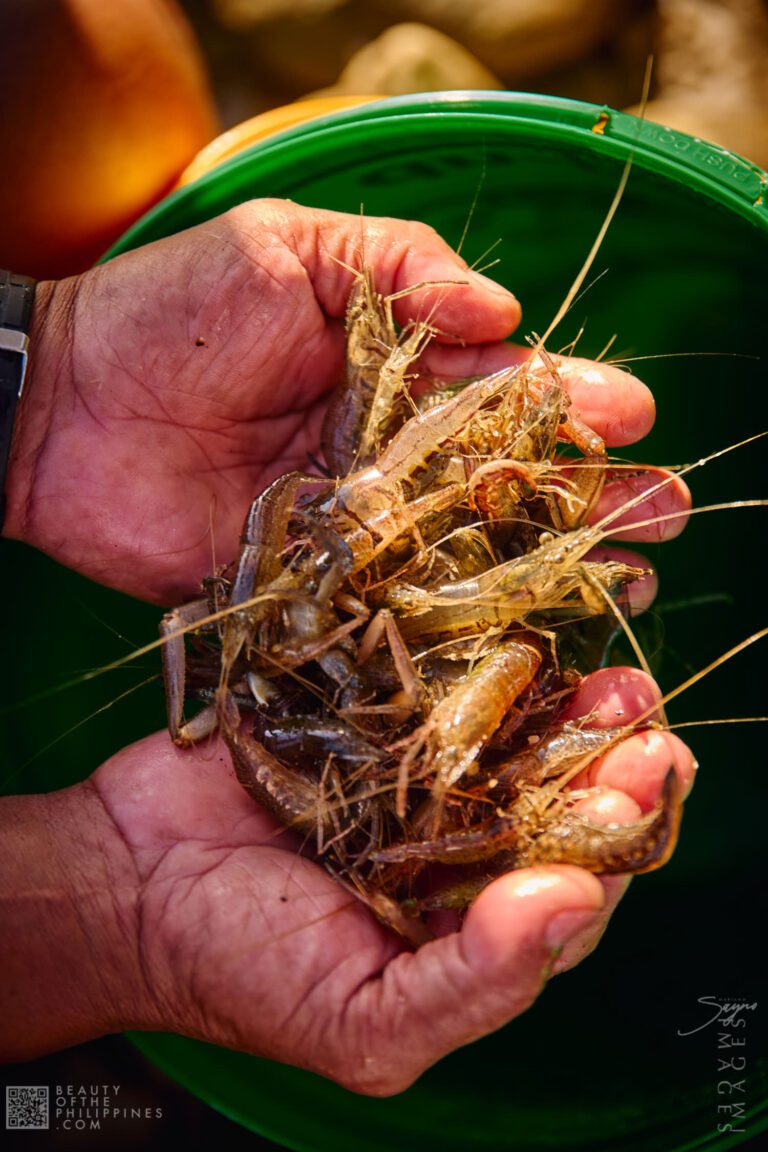
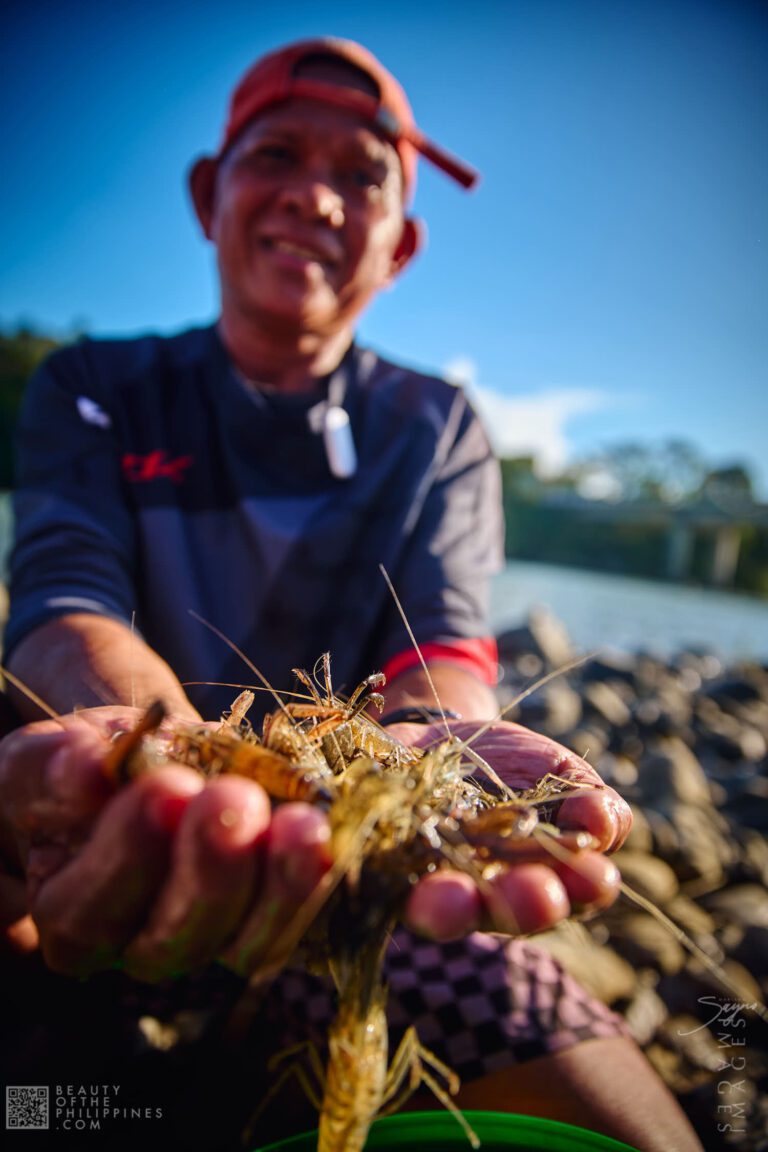
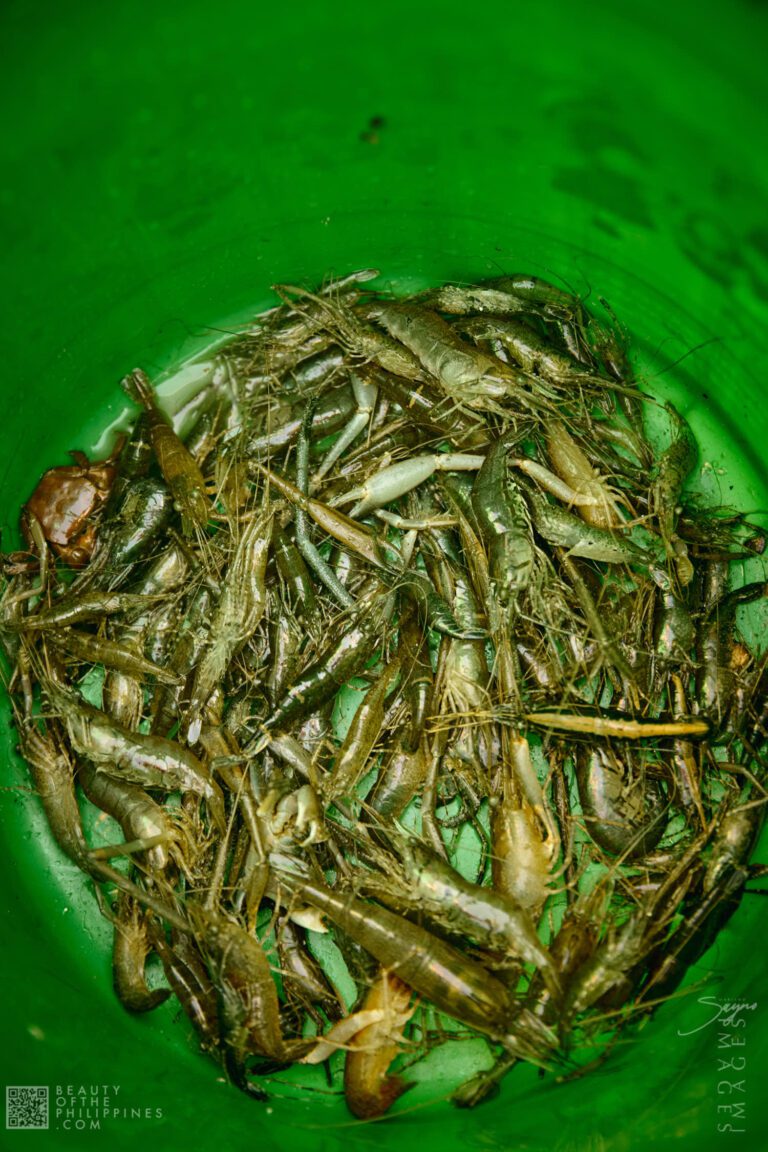
Once secured, the tain remains in the river overnight. By early morning, the fisherman returns to retrieve it and see what has entered the trap. Documented catches include river shrimp, small crabs, small fish, and occasionally eel. A separate account also describes common catches in the area such as freshwater shrimp, crayfish locally referred to as “taripis,” and eels.
The river is doing much of the visible work, but the fisherman has already made a series of decisions before leaving the trap behind.
That relationship with the current is what makes pagtatain particularly interesting as a cultural experience. The fisherman does not simply put a trap anywhere in the river and wait. The tain needs to be positioned so that its opening meets the incoming current, while surrounding stones help prevent the lightweight bamboo structure from being carried away.
Seen this way, the practice becomes a small lesson in traditional ecological knowledge. It involves water movement, riverbed conditions, timing, trap construction, and the behavior of river animals. The physical object may be made from a relatively simple material, but knowing where and how to place it requires familiarity with the landscape.
The bamboo itself also has a wider connection to the river environment. NIA CALABARZON launched an Integrated Water Resource Management Plan for the Agos River Irrigation System at Barangay Banugao in 2022, with streambank rehabilitation and bamboo planting among the measures associated with reducing soil erosion and protecting water quality and irrigation efficiency. The program proposed bamboo planting along sections of the river channel in Barangay Magsaysay. That does not establish that the bamboo used for individual tain traps comes from these rehabilitation projects, but it shows how bamboo has also become part of broader river-management efforts in the area.


The practice becomes more personal when it is demonstrated by someone who knows it firsthand.
Diosdado Astoveza is identified in the HAYINfanta Guided Tour material of the Infanta, Quezon Culture, Heritage, Arts, and Tourism Section (ICHATS) as a culture bearer or magtatain. The municipal tourism material specifically places a “Pagtatain demo at Agos River” within its guided-tour itinerary.
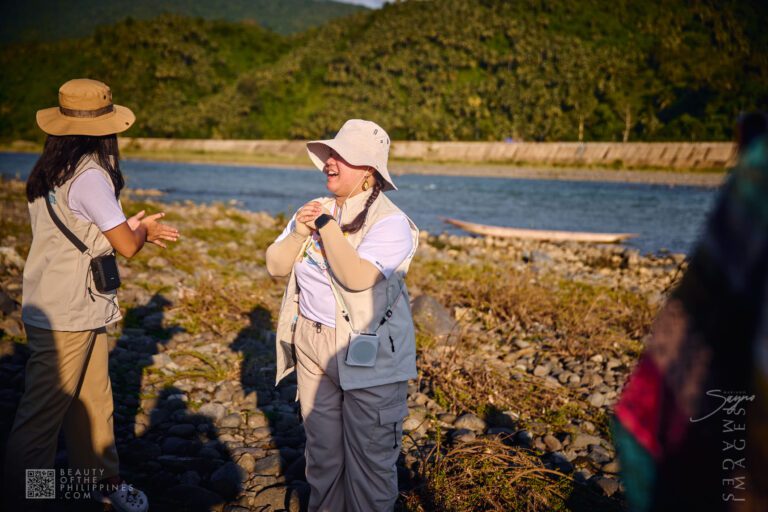
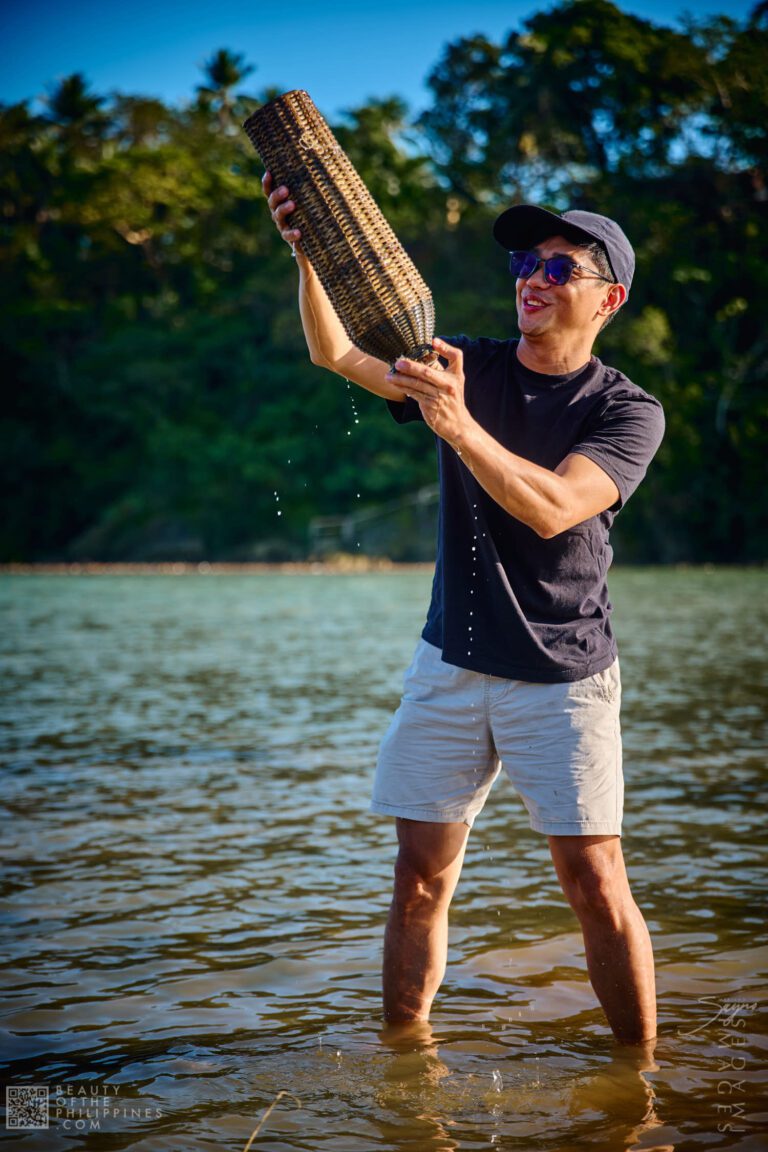
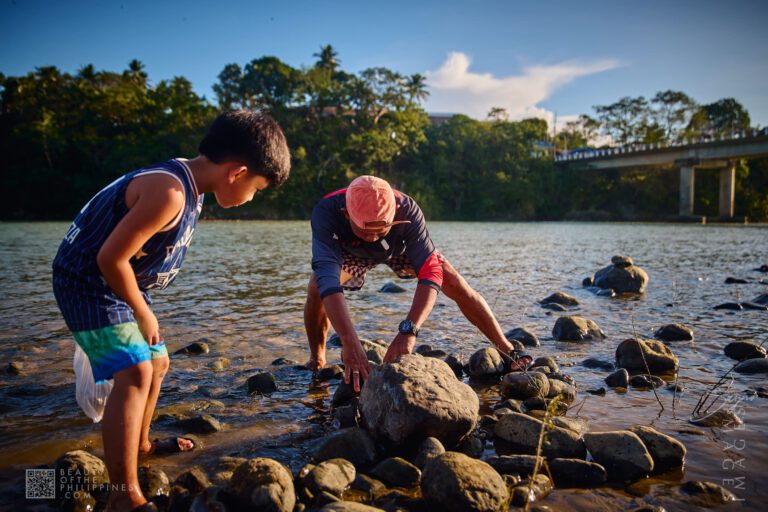
That role matters because pagtatain is easier to understand when it is shown rather than merely described. A visitor can watch the tain being positioned, see how stones are used to hold it in place, observe the direction of the current, and later see the trap retrieved and opened. The experience can even move beyond observation, with visitors given the opportunity to try the process themselves.
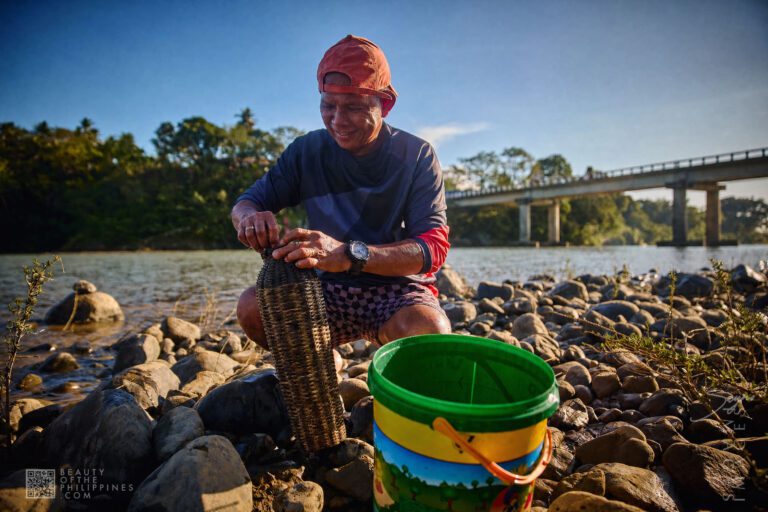
The field experience provided for this article captures that same character: during an early morning along Agos River in Barangay Banugao, Kuya Diosdado Astoveza shared how pagtatain is practiced and allowed the group to participate. What initially appears to be a simple way of catching food becomes more revealing once the fisherman explains the decisions behind it.
There is no need to assign an exact age to the practice or claim that every family along the river still uses it. The available evidence is stronger and more useful than an exaggerated origin story: pagtatain is a traditional local fishing practice that continues to be demonstrated and shared as part of Infanta’s experiential tourism.


The story of pagtatain does not end when the tain is lifted from the water. The catch connects the river directly to food.
A Pinas Sarap feature on Infanta has also presented the Agos River as a local source of shrimp and other river catch, including traditional bamboo traps that are set and left overnight. The program describes several locally recognized types of shrimp using descriptive local terms, including white-colored, long-clawed, small-headed, and egg-carrying shrimp. These descriptions are best treated as local classifications rather than scientific species names unless confirmed by a fisheries source.
That distinction is important. For a visitor, the value of the experience is not dependent on being able to attach a scientific name to every shrimp. What matters is seeing the connection between river, fisherman, trap, catch, and food.
Pagtatain therefore fits naturally within the slow rhythm promoted by HAYINfanta. Its guided-tour concept works around community interaction and the Slow Food travel framework, where residents can participate as guides, storytellers, drivers, and coaches during hands-on activities. The sequence is almost elemental: river, fisherman, bamboo trap, waiting, retrieval, catch, and eventually food.


The inclusion of pagtatain in HAYINfanta is significant because it places a local fishing practice inside a deliberately experiential tourism program. The published itinerary connects the Agos River and pagtatain demonstration with other cultural and natural experiences in Infanta, including the Old Spanish Church Ruins, Alitas Mangrove Eco Park, Moriones Farm, weaving activities, local food demonstrations, and the Infanta Pasalubong Center.
The program describes itself as community-based and experiential, with the natural environment serving as the setting for cultural, agricultural, and creative practices. Its two-day format also includes a chosen accommodation, while the day-tour package includes a guide, tourist tricycle driver, environmental user fee, and food inclusions. Those tourism-package details belong to the wider HAYINfanta program rather than the Banugao riverbank itself, so the pagtatain site should not be presented as a resort or accommodation facility.
That distinction helps keep the experience grounded. There may be places elsewhere in Infanta offering rooms, stays, and river amenities, but the attraction at Banugao is the activity itself—the chance to encounter a local practice beside the water.


RELATED STORIES


The Sine Sampaloc Film Festival becomes particularly vivid when the program leaves the formal screening space and reaches the roads of Sampaloc, Quezon. Among the


When you wander into the vibrant town of Lucban, Quezon, you can’t miss the aroma that defines its identity — the unmistakable, bold scent of


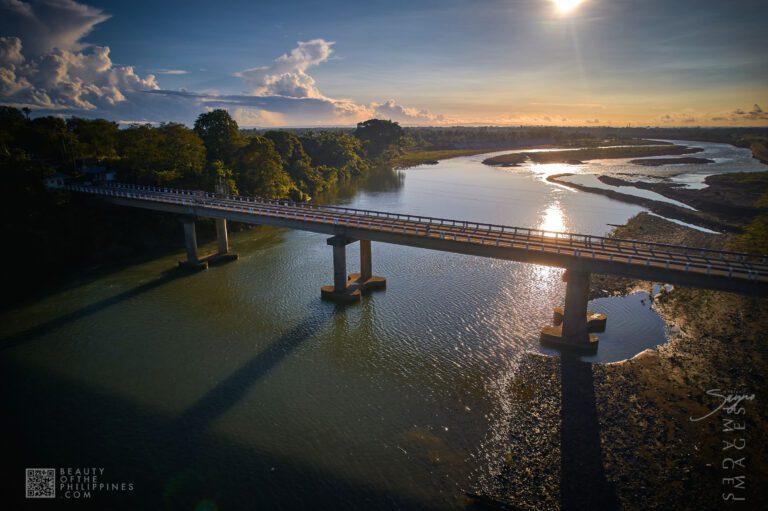
Beneath the Agos River Bridge in Barangay Banugao, the river takes on a different character in the early morning. The first light reaches the water,


Located in the heart of Dolores, Quezon, the Hambujan Festival is a vibrant celebration that embodies the town’s rich heritage and deep connection with nature.


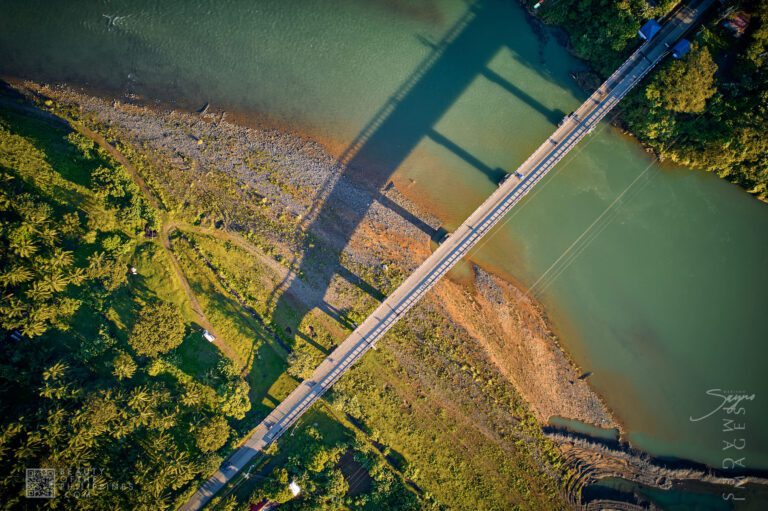
Banugao is not an arbitrary backdrop for pagtatain. The barangay forms part of Infanta’s riverine landscape, alongside other communities connected to the Agos River. Its relationship with the river extends beyond fishing.
The Agos River Irrigation System (Agos RIS) provides an agricultural connection, and government infrastructure programs have continued to support irrigation facilities in Infanta. Historical studies of the lower Agos basin also describe rice paddies, coconut fields, built-up areas, navigation, fisheries, and irrigation as interconnected parts of the landscape.
This makes the river better understood as a working landscape rather than an isolated scenic attraction. The same water that supports fishing also contributes to agriculture and irrigation, while the surrounding riverbanks have become subjects of environmental management.


There is another side to the river that a tourism story should not leave outside the frame.
In November 2022, the Municipality of Infanta adopted an ordinance recognizing the rights of the Agos River and Sierra Madre. The measure has been described as the Philippines’ first Rights of Nature ordinance, recognizing the river as a protected natural entity within the municipality.
That legal development gives additional meaning to the relationship between pagtatain and the river. The community depends on the water for food and livelihood, but the continued usefulness of that water depends on the health of the ecosystem itself.
River rehabilitation, irrigation management, fishing, food, and tourism are therefore not separate stories. They overlap in the same landscape.
The strongest image from pagtatain may not be the catch itself.
It may be the moment before the tain is opened, when the fisherman lifts the bamboo trap from the water and everyone waits to see what the river has left inside. The object is small enough to hold in the hands, yet it carries a much larger story about current, stones, timing, food, and knowledge.
That is what makes Agos River worth documenting through pagtatain. The river does not have to be reduced to a backdrop for a photograph. The tain brings attention back to the people who know the water, the food that comes from it, and the environment that makes the practice possible.
For travelers, the experience offers something different from simply stopping beside a river for a view. It asks for patience. It asks visitors to watch how a trap is positioned, listen to someone who knows the practice, understand why the current matters, and recognize that a traditional fishing method can also be a form of local environmental knowledge.
For Infanta, pagtatain gives the Agos River another way to be encountered—not simply as a place to visit, but as a living landscape where culture, food, livelihood, ecology, and tourism continue to meet.
I’m looking forward to the stories and images leaving a lasting positive impression on you, just as they have on me. Stay connected with us on social media for a weekly exploration of travel assignments and breathtaking visuals. Our focus is on championing local tourism, showcasing small businesses, and honoring the magnificence of the Philippines through the content we curate. Join us in spreading the word by clicking the ‘share’ buttons below. Your support means the world to us.
EXPLORE MORE about


Beneath the Agos River Bridge in Barangay Banugao, the river takes on a different character in the early morning. The first light reaches the water,


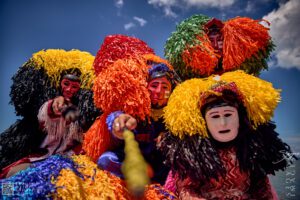
When most travelers picture the Moriones Festival, it’s the streets of Marinduque that come to mind. Yet the Bondoc Peninsula in Quezon Province has its


Every Holy Week, from Palm Sunday to Good Friday, the town of General Luna in Quezon transforms into a living stage of devotion and culture.


When people talk about ports in Quezon Province, the bigger and busier ones usually come to mind first. But further south, along the Bondoc Peninsula,


Pulong Pasig Sandbar, situated in the pristine coastal waters of Calauag, Quezon, is a breathtaking sandbar that emerges and disappears with the tides, offering an


Right in the heart of Lucban, Quezon, you’ll find the San Luis Obispo de Tolosa Parish Church, more commonly known as Lucban Church. This centuries-old


This celebration of the “Candle Festival” takes place from the 31st of January to the 2nd of February each year and is held in order


The Sine Sampaloc Film Festival becomes particularly vivid when the program leaves the formal screening space and reaches the roads of Sampaloc, Quezon. Among the

In General Luna, Quezon, Holy Week is far from ordinary. The town’s quiet streets transform into a tapestry of devotion and local artistry through the


For travelers exploring Quezon Province, few festivals rival the energy and creativity of the Boling-Boling Festival in Catanauan. Celebrated in the days leading up to


Within Tayabas City, a place more frequently identified by the commanding Minor Basilica of Saint Michael the Archangel, the lively Mayohan Festival, ancestral houses, and


Tucked along the Dumacaa River in Tayabas City, Malagonlong Bridge — or Puente de Malagonlong — is one of the Philippines’ oldest and longest stone


When you wander into the vibrant town of Lucban, Quezon, you can’t miss the aroma that defines its identity — the unmistakable, bold scent of

Gunao Lake, located in the charming town of Dolores in Quezon Province, remains a hidden treasure waiting to be discovered by adventurers seeking natural wonders.


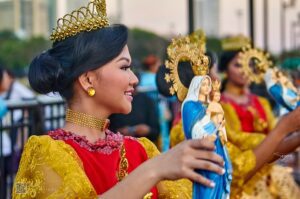
The strongest images from Sine Sampaloc Film Festival may not necessarily come from the film screenings themselves. In the interpretative-dance performances, the festival becomes something


At the heart of San Narciso town in Quezon, a modest but profoundly significant landmark rises — the San Narciso Church, officially named St. Joseph


Standing quietly at the center of town, Mulanay Church feels less like a monument and more like a steady presence. I noticed how time moves


Located in the town of San Narciso, Quezon Province, San Narciso Beach — or Talisay Beach as locals call it — stretches along the Philippine


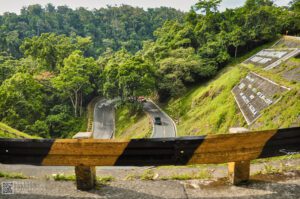
Quezon Zigzag Road, or Bitukang Manok, was constructed in 1969 during President Ferdinand Marcos’ administration. Engineers faced the challenge of traversing the rugged slopes of


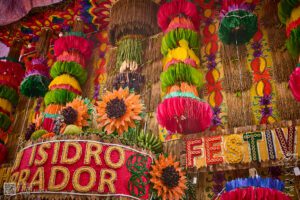
Every May 15, the charming town of Lucban, Quezon bursts into a dazzling display of colors, artistry, and cultural pride as it celebrates the Pahiyas


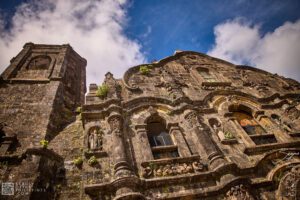
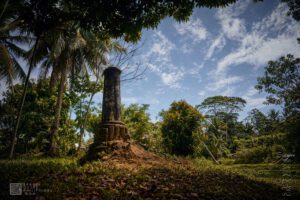
The first impression of the Infanta Old Church Ruins is less about scale than texture. What remains is a fragment of masonry rather than a


Every August, Quezon Province bursts with color, rhythm, and tradition as the Niyogyugan Festival takes over Lucena City. More than just a tribute to coconuts,


Finding A&J Cafe at J.P. Rizal Street corner E. Caparros Street in Barangay Pipisik, the space immediately communicates calm. Minimalist design, warm lighting, and an


Traveling along the Maharlika Highway in the heart of Sariaya, Quezon Province, you can’t help but notice the quiet elegance of Sariaya Church. Known formally


Hondagua is a barangay in the Municipality of Lopez, within Quezon Province, part of Region IV-A (CALABARZON) on Luzon island, Philippines. It lies directly along


The Candle Festival in Candelaria, Quezon, held from January 31 to February 5, 2026, celebrates devotion to Nuestra Señora de la Candelaria while highlighting community


This Christmas, Dolores shone as the creative heart of Quezon province. Paskotitap 2025 transformed the town into a radiant celebration of lights, movement, and storytelling—where


Every time I walk toward Siain Port, the first thing that hits me is the line of the pier itself—long, straight, and stretching into Lamon


Along the Edge of Lamon Bay I first approached Atimonan Port with the sea on one side and the steady traffic of the Maharlika Highway


Located in the heart of Dolores, Quezon, the Hambujan Festival is a vibrant celebration that embodies the town’s rich heritage and deep connection with nature.
Along Quezon Province’s eastern seaboard, Lamon Bay unfolds as a living tapestry of sea, sand, and human stories. Unlike the more visited Pacific-facing beaches of

A Familiar Figure Along the Road The Sirena ng Atimonan stands along the Pan-Philippine Highway, right by the shores of Lamon Bay in Barangay Angeles,

Every May 15, the charming town of Lucban, Quezon, bursts into a kaleidoscope of colors, music, and movement for the Pahiyas Festival, a grand celebration

BROWSE BY CATEGORIES
BROWSE BY PROVINCE