
BROWSE BY PROVINCE

Taal, Batangas
Panutsa Making in Taal, Batangas
A Closer Look at the Sweet Craft Behind One of Taal’s Beloved Local Delicacies
Share
Tweet
Email
EXPLORE Panutsa Making in Taal, Batangas

PUBLISHED October 21, 2026

PHOTOS | WORDS BY MARIANO SAYNO

  • Taal, Batangas
Panutsa making in Taal, Batangas offers a closer look at one of the town’s best-known local delicacies and the community traditions behind it. Made primarily from peanuts and caramelized sugar, panutsa is shaped into compact pieces or discs through a process that requires careful cooking, stirring, spreading, and molding. Barangay Seiran has long been associated with its production, while the Municipality of Taal also identifies Kawit, Laguile, and Latag among areas known for making the delicacy. Beyond its role as a pasalubong, panutsa forms part of Taal’s wider cultural identity and is featured among the products celebrated through El Pasubat Festival.
Explore the Philippines through my lens as we venture into Panutsa Making in Taal, Batangas with Point of View (POV) photography. Using a body cam, I’ll guide you on an interactive tour, revealing the behind-the-scenes of capturing the shots shared here. Let’s dive into this visual journey together and uncover the wonders through my lens!
Let’s explore the PHILIPPINES through my lens as we journey on a photo slideshow to Panutsa Making in Taal, Batangas. Join me in this visual adventure and discover the wonders captured through my lens! Check out the shared slideshow here.
A Sweet Tradition in Taal

In Taal, Batangas, some of the town’s most recognizable traditions can be found not only in its ancestral houses, churches, embroidery, and balisong-making, but also in its food. Among the local delicacies associated with the town is panutsa, a simple confection made by combining peanuts with caramelized sugar and shaping the mixture into compact pieces or discs. For visitors exploring Taal’s heritage and food culture, seeing how panutsa is prepared offers a different way of understanding the town—through a product that has long been made, sold, shared, and carried home as a local treat.

Check out the video for more highlights. See what I’ve captured through my lens with Point of View (POV) photography. Using a body cam, I’ll take you on an interactive tour, showing you behind-the-scenes moments of capturing the shots shared here.
Check out the video below for additional features. Explore what I’ve captured through my lens in this cinematic slideshow.
What Makes Taal Panutsa Distinct

Panutsa is commonly compared with peanut brittle because both rely on the combination of nuts and cooked sugar, but the Taal version has its own recognizable appearance and preparation style. Municipal tourism material describes it as a sweet, disc-shaped product, while earlier documentation of panutsa production in Taal shows makers using whole peanuts bound together with caramelized brown sugar and forming the mixture in molds of different sizes. The result can range from small, individually sized pieces to considerably larger rounds intended for sharing or pasalubong.


The ingredients may look uncomplicated, but the cooking requires attention. Sugar is dissolved and heated until it reaches the appropriate consistency before the peanuts are incorporated. The mixture is then cooked until sufficiently thick, transferred for shaping, and allowed to cool and firm up before being removed from its mold and wrapped. Actual cooking times, heat sources, mixing methods, and proportions can vary between producers, so the process should be understood as a traditional method rather than one fixed recipe followed by every panutsa maker in Taal.

The Tools Behind the Process

Part of the interest in traditional panutsa-making comes from the tools themselves. Documentation of production in Barangay Seiran has shown the use of molds for shaping the confection, while a more recent feature documented wooden molds and wooden implements used by a longtime producer in Taal. These tools are practical rather than decorative: they help workers portion, spread, shape, and handle the hot mixture before it hardens.


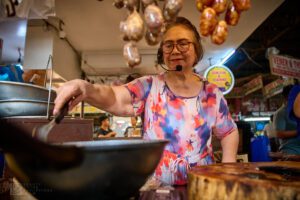
For anyone watching the process, the most visually distinctive moments occur when the hot sugar-and-peanut mixture is being stirred, transferred, spread, and shaped. The transformation is remarkably quick: a loose, bubbling mixture gradually becomes a dense confection capable of holding its form. The contrast between the dark caramelized sugar, pale peanuts, wooden implements, and finished rounds also makes panutsa-making a particularly strong subject for documentary-style photography.

Barangay Seiran and Taal’s Panutsa-Making Tradition

Barangay Seiran has been particularly associated with panutsa production in Taal. Historical material about the municipality specifically records panutsa-making in Seiran, while accounts of local production have also documented panutsa makers working there. The Municipality of Taal has additionally identified Seiran, Kawit, Laguile, and Latag among the barangays known for producing the delicacy, showing that the tradition is not confined to a single household or location within the municipality.


The continued presence of panutsa-making in Taal is also reflected in contemporary gastronomy tourism. In October 2026, a Department of Tourism Calabarzon familiarization tour in Batangas included Taal and featured local food traditions, including panutsa preparation, alongside visits to cultural landmarks and other local food experiences. This provides a useful indication that panutsa-making is being presented not merely as a product to purchase, but also as part of an experiential approach to discovering Taal’s culinary heritage.

More Than a Pasalubong

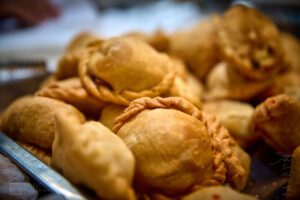
Panutsa is easy to understand as a pasalubong: it is compact, durable compared with many freshly prepared foods, and strongly associated with the place where it is made. Yet reducing it to a souvenir misses its larger role in Taal’s food identity. The delicacy appears alongside other products such as empanada, longganisa, suman, tapa, barong Tagalog, and balisong in the town’s tourism promotions and local celebrations.


That connection becomes especially visible during El Pasubat Festival, an annual celebration highlighting the products and traditions associated with Taal. The municipality describes El Pasubat as a showcase of the town’s trademarks, with panutsa forming part of the name alongside empanada, longganisa, suman, balisong, barong Tagalog, tapa, tamales, tawilis, and tulingan. For visitors, the festival provides a wider cultural setting in which panutsa can be understood alongside the other foods, crafts, and practices that contribute to Taal’s identity.

Seeing Panutsa-Making in Taal

A visit centered on Panutsa Making in Taal, Batangas is best approached as a cultural food experience rather than simply a search for a particular shop. Production takes place at the community level, and access to a working preparation area can depend on the maker, schedule, and prior coordination. Visitors interested in seeing the process should therefore confirm arrangements with the local tourism office, community contacts, or a local tour organizer before arriving rather than assuming that every panutsa-making household accepts walk-in visitors.


For visitors who do arrange a demonstration, the experience can be especially rewarding because the process reveals details that are easy to miss when buying the finished product. The sound and movement of the cooking, the heat around the work area, the changing consistency of the sugar mixture, the careful handling of the peanuts, and the final shaping all show how a familiar snack is produced through practiced handwork. The finished panutsa then becomes more than something brought home from Taal—it becomes a reminder of the people and process behind the delicacy.

RELATED STORIES

Taal Volcano: The Iconic Island-in-a-Lake Wonder

Rising dramatically from the serene waters of Taal Lake in Batangas Province, Taal Volcano immediately captures attention with its extraordinary configuration — a volcano on


Read More »

Taal Lake: Exploring Batangas’ Iconic Caldera Lake

Taal Lake, located in Batangas on Luzon, is one of the Philippines’ most remarkable natural landscapes. This freshwater lake occupies a vast volcanic caldera, shaped

Read More »

Taal Volcano: The Philippines’ Iconic Active Volcano

Let’s be real—when you think of volcanoes, you probably imagine something massive and far-flung, right? But here in the Philippines, just 50-ish kilometers from Metro

Read More »

Island Dreamer Resort: A Quiet Escape in Talisay, Batangas That Feels Like Home

Located in Barangay Caloocan, Talisay, Batangas—just a couple of hours’ drive from Metro Manila—is a quiet little spot that’s as unbothered as it is underrated:

Read More »
Panutsa Within Taal’s Heritage Landscape

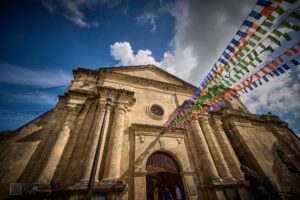
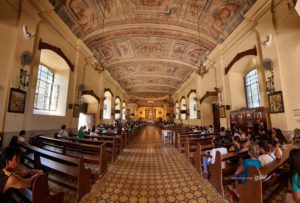
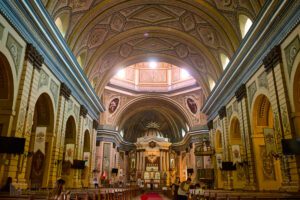
Panutsa-making also fits naturally into a broader visit around Taal. The municipality is widely promoted for its heritage architecture and cultural attractions, including the Basilica of St. Martin de Tours, the Taal Heritage Village, ancestral houses, museums, and other traditional industries. Pairing a food experience with these sites allows visitors to see that Taal’s heritage is not limited to preserved buildings; it also survives through products, skills, recipes, and livelihoods that continue to be practiced in the community.


The result is a more complete picture of Taal, Batangas. Its old houses and religious landmarks tell stories through architecture, while its embroidery, balisong-making, local dishes, and panutsa-making tell stories through skilled hands and everyday production. In this setting, a round piece of caramelized peanuts may appear modest compared with the town’s monumental structures, but it carries another kind of heritage—one that can be tasted, observed, photographed, and passed from one generation to the next.

A Small Sweet With a Long Local Story

For travelers exploring Taal beyond its famous landmarks, panutsa offers an opportunity to encounter the town at a more intimate scale. Watching the confection take shape from heated sugar and peanuts connects a familiar pasalubong to the people, tools, places, and working traditions that give it meaning. As of 2026, panutsa remains part of Taal’s recognized local-product identity and continues to appear within the town’s wider gastronomy and heritage-tourism story.

I’m looking forward to the stories and images leaving a lasting positive impression on you, just as they have on me. Stay connected with us on social media for a weekly exploration of travel assignments and breathtaking visuals. Our focus is on championing local tourism, showcasing small businesses, and honoring the magnificence of the Philippines through the content we curate. Join us in spreading the word by clicking the ‘share’ buttons below. Your support means the world to us.

BROWSE BY REGION
  • metro MANILA
  • abra
  • albay
  • baguio city
  • BATAAN
  • batangas
  • Benguet
  • bulacan
  • cagayan
  • cavite
  • cebu
  • cotabato
  • davao oriental
  • Guimaras
  • ilocos norte
  • ilocos sur
  • Iloilo
  • Isabela
  • laguna
  • lanao del norte
  • maguindanao
  • negros occidental
  • nueva vizcaya
  • palawan
  • Pampanga
  • pangasinan
  • QUEZON
  • rizal
  • Samar
  • sarangani
  • sorsogon
  • Tarlac
  • zambales
  • zamboanga city

EXPLORE MORE about

  • batangas

CaSoBe: Discover Calatagan’s Best-Kept Coastal Gem

You know that feeling when you just want to escape the city buzz and dive straight into a chill beach vibe? Well, Calatagan South Beach,

Read More »

Sigpawan Festival: Lemery’s Vibrant Easter Celebration of Bounty and Culture

Each year, the Sigpawan Festival, which is held in Lemery, Batangas, takes place on Easter Sunday. The highlight of the festival is the Fluvial procession

Read More »

Balai Isabel: Where Lakeside Calm Meets Adventure

If you’re craving that sweet spot where calm meets adventure—where you can sip coffee while staring at a volcano, then hop on a kayak right

Read More »

Tanauan Church: Spiritual Heart of Tanauan City

It was once a stone church, that was built during the Spanish colonial era in Tanauan, Batangas, and was known as Tanauan Church or St

Read More »

Taal Lake: Exploring Batangas’ Iconic Caldera Lake

Taal Lake, located in Batangas on Luzon, is one of the Philippines’ most remarkable natural landscapes. This freshwater lake occupies a vast volcanic caldera, shaped

Read More »

Tapang Taal: A Taste of Taal’s Pork Tapa Tradition

Tapang Taal is one of the culinary specialties that gives Taal, Batangas, a distinct food identity. Unlike the beef tapa commonly associated with Filipino breakfasts,

Read More »

Fantasy World: The Unfinished Kingdom of Batangas

The Fantasy World theme park sits alone and quietly in Lemery, Batangas Province, and is known as the supposed Disney World as well as one

Read More »

Burdang Taal: A Living Textile Heritage in the Historic Town of Taal, Batangas

In the historic town of Taal, Batangas, heritage can be found not only in centuries-old churches and ancestral houses but also in the fine details

Read More »

Lemery Beach: A Black-Sand Coast Along Balayan Bay

Lemery Beach offers a different kind of Batangas seaside experience. Rather than being defined by a single large resort complex or one tightly enclosed tourist

Read More »

Atcharang Calaca: A Taste of Calaca City’s Pickled Heritage

For visitors exploring Calaca City, Batangas, food offers one of the clearest ways to encounter the character of the community. Among the city’s most recognizable

Read More »

Balayan Bay: A Coastal Gem in Batangas Province

Among the many contributions of Balayan Bay that Batanguenos are proud of, the bay served as a fishing village and a summer retreat for locals

Read More »

Our Lady of Caysasay Shrine: A Sacred Treasure of Taal

Known as the Caysasay Church, the Shrine of Our Lady of Caysasay is located in Barrio Caysasay, Taal, Batangas. This is a coral-hewn chapel that

Read More »

Taal Volcano: The Philippines’ Iconic Active Volcano

Let’s be real—when you think of volcanoes, you probably imagine something massive and far-flung, right? But here in the Philippines, just 50-ish kilometers from Metro

Read More »

Taal Heritage Town: The Living Chronicle of Batangas

When exploring heritage towns in the Philippines, Taal in Batangas always stands out. Often overshadowed by Taal Lake and Taal Volcano, the town itself is

Read More »

Tingloy Island: Masasa, Sombrero, and Beyond

Tingloy is a unique municipality in Batangas Province, occupying Maricaban Island along with Caban Island and several smaller islets just south of the Calumpang Peninsula.

Read More »

Taal Basilica: Exploring the Philippines’ Largest Church

This Minor Basilica is canonically known as the Minor Basilica of Saint Martin of Tours and is located in the town of Taal, Batangas, within

Read More »

Island Dreamer Resort: A Quiet Escape in Talisay, Batangas That Feels Like Home

Located in Barangay Caloocan, Talisay, Batangas—just a couple of hours’ drive from Metro Manila—is a quiet little spot that’s as unbothered as it is underrated:

Read More »

Marcela Agoncillo Museum: Through the Home of the Woman Behind the Philippine Flag

The Marcela Agoncillo Museum, formally known as the Museo nina Marcela Mariño at Felipe Agoncillo, occupies the ancestral home of Marcela Mariño Agoncillo in Taal,

Read More »

Calaca Church: Discovering Calaca’s Heritage, Faith, and Enduring Church Traditions

At the heart of Calaca City, Batangas, the Archdiocesan Shrine and Parish of St. Raphael the Archangel stands as one of the city’s most important

Read More »

Nasugbu, Batangas: A Coastal Haven of Serenity and Adventure

The Nasugbu area has an extensive collection of beaches and snorkeling spots which make it a popular summer destination. There are numerous swimming-related activities and

Read More »

Sta. Lucia Miracle Well: A Sacred Spring in Taal, Batangas

Tucked away in the historic town of Taal, Batangas, the Sta. Lucia Miracle Well—locally known as Balon ng Sta. Lucia—is more than just a quiet,

Read More »

Calaca Church: Saint Raphael’s Sacred Home in Calaca

Calaca Church, formally the Saint Raphael the Archangel Parish Church, was established shortly after the founding of Calaca on May 10, 1835. By 1836, local

Read More »

Taal Basilica: A Grand Heritage Landmark at the Heart of Taal, Batangas

Taal Basilica stands at the heart of Taal Heritage Village in Batangas as both a monumental historic church and a living center of Catholic worship.

Read More »

Taal Empanada: Discover the Savory Local Specialty of Taal Public Market, Batangas

Taal Empanada is one of the local food specialties that gives Taal, Batangas its distinctive culinary character. Found among the food offerings associated with Taal

Read More »

Taal Volcano: The Island Within a Lake Within an Island

Standing before Taal Volcano, you quickly realize why it’s one of the Philippines’ most iconic natural landmarks. The sight of Volcano Island rising from the

Read More »

Laiya Beach: Your Quick Escape to Sun, Sand, and Saltwater Joy

If you’ve ever found yourself stuck in Metro traffic, daydreaming about the beach while scrolling through Instagram—Laiya Beach might just be the answer your soul’s

Read More »

Taal Lake: Discovering Batangas’ Iconic Natural Wonder 

Taal Lake, also simply known as Lake Taal, is one of the Philippines’ most unique natural features — a volcanic lake occupying the caldera of

Read More »

Taal Volcano: The Iconic Island-in-a-Lake Wonder

Rising dramatically from the serene waters of Taal Lake in Batangas Province, Taal Volcano immediately captures attention with its extraordinary configuration — a volcano on

Read More »

BROWSE BY CATEGORIES

LOCATIONS
PROVINCES

Abra

Albay

Baguio City

Bataan

Batangas

Benguet

BOTP Template

Bulacan

Cagayan

Cavite

Cebu

Cotabato

Davao Oriental

Guimaras

Ilocos Norte

Ilocos Sur

Iloilo

Isabela

Laguna

Lanao del Norte

Maguindanao

Manila

Negros Occidental

Nueva Vizcaya

Palawan

Pampanga

Pangasinan

Quezon

Rizal

Samar

Sarangani

Sorsogon

Tarlac

Zambales

Zamboanga City

ARCHITECTURE
HERITAGE

Bonifacio Monument Tutuban

Burdang Lumban Festival

Cagsawa Festival

Capones Lighthouse

Casa Manila

Christ the King Seminary

Corregidor Island Dark Tour Experience

Corregidor Island Reopens

Corregidor Island

Cultural Center of the Philippines

Fantasy World

Gabriela Silang Memorial Shrine

Gomburza National Monument

Hondagua

Iloilo Customs House

Intramuros

Jones Bridge

Jones Bridge

Kartilya ng Katipunan

La Loma Cemetery

LOAD MORE

CHURCHES
FAITH

Bacolor Church

Baguio Cathedral

Barasoain Church

Binondo Church

Calaca Church

Calumpit Church

Chong Hock Tong Temple

Feast of Black Nazarene

Greenbelt Chapel

Guadalupe Chapel Intramuros

Guadalupe Ruins Makati

La Naval de Manila

Las Piñas Bamboo Organ

Las Piñas Church

Lingayen Cathedral

Lubenas Festival

Lucban Church

Malate Church

Manila Abbey

Manila Cathedral

LOAD MORE

NATURAL & MAN-MADE
ATTRACTIONS

A&J Cafe

Agos River

Agos River

Alligator Lake

Amare La Cucina Baguio

Ambuklao Dam

Angeles City Holy Rosary Parish Church

Antipolo Cathedral

Apurawan Beach

Atcharang Calaca

Atimonan Port

Avilon Zoo

Azalea Hotels & Residences Baguio

Bagac Beach

Baguio Media Newseum

Balai Isabel

Balayan Bay

Baluarte de San Diego

Betis Church

Binondo Chinatown

LOAD MORE

FESTIVALS &
EVENTS

Al Cinco de Noviembre Festival

Ana Kalang Festival

Antipolo Maytime Festival

Balacat Festival

Balitok Ti Alicia Festival

Bañamos Festival

Bato Art Festival

Bato Art Festival

Boling-Boling Festival

Buhayani Festival

Burdang Lumban Festival

Candle Festival

Dinagyang Festival

Feast of Santo Niño

Gilingan Festival

Halamanan Festival

Hambujan Festival

Iloilo Dinagyang Festival

Inaul Festival

Itik Festival

LOAD MORE
Facebook Twitter Instagram Envelope

All photographs that appear on the site are copyright of Mariano Sayno ©2022 Beauty of the philippines

All photographs that appear on the site are copyright of Mariano Sayno ©2022 Beauty of the philippines.com

Beauty of the philipipnes LOGO WHITE

BROWSE BY PROVINCE

Abra

Albay

Baguio City

Bataan

Batangas

Benguet

BOTP Template

Bulacan

Cagayan

corregidor-island

Cavite

Cebu

Cotabato

Davao Oriental

Manggahan aFestival of Guimaras

Guimaras

Ilocos Norte

Ilocos Sur

dinagyang aliwan friesta husayno mariano sayno

Iloilo

Isabela

Laguna

Lanao del Norte

Maguindanao

Manila Bay by Mariano Sayno

Manila

Negros Occidental

Magat River Dupax Del Norte

Nueva Vizcaya

Palawan

Pampanga

Lingayen Cathedral

Pangasinan

Quezon

Rizal

Samar

Sarangani

Sorsogon

Tarlac

Zambales

Zamboanga City

Taal, Batangas, Philippines