
Balayan Bay: A Coastal Gem in Batangas Province
Among the many contributions of Balayan Bay that Batanguenos are proud of, the bay served as a fishing village and a summer retreat for locals

In the historic town of Taal, Batangas, heritage can be found not only in centuries-old churches and ancestral houses but also in the fine details of fabric worked carefully by hand. Burdang Taal, the traditional hand-embroidery craft associated with the town, remains one of the most distinctive expressions of Batangueño craftsmanship. Its delicate patterns, painstaking stitching, and connection to Filipino formal clothing make it an important part of Taal’s cultural identity. For visitors exploring Taal Heritage Village, the craft provides another way to understand the town—not simply through its architecture, but through the skills and livelihoods that have been passed from one generation to another.
Burdang Taal refers to the traditional art of hand embroidery practiced in Taal, particularly by generations of women who developed specialized skills in decorating fine fabrics. Historical accounts connect the craft’s development to the Spanish colonial period, when embroidery and lace-making traditions were introduced and subsequently adapted by local women. Over time, Taal became known for highly detailed needlework used for clothing, church-related textiles, household linens, and other finely decorated pieces. By the early twentieth century, Taal embroidery had already gained a reputation beyond the town, becoming part of a wider cottage-industry economy that provided income for families and especially for women working from home.
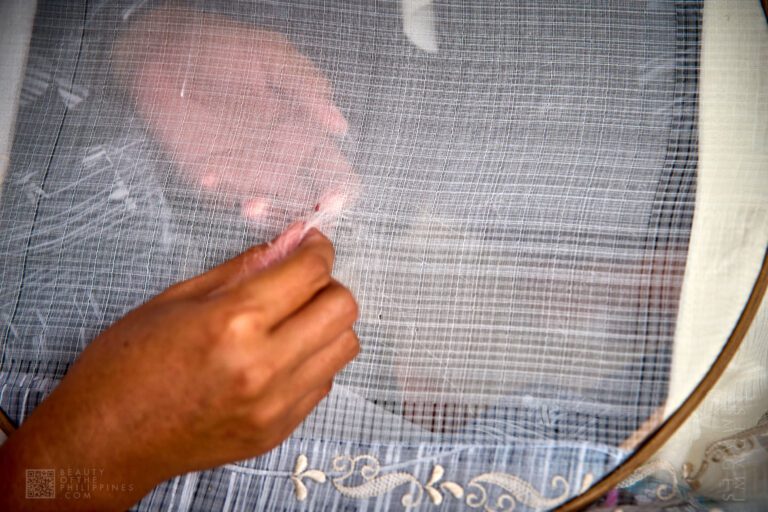
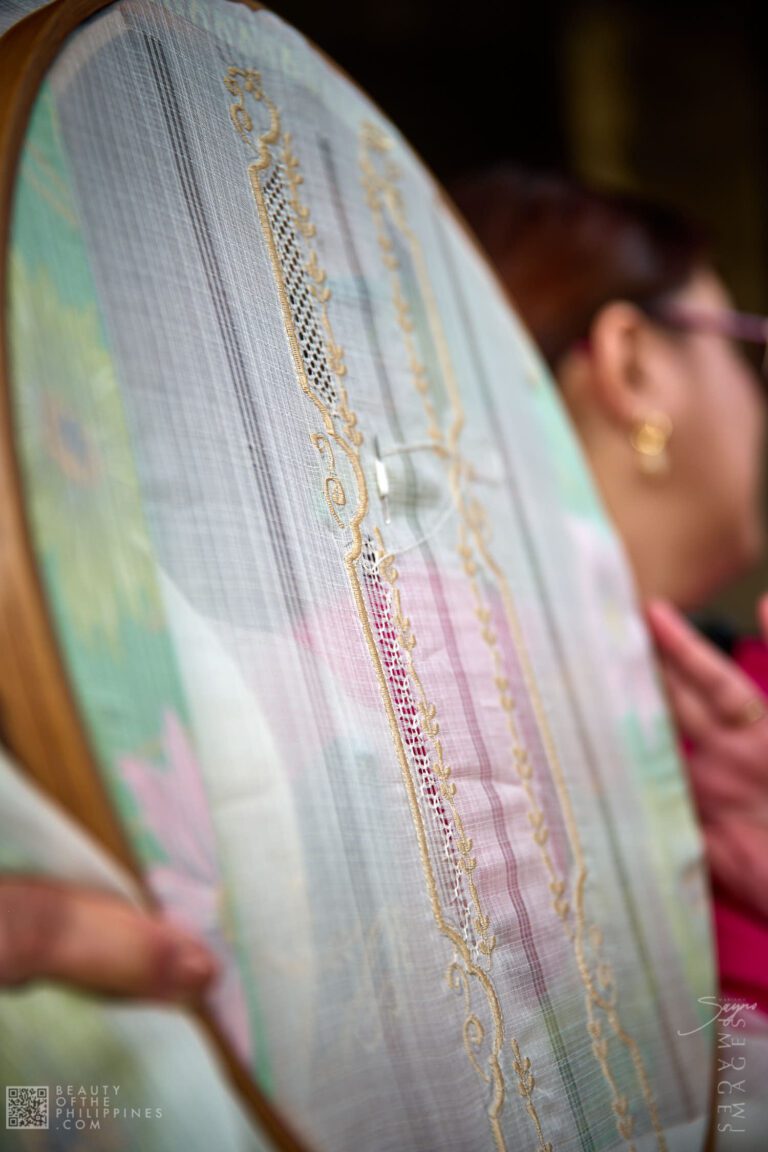
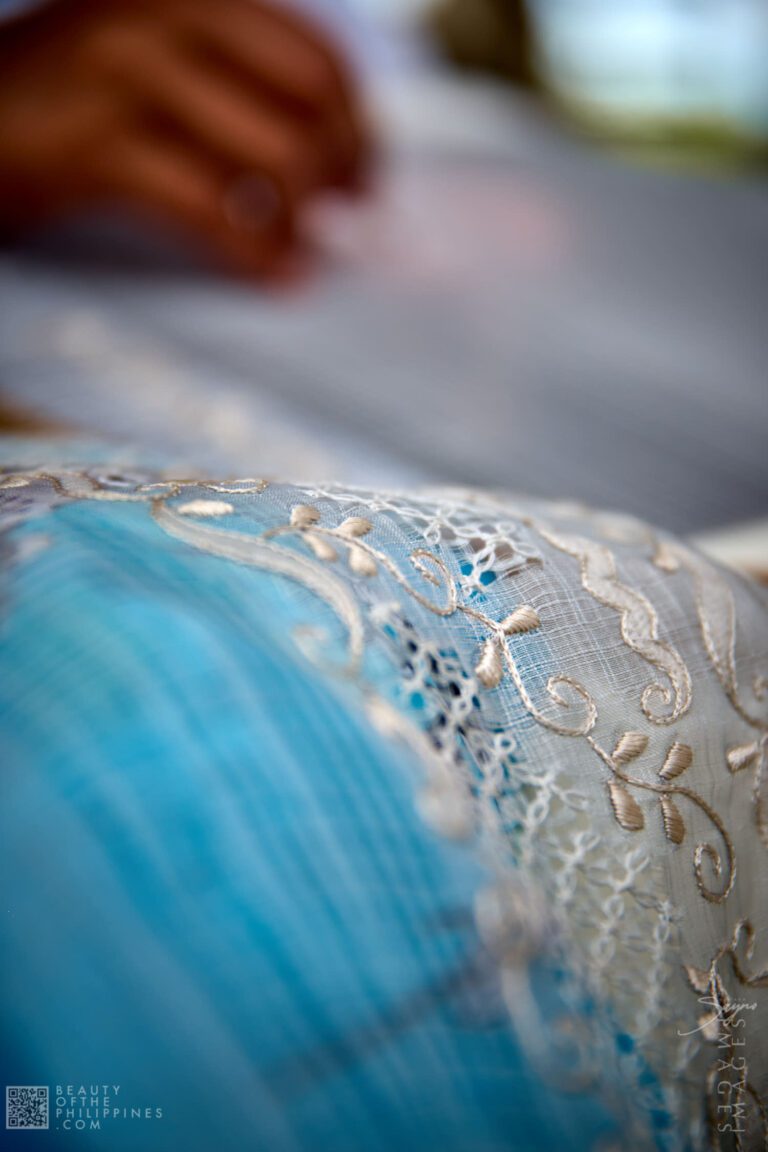
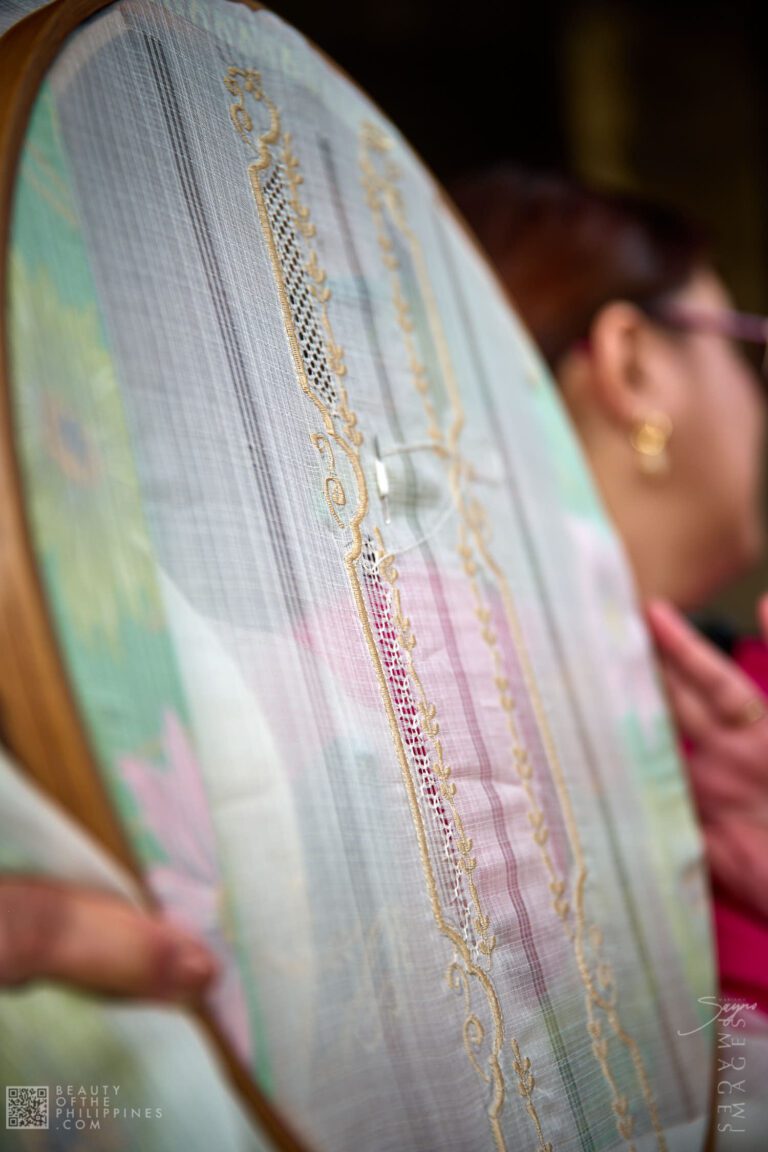
The craft is especially associated with delicate fabrics such as piña and jusi, although embroidery has also been applied to other textiles including cotton, linen, ramie, silk, and organza. Piña, made from pineapple leaf fiber, is particularly valued for its fine, translucent character, while jusi has traditionally provided another suitable surface for detailed embroidery. The resulting textiles have been incorporated into Barong Tagalog, Filipiniana gowns, wedding attire, accessories, table linens, altar cloths, and other formal or decorative pieces.
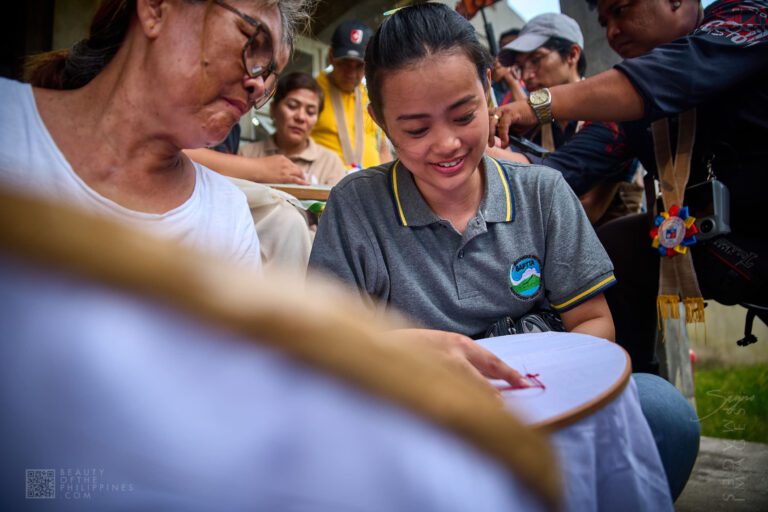
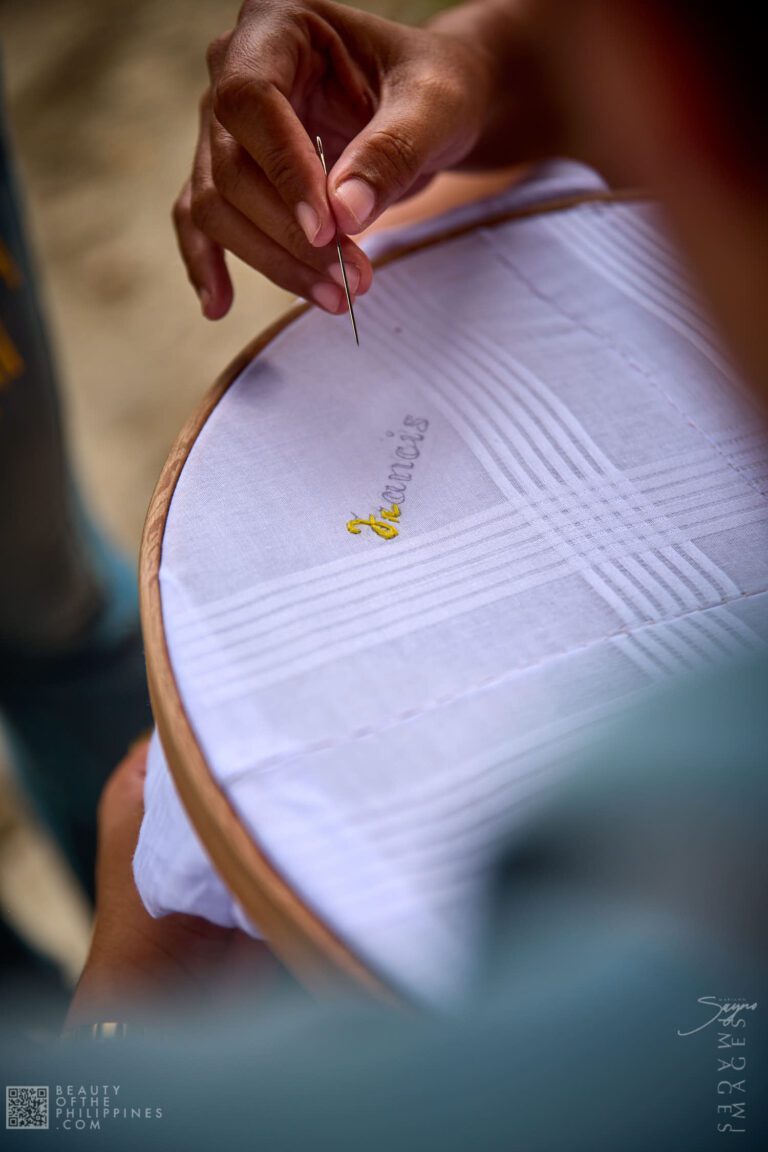
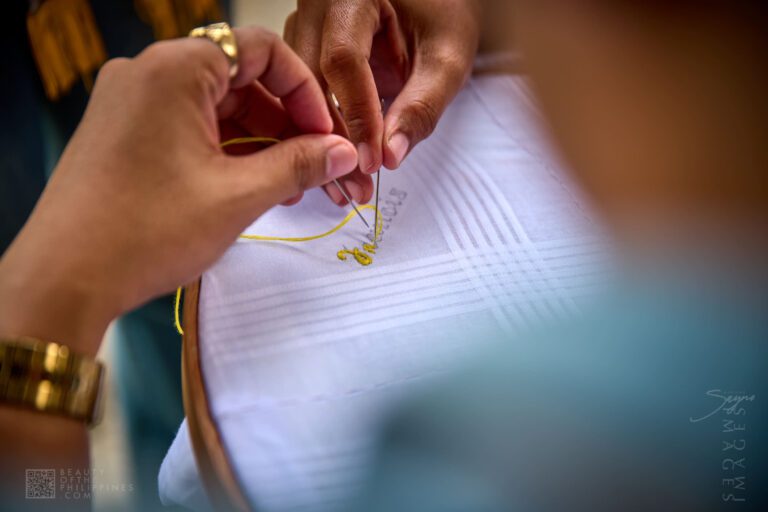
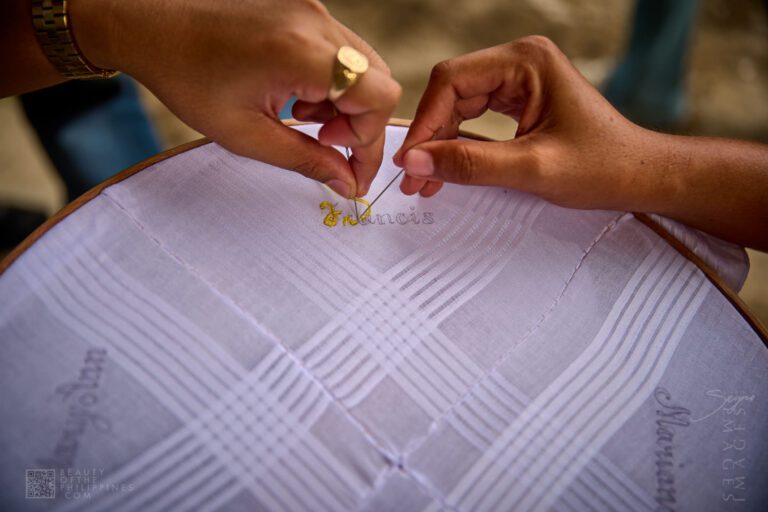
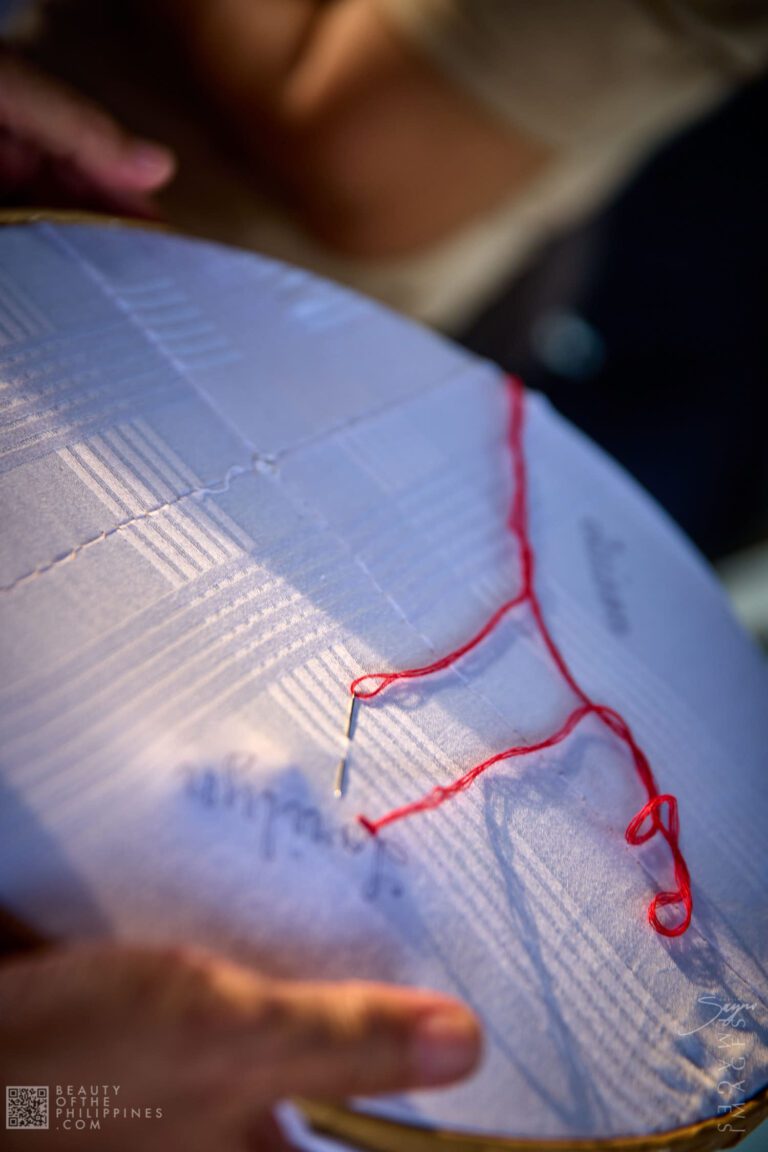
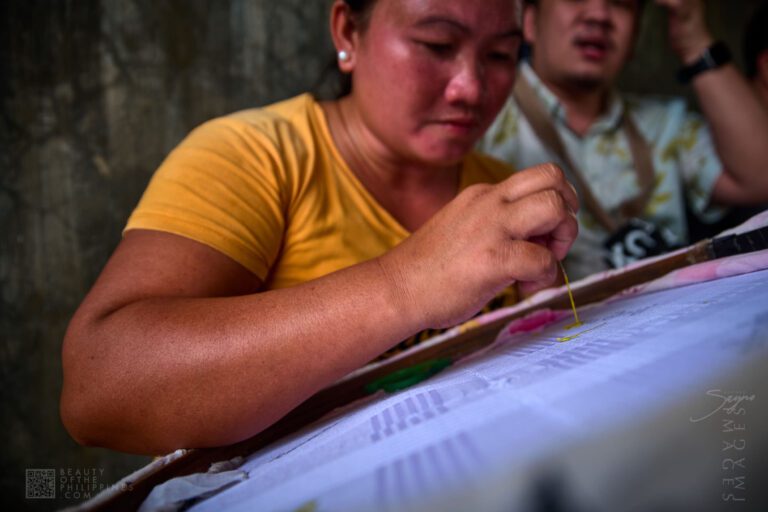
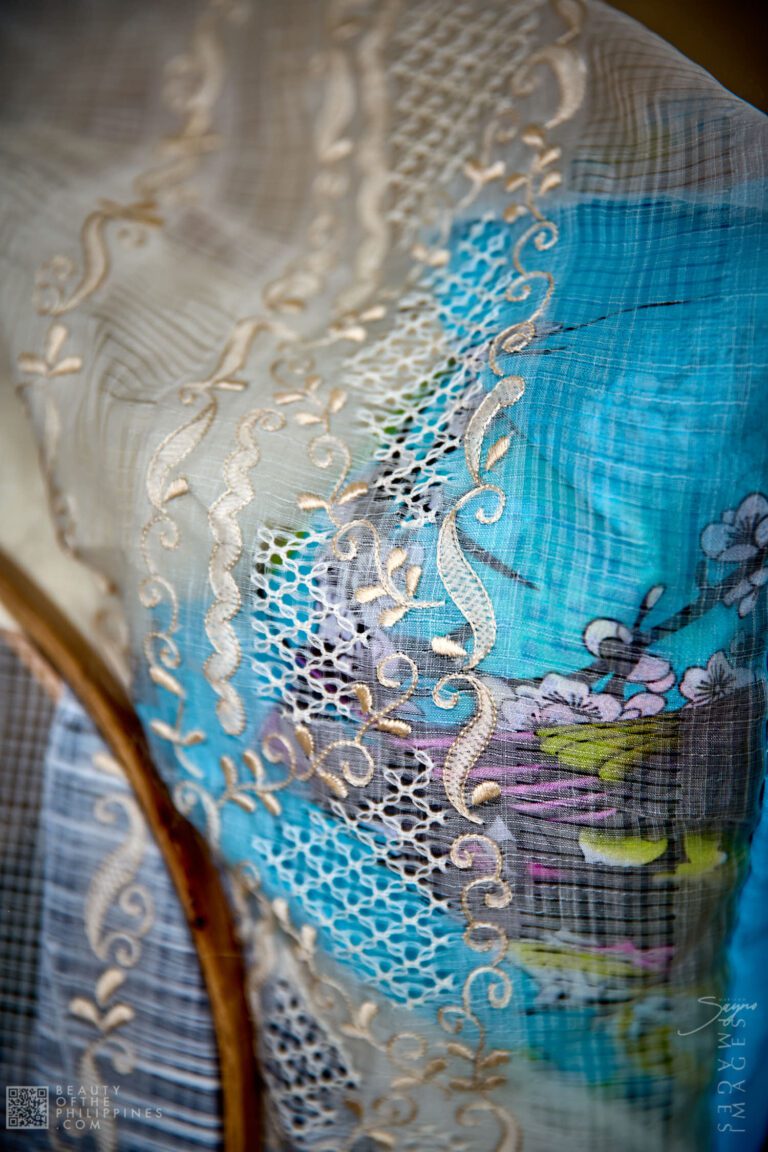
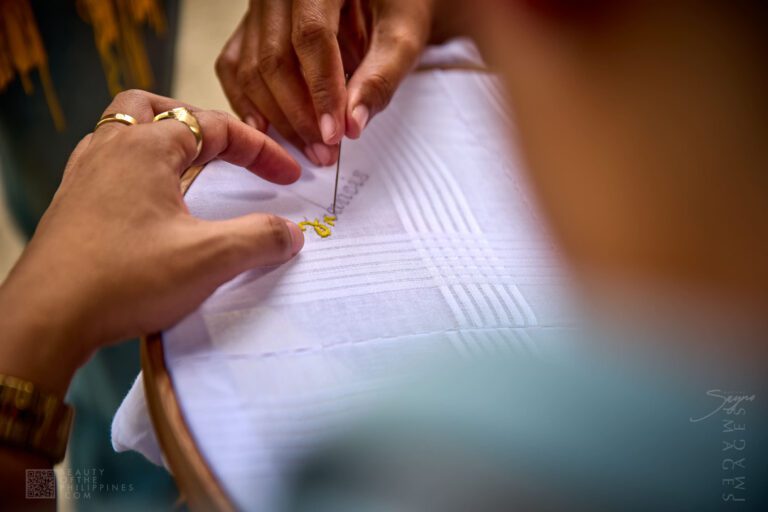
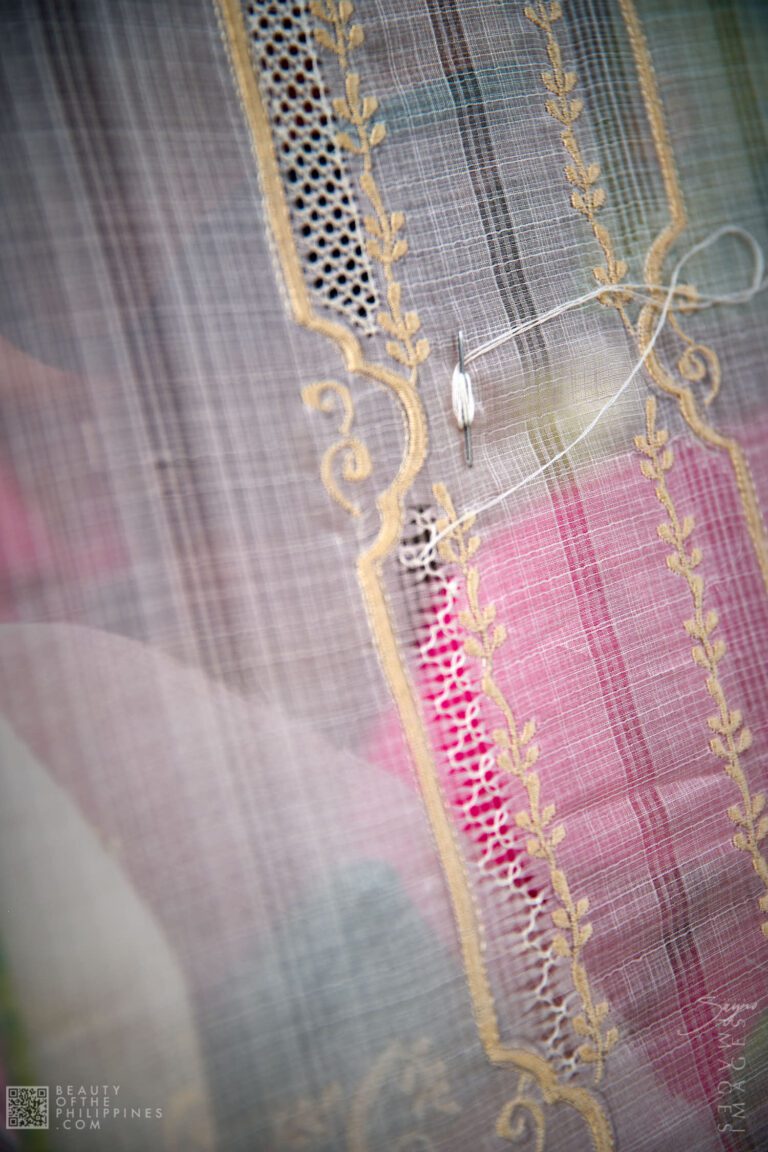
The beauty of Burdang Taal becomes easier to appreciate when the work itself is understood. A piece begins with the preparation of the fabric and the design, followed by the careful stretching of the textile on a bastidor, a wooden embroidery frame that helps keep delicate material stable. The embroiderer then works through fine stitches and decorative details by hand. Some traditional pieces also incorporate callado, a form of openwork or drawn-thread embroidery that creates a lace-like effect by carefully manipulating the threads of the fabric. The result is an intricate surface in which floral, leaf, geometric, and repeating patterns can appear remarkably precise despite being produced through painstaking manual work.
The patterns of Burdang Taal are more than decorative additions. A study by researchers from the University of Batangas examined 124 embroidery samples and found recurring symmetrical structures and frieze patterns across Barong Tagalog and other embroidered objects. This offers another perspective on the craft: behind its delicate appearance is a sophisticated visual system in which repeated motifs, balance, and geometric transformation contribute to the character of Taal embroidery.
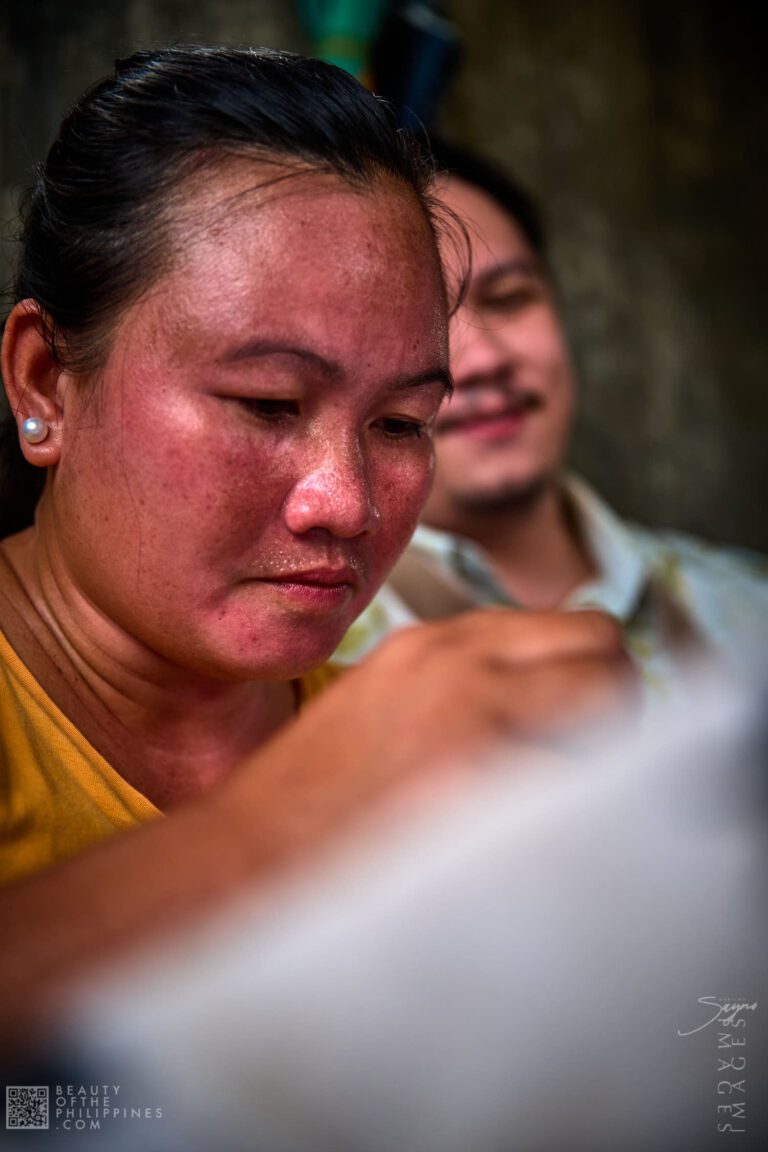
For generations, embroidery was closely tied to household life in Taal. Women could work on pieces from their homes while contributing to family income, and knowledge was commonly transferred through observation, demonstration, and practice within families. Older accounts describe embroidery as an important livelihood as well as a form of artistic expression, with finished work reaching customers outside Taal. This relationship between craft and domestic livelihood helped make Burdang Taal part of the social history of the town rather than simply a souvenir or decorative product.
The craft also became closely associated with some of the garments most strongly identified with Filipino formalwear. Taal’s embroidered Barong Tagalog and gowns helped establish the town’s reputation as a place where finely worked clothing could be commissioned or purchased. Local tourism materials continue to list Barong Tagalog and Burdang Taal among Taal’s notable products, placing embroidery alongside other well-known expressions of the town’s culinary and artisanal identity.
RELATED STORIES

Among the many contributions of Balayan Bay that Batanguenos are proud of, the bay served as a fishing village and a summer retreat for locals


Tucked away in the historic town of Taal, Batangas, the Sta. Lucia Miracle Well—locally known as Balon ng Sta. Lucia—is more than just a quiet,


For visitors exploring Calaca City, Batangas, food offers one of the clearest ways to encounter the character of the community. Among the city’s most recognizable


Taal Lake, located in Batangas on Luzon, is one of the Philippines’ most remarkable natural landscapes. This freshwater lake occupies a vast volcanic caldera, shaped


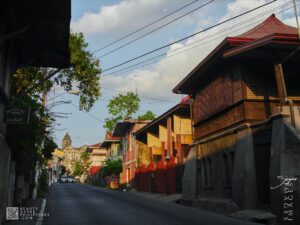
For visitors, the relationship between Burdang Taal and Taal Heritage Village is best understood as part of a larger cultural landscape. The heritage area is recognized for its concentration of historic structures, ancestral houses, religious landmarks, and other reminders of Taal’s past, while embroidery represents a living tradition that continues beyond the walls of those heritage buildings. A walk through the town therefore offers two connected experiences: the preserved physical environment of historic Taal and the continuing craft traditions practiced by its residents.
The craft has also been associated with particular communities within Taal. Cultural heritage documentation identifies areas including Buli, Cubamba, Tulo, and Apacay among places where Burdang Taal has been practiced. Other historical accounts have identified embroidery activity in additional parts of the municipality, illustrating that the tradition belongs to a broader community network rather than a single shop, museum, or tourist attraction.


One of the most meaningful ways to encounter Burdang Taal is to see the difference between machine-produced embroidery and genuine handwork. Hand embroidery requires considerably more time and attention, with artisans manipulating fine thread and fabric one section at a time. The small variations that appear from hand to hand are part of the character of the work, while intricate details such as openwork and fine floral patterns can reveal the amount of labor involved. For visitors purchasing embroidered clothing or fabric, asking about the maker, technique, and material can provide a clearer understanding of what they are buying.
For photographers and visitors documenting the craft, the embroidery itself offers details that can easily be missed from a distance. A close view of the bastidor, the needlework, the repeating motifs, or the transparency of a fine piña textile can show the labor behind a finished garment. At the same time, photographing artisans should be approached respectfully, particularly when working inside homes, workshops, or other spaces where embroidery is part of everyday livelihood rather than a staged attraction.


Burdang Taal remains a living craft, but its continuation cannot be taken for granted. Earlier reports already described declining demand, fewer embroiderers, modernization, and competition from machine-produced garments as major challenges. More recent reporting in 2026 shows that these pressures remain relevant, with practitioners calling for more opportunities for younger people to learn the craft and for stronger support that can connect embroidery with sustainable livelihoods.
There have also been efforts to give the tradition a more viable place in contemporary economic life. In 2023, the Department of Trade and Industry–Batangas and the Municipality of Taal launched a Shared Service Facility for embroidery at the Taal Convention Center, providing access to computerized embroidery equipment while aiming to rejuvenate the local industry and support livelihoods. Provincial tourism initiatives have likewise continued to feature Burdang Taal alongside other Batangas textile traditions, demonstrating that the craft remains part of the province’s broader cultural-tourism agenda.


A visit to Taal Heritage Village can easily begin with architecture—the old houses, churches, streets, and landmarks that give the town its historic character—but Burdang Taal adds another layer to the experience. It reveals how heritage survives through skills practiced by people, not only through structures preserved from the past. The embroidered fabric, the tools of the burdadera, and the patience required to complete a piece all tell a quieter story about Taal’s history and the people who continue to carry it.
For travelers exploring Taal, Batangas, Burdang Taal is therefore worth seeking out not simply as a decorative product, but as a tradition with a long history of craftsmanship, livelihood, identity, and adaptation. Seeing an embroidered piece in person—and, when possible, learning how it was made or meeting the person who made it—can turn a visit through the heritage town into a more meaningful encounter with one of Batangas’ enduring cultural traditions. In 2026, the continued work of Taal’s embroiderers shows that this heritage is not merely something preserved in the past; it is still being practiced, challenged, and carried forward one stitch at a time.
I’m looking forward to the stories and images leaving a lasting positive impression on you, just as they have on me. Stay connected with us on social media for a weekly exploration of travel assignments and breathtaking visuals. Our focus is on championing local tourism, showcasing small businesses, and honoring the magnificence of the Philippines through the content we curate. Join us in spreading the word by clicking the ‘share’ buttons below. Your support means the world to us.
EXPLORE MORE about


Taal Lake, located in Batangas on Luzon, is one of the Philippines’ most remarkable natural landscapes. This freshwater lake occupies a vast volcanic caldera, shaped


Lemery Beach offers a different kind of Batangas seaside experience. Rather than being defined by a single large resort complex or one tightly enclosed tourist


Calaca Church, formally the Saint Raphael the Archangel Parish Church, was established shortly after the founding of Calaca on May 10, 1835. By 1836, local


In Taal, Batangas, some of the town’s most recognizable traditions can be found not only in its ancestral houses, churches, embroidery, and balisong-making, but also


At the heart of Calaca City, Batangas, the Archdiocesan Shrine and Parish of St. Raphael the Archangel stands as one of the city’s most important


The Nasugbu area has an extensive collection of beaches and snorkeling spots which make it a popular summer destination. There are numerous swimming-related activities and


For visitors exploring Calaca City, Batangas, food offers one of the clearest ways to encounter the character of the community. Among the city’s most recognizable


If you’re craving that sweet spot where calm meets adventure—where you can sip coffee while staring at a volcano, then hop on a kayak right


It was once a stone church, that was built during the Spanish colonial era in Tanauan, Batangas, and was known as Tanauan Church or St


Standing before Taal Volcano, you quickly realize why it’s one of the Philippines’ most iconic natural landmarks. The sight of Volcano Island rising from the


Taal Basilica stands at the heart of Taal Heritage Village in Batangas as both a monumental historic church and a living center of Catholic worship.


Known as the Caysasay Church, the Shrine of Our Lady of Caysasay is located in Barrio Caysasay, Taal, Batangas. This is a coral-hewn chapel that


Taal Lake, also simply known as Lake Taal, is one of the Philippines’ most unique natural features — a volcanic lake occupying the caldera of


If you’ve ever found yourself stuck in Metro traffic, daydreaming about the beach while scrolling through Instagram—Laiya Beach might just be the answer your soul’s


When exploring heritage towns in the Philippines, Taal in Batangas always stands out. Often overshadowed by Taal Lake and Taal Volcano, the town itself is


Taal Empanada is one of the local food specialties that gives Taal, Batangas its distinctive culinary character. Found among the food offerings associated with Taal


Each year, the Sigpawan Festival, which is held in Lemery, Batangas, takes place on Easter Sunday. The highlight of the festival is the Fluvial procession


The Marcela Agoncillo Museum, formally known as the Museo nina Marcela Mariño at Felipe Agoncillo, occupies the ancestral home of Marcela Mariño Agoncillo in Taal,


Tucked away in the historic town of Taal, Batangas, the Sta. Lucia Miracle Well—locally known as Balon ng Sta. Lucia—is more than just a quiet,


Let’s be real—when you think of volcanoes, you probably imagine something massive and far-flung, right? But here in the Philippines, just 50-ish kilometers from Metro


Tapang Taal is one of the culinary specialties that gives Taal, Batangas, a distinct food identity. Unlike the beef tapa commonly associated with Filipino breakfasts,


Rising dramatically from the serene waters of Taal Lake in Batangas Province, Taal Volcano immediately captures attention with its extraordinary configuration — a volcano on


You know that feeling when you just want to escape the city buzz and dive straight into a chill beach vibe? Well, Calatagan South Beach,


This Minor Basilica is canonically known as the Minor Basilica of Saint Martin of Tours and is located in the town of Taal, Batangas, within


Located in Barangay Caloocan, Talisay, Batangas—just a couple of hours’ drive from Metro Manila—is a quiet little spot that’s as unbothered as it is underrated:


Among the many contributions of Balayan Bay that Batanguenos are proud of, the bay served as a fishing village and a summer retreat for locals

Tingloy is a unique municipality in Batangas Province, occupying Maricaban Island along with Caban Island and several smaller islets just south of the Calumpang Peninsula.


The Fantasy World theme park sits alone and quietly in Lemery, Batangas Province, and is known as the supposed Disney World as well as one

BROWSE BY CATEGORIES
BROWSE BY PROVINCE