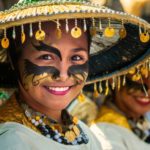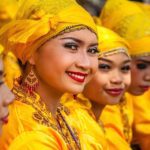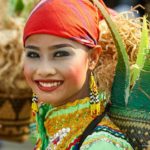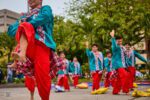
Sigpawan Festival: Lemery’s Vibrant Easter Celebration of Bounty and Culture
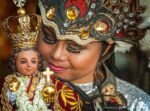
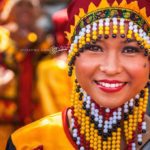
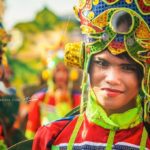
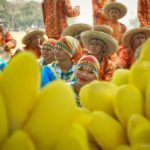
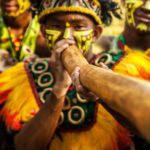
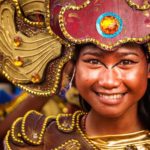
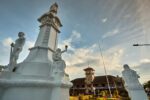
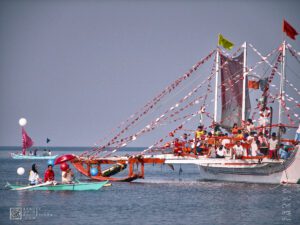
Each year, the Sigpawan Festival, which is held in Lemery, Batangas, takes place on Easter Sunday. The highlight of the festival is the Fluvial procession

In Taal, Batangas, some of the town’s most recognizable traditions can be found not only in its ancestral houses, churches, embroidery, and balisong-making, but also in its food. Among the local delicacies associated with the town is panutsa, a simple confection made by combining peanuts with caramelized sugar and shaping the mixture into compact pieces or discs. For visitors exploring Taal’s heritage and food culture, seeing how panutsa is prepared offers a different way of understanding the town—through a product that has long been made, sold, shared, and carried home as a local treat.
Panutsa is commonly compared with peanut brittle because both rely on the combination of nuts and cooked sugar, but the Taal version has its own recognizable appearance and preparation style. Municipal tourism material describes it as a sweet, disc-shaped product, while earlier documentation of panutsa production in Taal shows makers using whole peanuts bound together with caramelized brown sugar and forming the mixture in molds of different sizes. The result can range from small, individually sized pieces to considerably larger rounds intended for sharing or pasalubong.
The ingredients may look uncomplicated, but the cooking requires attention. Sugar is dissolved and heated until it reaches the appropriate consistency before the peanuts are incorporated. The mixture is then cooked until sufficiently thick, transferred for shaping, and allowed to cool and firm up before being removed from its mold and wrapped. Actual cooking times, heat sources, mixing methods, and proportions can vary between producers, so the process should be understood as a traditional method rather than one fixed recipe followed by every panutsa maker in Taal.
Part of the interest in traditional panutsa-making comes from the tools themselves. Documentation of production in Barangay Seiran has shown the use of molds for shaping the confection, while a more recent feature documented wooden molds and wooden implements used by a longtime producer in Taal. These tools are practical rather than decorative: they help workers portion, spread, shape, and handle the hot mixture before it hardens.
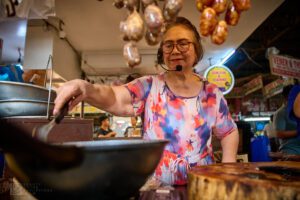
For anyone watching the process, the most visually distinctive moments occur when the hot sugar-and-peanut mixture is being stirred, transferred, spread, and shaped. The transformation is remarkably quick: a loose, bubbling mixture gradually becomes a dense confection capable of holding its form. The contrast between the dark caramelized sugar, pale peanuts, wooden implements, and finished rounds also makes panutsa-making a particularly strong subject for documentary-style photography.
Barangay Seiran has been particularly associated with panutsa production in Taal. Historical material about the municipality specifically records panutsa-making in Seiran, while accounts of local production have also documented panutsa makers working there. The Municipality of Taal has additionally identified Seiran, Kawit, Laguile, and Latag among the barangays known for producing the delicacy, showing that the tradition is not confined to a single household or location within the municipality.
The continued presence of panutsa-making in Taal is also reflected in contemporary gastronomy tourism. In October 2026, a Department of Tourism Calabarzon familiarization tour in Batangas included Taal and featured local food traditions, including panutsa preparation, alongside visits to cultural landmarks and other local food experiences. This provides a useful indication that panutsa-making is being presented not merely as a product to purchase, but also as part of an experiential approach to discovering Taal’s culinary heritage.
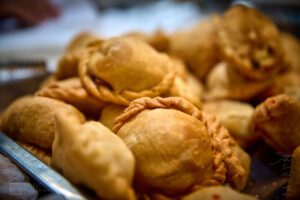
Panutsa is easy to understand as a pasalubong: it is compact, durable compared with many freshly prepared foods, and strongly associated with the place where it is made. Yet reducing it to a souvenir misses its larger role in Taal’s food identity. The delicacy appears alongside other products such as empanada, longganisa, suman, tapa, barong Tagalog, and balisong in the town’s tourism promotions and local celebrations.
That connection becomes especially visible during El Pasubat Festival, an annual celebration highlighting the products and traditions associated with Taal. The municipality describes El Pasubat as a showcase of the town’s trademarks, with panutsa forming part of the name alongside empanada, longganisa, suman, balisong, barong Tagalog, tapa, tamales, tawilis, and tulingan. For visitors, the festival provides a wider cultural setting in which panutsa can be understood alongside the other foods, crafts, and practices that contribute to Taal’s identity.
A visit centered on Panutsa Making in Taal, Batangas is best approached as a cultural food experience rather than simply a search for a particular shop. Production takes place at the community level, and access to a working preparation area can depend on the maker, schedule, and prior coordination. Visitors interested in seeing the process should therefore confirm arrangements with the local tourism office, community contacts, or a local tour organizer before arriving rather than assuming that every panutsa-making household accepts walk-in visitors.
For visitors who do arrange a demonstration, the experience can be especially rewarding because the process reveals details that are easy to miss when buying the finished product. The sound and movement of the cooking, the heat around the work area, the changing consistency of the sugar mixture, the careful handling of the peanuts, and the final shaping all show how a familiar snack is produced through practiced handwork. The finished panutsa then becomes more than something brought home from Taal—it becomes a reminder of the people and process behind the delicacy.
RELATED STORIES

Each year, the Sigpawan Festival, which is held in Lemery, Batangas, takes place on Easter Sunday. The highlight of the festival is the Fluvial procession



Known as the Caysasay Church, the Shrine of Our Lady of Caysasay is located in Barrio Caysasay, Taal, Batangas. This is a coral-hewn chapel that


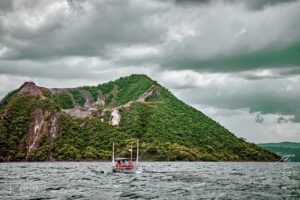
Rising dramatically from the serene waters of Taal Lake in Batangas Province, Taal Volcano immediately captures attention with its extraordinary configuration — a volcano on


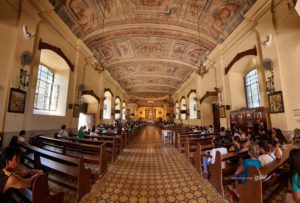
This Minor Basilica is canonically known as the Minor Basilica of Saint Martin of Tours and is located in the town of Taal, Batangas, within
Panutsa-making also fits naturally into a broader visit around Taal. The municipality is widely promoted for its heritage architecture and cultural attractions, including the Basilica of St. Martin de Tours, the Taal Heritage Village, ancestral houses, museums, and other traditional industries. Pairing a food experience with these sites allows visitors to see that Taal’s heritage is not limited to preserved buildings; it also survives through products, skills, recipes, and livelihoods that continue to be practiced in the community.
The result is a more complete picture of Taal, Batangas. Its old houses and religious landmarks tell stories through architecture, while its embroidery, balisong-making, local dishes, and panutsa-making tell stories through skilled hands and everyday production. In this setting, a round piece of caramelized peanuts may appear modest compared with the town’s monumental structures, but it carries another kind of heritage—one that can be tasted, observed, photographed, and passed from one generation to the next.
For travelers exploring Taal beyond its famous landmarks, panutsa offers an opportunity to encounter the town at a more intimate scale. Watching the confection take shape from heated sugar and peanuts connects a familiar pasalubong to the people, tools, places, and working traditions that give it meaning. As of 2026, panutsa remains part of Taal’s recognized local-product identity and continues to appear within the town’s wider gastronomy and heritage-tourism story.
I’m looking forward to the stories and images leaving a lasting positive impression on you, just as they have on me. Stay connected with us on social media for a weekly exploration of travel assignments and breathtaking visuals. Our focus is on championing local tourism, showcasing small businesses, and honoring the magnificence of the Philippines through the content we curate. Join us in spreading the word by clicking the ‘share’ buttons below. Your support means the world to us.
EXPLORE MORE about


It was once a stone church, that was built during the Spanish colonial era in Tanauan, Batangas, and was known as Tanauan Church or St


When exploring heritage towns in the Philippines, Taal in Batangas always stands out. Often overshadowed by Taal Lake and Taal Volcano, the town itself is


Tucked away in the historic town of Taal, Batangas, the Sta. Lucia Miracle Well—locally known as Balon ng Sta. Lucia—is more than just a quiet,


Taal Lake, also simply known as Lake Taal, is one of the Philippines’ most unique natural features — a volcanic lake occupying the caldera of


You know that feeling when you just want to escape the city buzz and dive straight into a chill beach vibe? Well, Calatagan South Beach,


Located in Barangay Caloocan, Talisay, Batangas—just a couple of hours’ drive from Metro Manila—is a quiet little spot that’s as unbothered as it is underrated:


At the heart of Calaca City, Batangas, the Archdiocesan Shrine and Parish of St. Raphael the Archangel stands as one of the city’s most important


Let’s be real—when you think of volcanoes, you probably imagine something massive and far-flung, right? But here in the Philippines, just 50-ish kilometers from Metro


The Nasugbu area has an extensive collection of beaches and snorkeling spots which make it a popular summer destination. There are numerous swimming-related activities and


Each year, the Sigpawan Festival, which is held in Lemery, Batangas, takes place on Easter Sunday. The highlight of the festival is the Fluvial procession
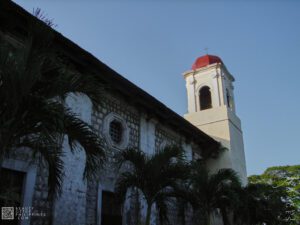

Taal Basilica stands at the heart of Taal Heritage Village in Batangas as both a monumental historic church and a living center of Catholic worship.


If you’re craving that sweet spot where calm meets adventure—where you can sip coffee while staring at a volcano, then hop on a kayak right


The Fantasy World theme park sits alone and quietly in Lemery, Batangas Province, and is known as the supposed Disney World as well as one


If you’ve ever found yourself stuck in Metro traffic, daydreaming about the beach while scrolling through Instagram—Laiya Beach might just be the answer your soul’s


Tapang Taal is one of the culinary specialties that gives Taal, Batangas, a distinct food identity. Unlike the beef tapa commonly associated with Filipino breakfasts,


Among the many contributions of Balayan Bay that Batanguenos are proud of, the bay served as a fishing village and a summer retreat for locals


The Marcela Agoncillo Museum, formally known as the Museo nina Marcela Mariño at Felipe Agoncillo, occupies the ancestral home of Marcela Mariño Agoncillo in Taal,


Lemery Beach offers a different kind of Batangas seaside experience. Rather than being defined by a single large resort complex or one tightly enclosed tourist


Tingloy is a unique municipality in Batangas Province, occupying Maricaban Island along with Caban Island and several smaller islets just south of the Calumpang Peninsula.


Standing before Taal Volcano, you quickly realize why it’s one of the Philippines’ most iconic natural landmarks. The sight of Volcano Island rising from the


Taal Lake, located in Batangas on Luzon, is one of the Philippines’ most remarkable natural landscapes. This freshwater lake occupies a vast volcanic caldera, shaped


For visitors exploring Calaca City, Batangas, food offers one of the clearest ways to encounter the character of the community. Among the city’s most recognizable


Calaca Church, formally the Saint Raphael the Archangel Parish Church, was established shortly after the founding of Calaca on May 10, 1835. By 1836, local


Rising dramatically from the serene waters of Taal Lake in Batangas Province, Taal Volcano immediately captures attention with its extraordinary configuration — a volcano on


Taal Empanada is one of the local food specialties that gives Taal, Batangas its distinctive culinary character. Found among the food offerings associated with Taal


Known as the Caysasay Church, the Shrine of Our Lady of Caysasay is located in Barrio Caysasay, Taal, Batangas. This is a coral-hewn chapel that



This Minor Basilica is canonically known as the Minor Basilica of Saint Martin of Tours and is located in the town of Taal, Batangas, within
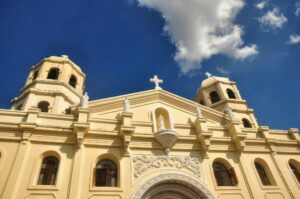

In the historic town of Taal, Batangas, heritage can be found not only in centuries-old churches and ancestral houses but also in the fine details

BROWSE BY CATEGORIES
BROWSE BY PROVINCE